

 English
 русский
 عربى
عربى
Product Consultation
Your email address will not be published. Required fields are marked *
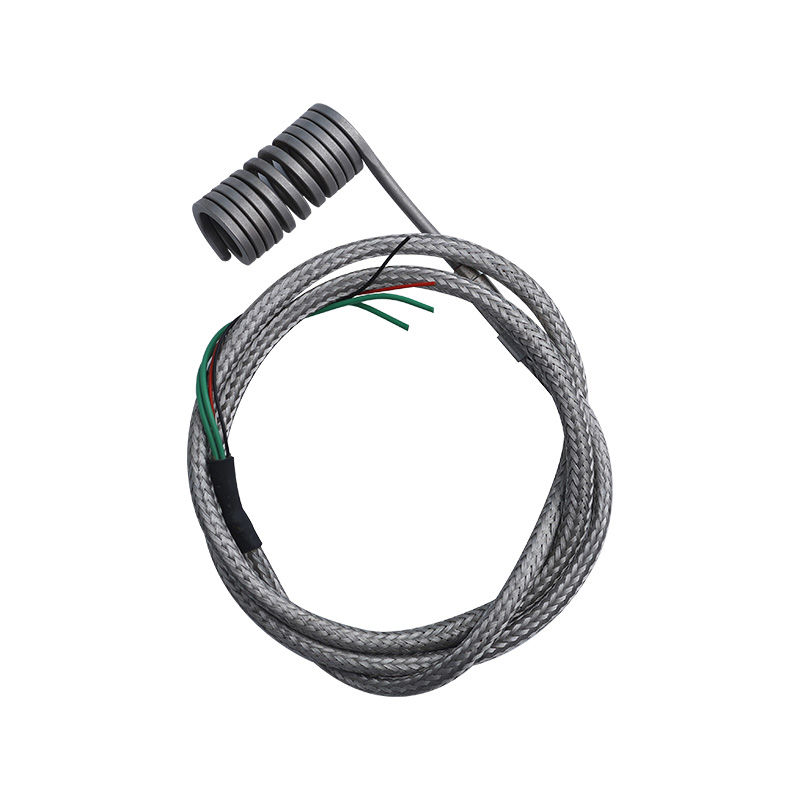
Hot runner coil heaters are indispensable components in injection molding systems, designed to provide highly localized and uniform heat distribution. This precise thermal control prevents the premature solidification of molten plastic as it flows through the nozzles and gates. By maintaining a consistent melt temperature throughout the molding cycle, these specialized heaters ensure continuous plastic flow, significantly reduce molding defects, and eliminate material waste associated with cold runner systems.
In modern plastic manufacturing, maintaining precise thermal balance is critical. As plastic resin is forced through narrow channels, it naturally cools. Without continuous external heating, the polymer would freeze off within the mold core, leading to blockages and production halts. Coil heaters are strategically placed around the nozzle and gate areas to counteract this heat loss, ensuring the molten material reaches the cavity at the optimal viscosity and flow rate.
The superior performance of these heaters lies in their specific structural engineering. Unlike traditional heating bands that loosely wrap around components, hot runner coil heaters are precision-manufactured to maximize heat transfer and durability.
The manufacturing process involves advanced metallurgy to ensure the components can withstand extreme operational conditions. The coiling process is precisely engineered so that the pitch of the wire aligns with the specific thermal requirements of the nozzle. For example, the spacing may be varied to concentrate more heat near the gate tip where heat loss is most rapid. This structural mastery guarantees even heat distribution across the entire surface.
This unique construction allows the heater to conform perfectly to the curved contours of the nozzle. By ensuring direct surface contact between the heating element and the mold steel, thermal transfer is highly efficient, minimizing the energy lost to the surrounding environment.
The primary application for hot runner coil heaters is within the plastic manufacturing industry, specifically in runnerless injection molding systems. They are strategically installed around the nozzle and hot tip, acting as the temperature guardian for the molten polymer as it travels through the mechanical cycle.
Plastic resins require a specific and narrow melting temperature range to flow properly. If the temperature drops even slightly, the viscosity increases, leading to short shots, part distortion, or cold slugs. Coil heaters provide continuous, even heat to keep the plastic in a molten state, ensuring a seamless transition from the machine barrel to the final mold cavity.
Because of their conforming design, heat is transferred directly into the mold steel rather than being broadly dissipated into the ambient factory environment. This localized heating approach is highly energy-efficient, reducing the overall power consumption required to maintain the manufacturing temperature, thereby lowering operational costs.
Utilizing these specialized heating elements in injection molding yields several measurable benefits in operational efficiency and product quality. Their ability to handle high watt densities makes them ideal for applications requiring rapid thermal recovery.
Beyond heat distribution, the operational stability in a continuous manufacturing environment is another crucial advantage. Injection molding machines run relentlessly, often under high clamping tonnages and mechanical vibrations. Coil heaters must resist physical degradation from these forces. The solid metal sheath absorbs much of the mechanical stress, preventing the internal coils from fracturing. This durability reduces replacement frequency, minimizing costly production interruptions.
To better understand the operational parameters of these heaters within the mold, the table below demonstrates general performance characteristics:
| Performance Metric | General Characteristic | Operational Benefit |
|---|---|---|
| Thermal Response | Rapid heating | Reduces machine startup waiting time |
| Temperature Distribution | Highly uniform | Prevents plastic degradation and cold slugs |
| Mechanical Durability | High vibration resistance | Prolonged lifespan under high-pressure clamping |
Furthermore, because these heaters provide such precise temperature control, manufacturers are able to produce higher quality plastic parts with superior surface finish and structural integrity, reducing the scrap rate and improving overall profitability.
Proper installation and diligent maintenance are critical to maximizing the lifespan of hot runner coil heaters. Following a structured approach prevents premature failure and ensures consistent molding quality throughout the production run.
Routine inspections are vital for continuous operation. Technicians should periodically measure the electrical resistance using a multimeter to verify continuity and detect internal wire degradation. Furthermore, using an infrared thermometer or a thermal imaging camera can monitor the temperature profile across the mold. Consistent monitoring of temperature through accurately placed thermocouples ensures the heaters do not overshoot their setpoints, preventing thermal fatigue and extending the overall lifespan of the element.
Even with diligent maintenance, anomalies can occur due to continuous operational stress. Early detection of these issues saves valuable production time and prevents the production of large quantities of defective parts.
By understanding these common failure modes, mold operators can quickly restore production and prevent defective plastic parts from entering the supply chain. Implementing a soft-start algorithm on the temperature controllers can further protect the heaters by limiting the initial inrush of current, allowing the heating elements to gradually expand and heat up, significantly reducing thermal shock.
How to properly install and maintain an immersion flange heater?
Jul 01,2026
How do infrared heater elements work compared to traditional convection heaters?
Jul 15,2026Your email address will not be published. Required fields are marked *