

 English
 русский
 عربى

Product Consultation
Your email address will not be published. Required fields are marked *
U-shaped immersion tubes on a packaged hot water skid kept failing at the threaded terminal after nine weeks of service. The supplier replaced them free of charge, but the downtime cost far more than the parts. The actual cause was a watt density of 9.5 W/cm2 on a 6 kW tube immersed in hard water, inside the catalog limit but well above what a stainless steel sheath can sustain in continuous duty. Selecting an electric heating tube is a four-variable engineering decision: heat generation, watt density, sheath material, and form factor. Get all four aligned and a tube runs for years; miss one and you own the failure.
An electric heating tube converts electricity into heat by Joule heating in a resistance wire, with compacted magnesium oxide transferring that heat to a metal sheath contacting the process medium. The wire is a coiled nickel-chromium alloy, usually 80/20 Ni-Cr, centered along the full heated length. Magnesium oxide powder fills the gap between wire and sheath and is mechanically compacted until it reaches the density that provides both electrical insulation and thermal conduction. After filling, the tube is swaged down, and the ends are sealed with ceramic heads, threaded plugs, or flexible leads.
Heat generated in the resistance wire moves outward through the MgO layer and the sheath into the target medium, whether air, water, oil, or an aluminum mold block. The sheath surface temperature always runs lower than the wire temperature, which is why the medium's ability to absorb heat directly limits how much power the tube can safely carry.
Watt density, also called surface load, is the rated power divided by the heated surface area of the tube, and exceeding the recommended value for your medium is the most common cause of early failure in an electric heating tube.
The calculation is direct: surface load = P / (3.14 x D x L), where D is the diameter of the heated zone and L is the heated length. A 2.5 kW cartridge at 200 mm heated length runs at roughly twice the watt density of the same power over 400 mm. The medium sets the limit: water and oil absorb heat quickly, air absorbs very little, and a mold block conducts heat away only if the bore fit is tight.
| Medium / application | Recommended max watt density | Design notes |
| Transformer oil | 1.0 W/cm2 | Coking risk above this level |
| Heavy oil / asphalt | 2.5 W/cm2 | Use a finned structure if viscosity is high |
| Water, stainless sheath | 4.0 W/cm2 | Hard water lowers the safe value |
| Water, copper sheath | 5.0 W/cm2 | Scale forms above 60 degC media temperature |
| Air, finned tube | 5.5 W/cm2 | Fins multiply the effective surface area |
| Mold, cartridge heater | 12.0 W/cm2 | Bore fit within 0.05-0.1 mm clearance |
The sheath material sets the maximum continuous sheath temperature and the chemical resistance of the tube, so it is selected against the medium before any other parameter.
Copper is the standard for clean water because it resists scale and transfers heat well, but copper cannot serve above roughly 150 degC. Stainless steel 304 handles sheath temperatures to about 400 degC and covers most water, oil, and air applications. Stainless 316 adds molybdenum for better resistance to chlorides and weak acids. The Incoloy alloys, 800 and 840, extend the limit to 700-800 degC and appear in duct heaters, ovens, and high-temperature processes. Titanium serves aggressive chemical baths such as pickling solutions.
| Sheath material | Max continuous sheath temperature | Suited for |
| Copper | 150 degC | Clean water, scale-prone water |
| Stainless steel 304 | 400 degC | Water, oil, air, general industrial use |
| Stainless steel 316 | 500 degC | Chlorinated water, weak acids |
| Incoloy 800 | 700 degC | High-temperature air, salt baths |
| Incoloy 840 | 800 degC | Duct heaters, ovens, kilns |
| Titanium | 300 degC | Aggressive chemical solutions |
The form factor of an electric heating tube follows the installation: cartridge heaters slide into drilled mold cavities, immersion heaters mount on tank walls, and finned air tubes sit inside ducts and ovens.
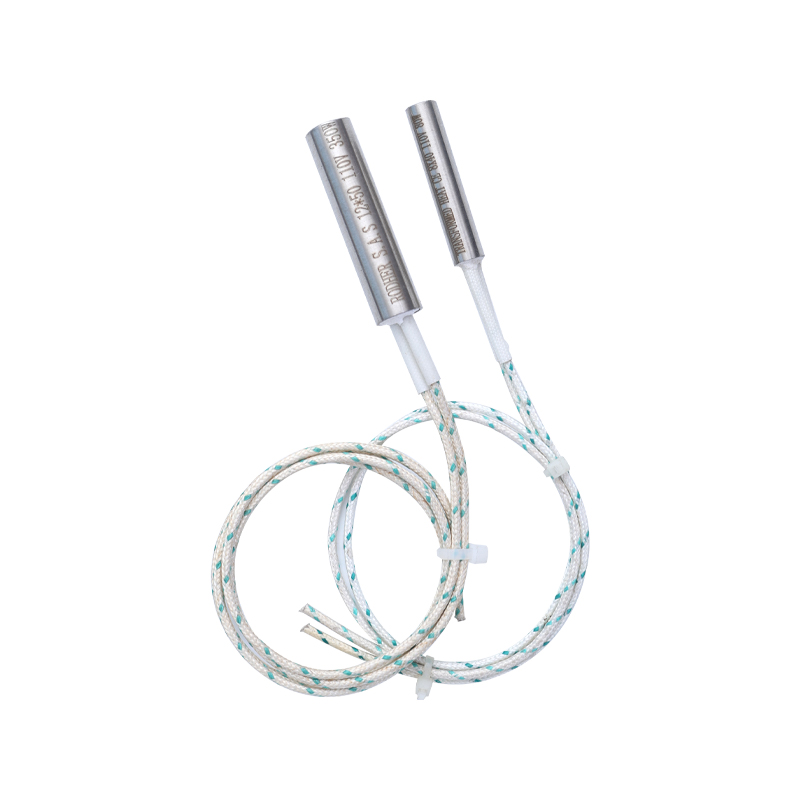
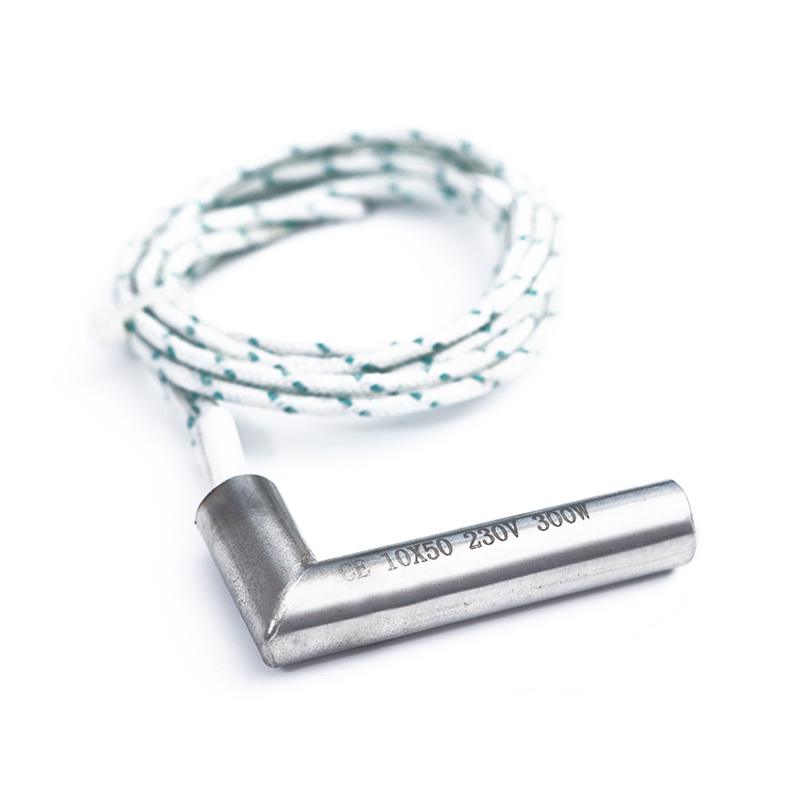
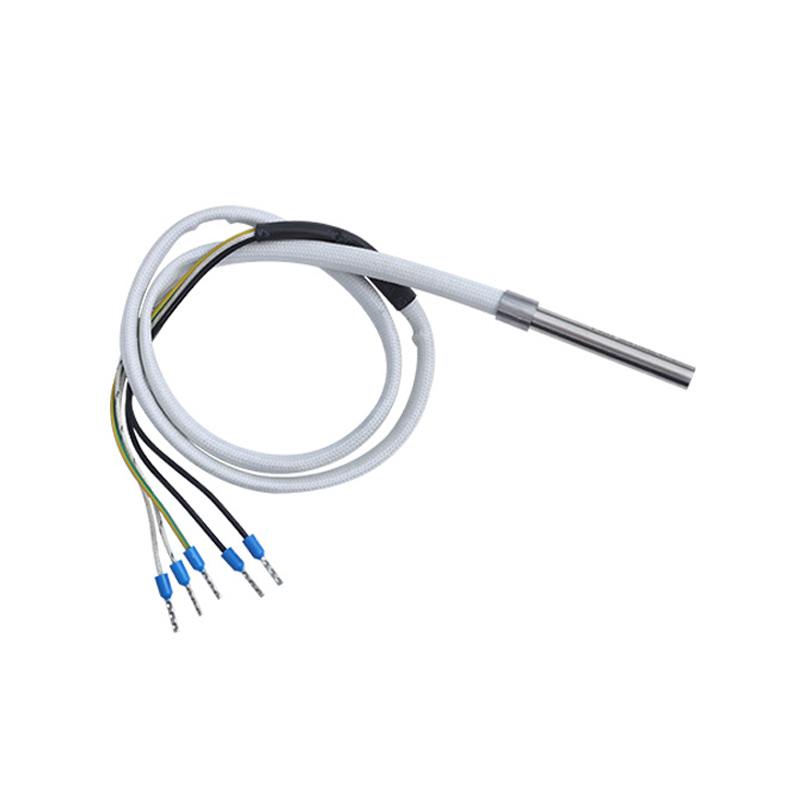
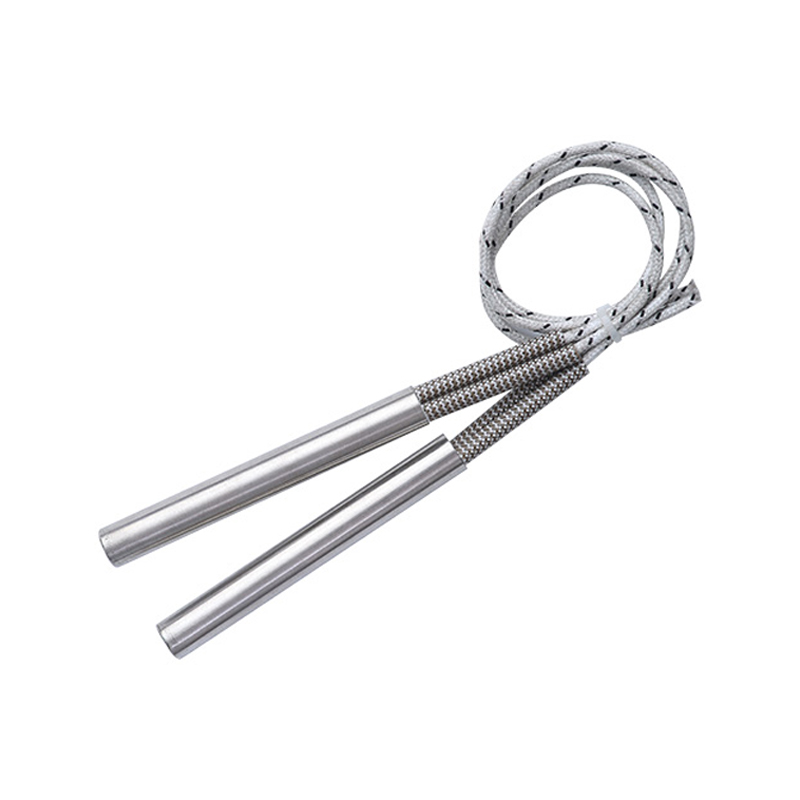
Cartridge heaters are machined to a close bore fit in dies, platens, and injection molds, reaching 8-12 W/cm2 only because the surrounding metal conducts heat away. Typical diameters run from 6 to 20 mm, and the bore tolerance determines the surface temperature.
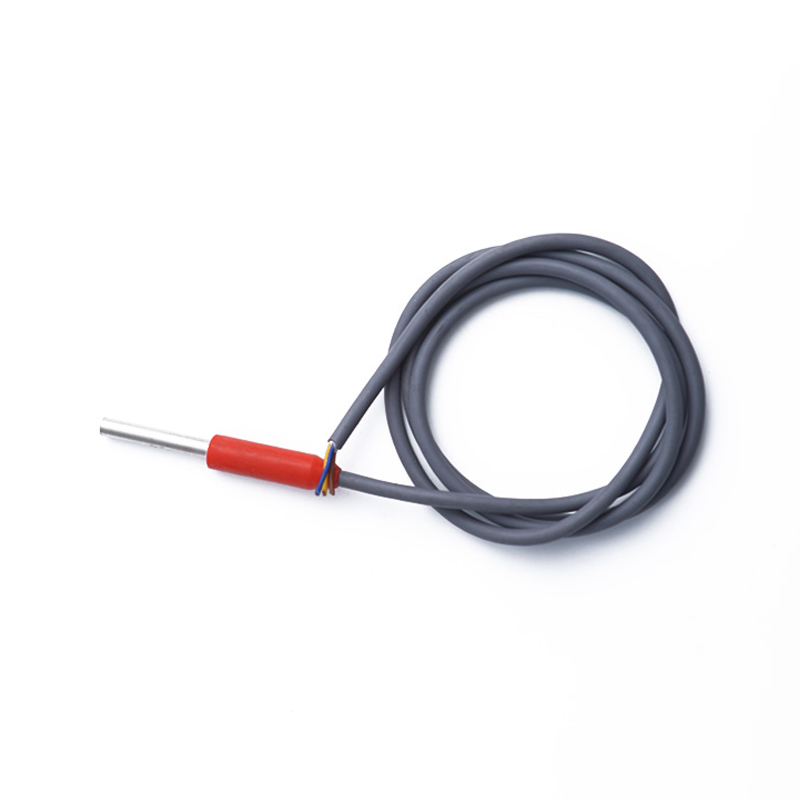
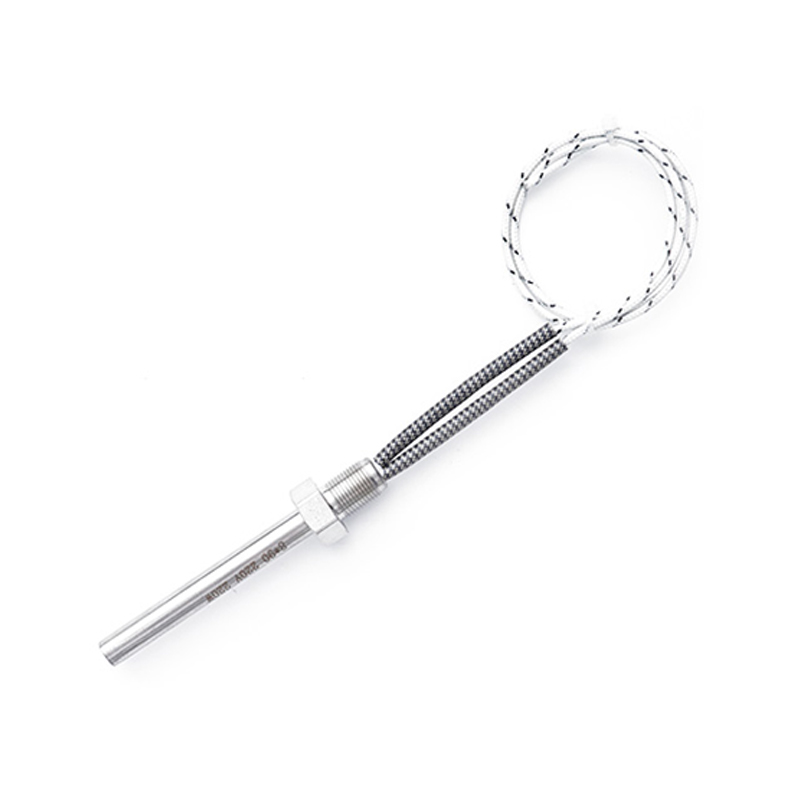
Cartridge Heater Element Manufacturers and ConfigurationsThis page lists cartridge heater variants such as external wiring, micro, right angle, and threaded types, useful when you need a close-fit element for dies or molds.View Product →
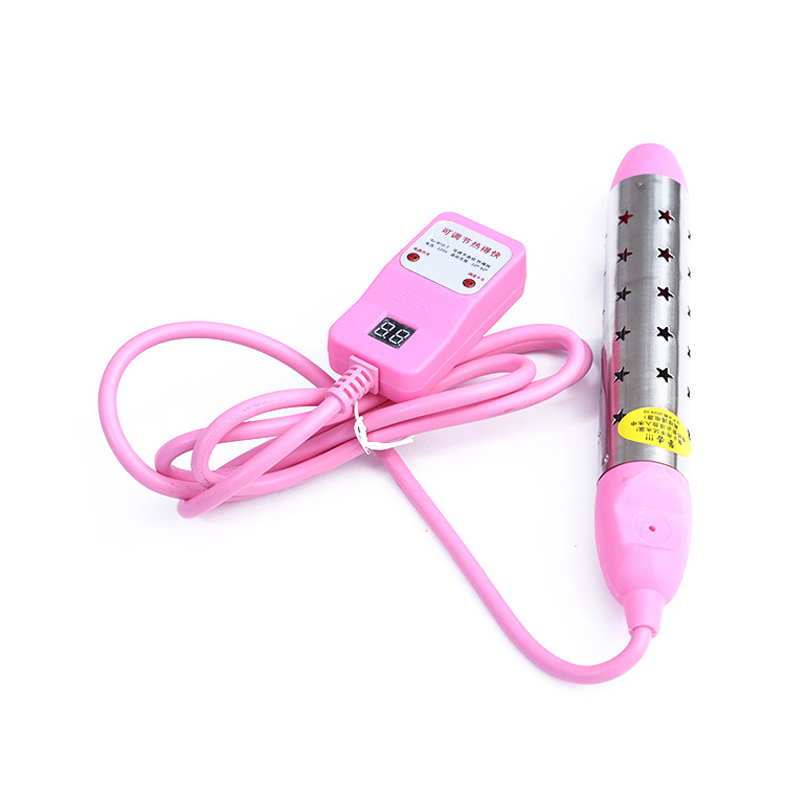
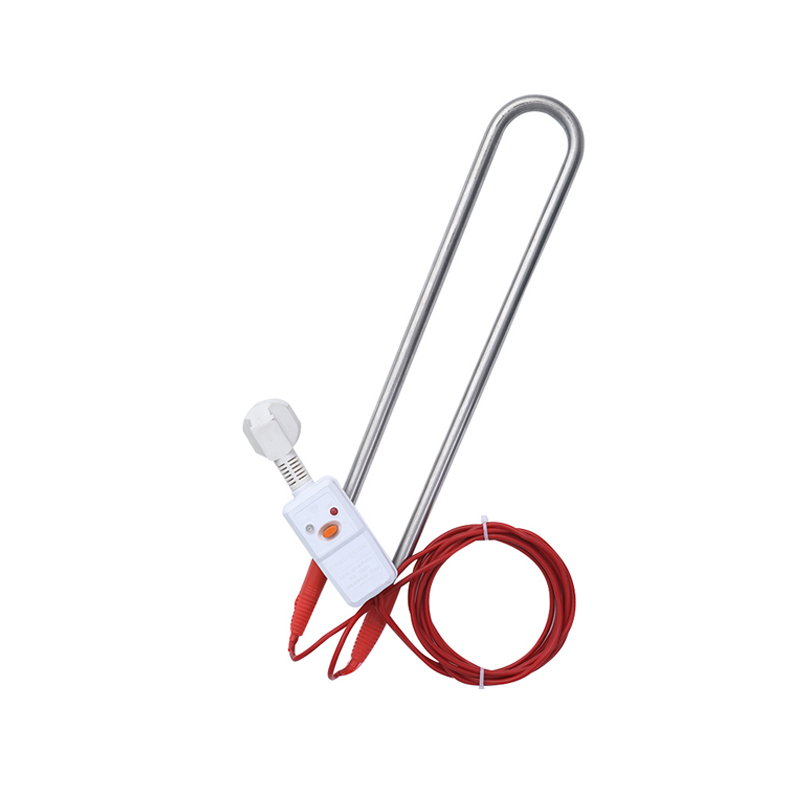
Immersion heaters come in threaded plug and flanged forms and are sized by tank height and liquid volume. The heated length must remain below the liquid level whenever power is applied; a partially exposed element is a burn-out risk.
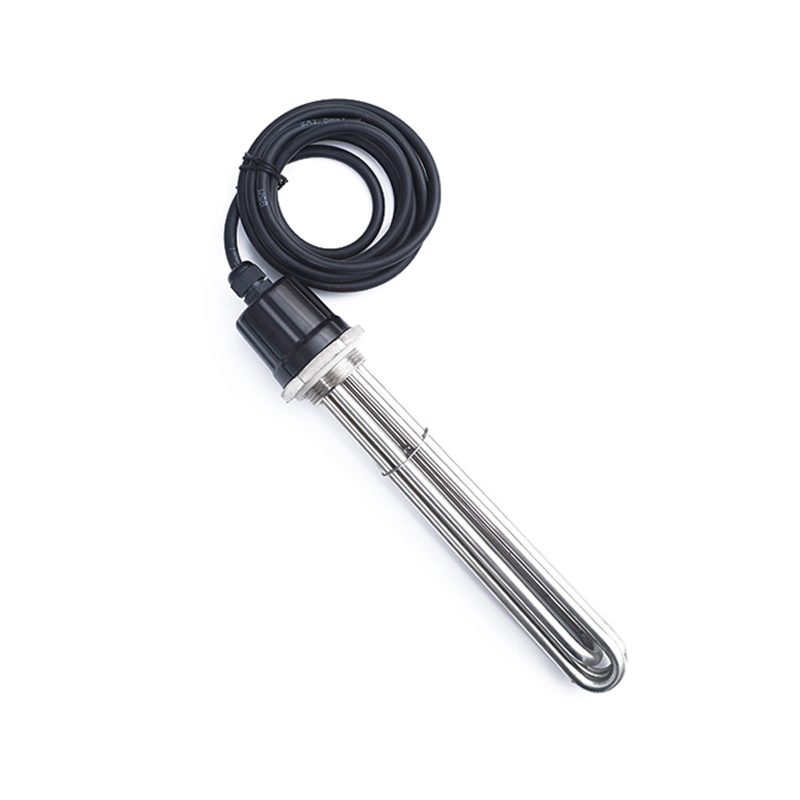 Industrial Immersion Heater Manufacturers and TypesCovers hexagonal thread, flange, and U-shaped immersion heaters for tank and liquid heating, relevant when sizing an element by tank height and liquid volume.View Product →
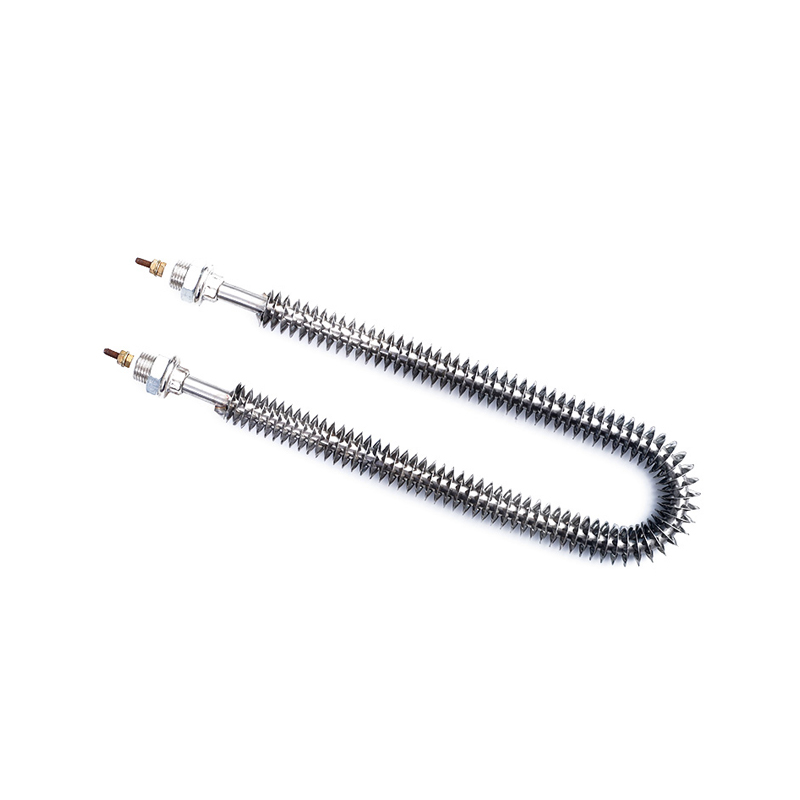
Finned air heating tubes, including U-shaped, W-shaped, and square-finned elements, multiply the dissipating surface so the tube can deliver useful power into moving or forced air without scorching. O-shaped and I-shaped fin variants fit different duct geometries.
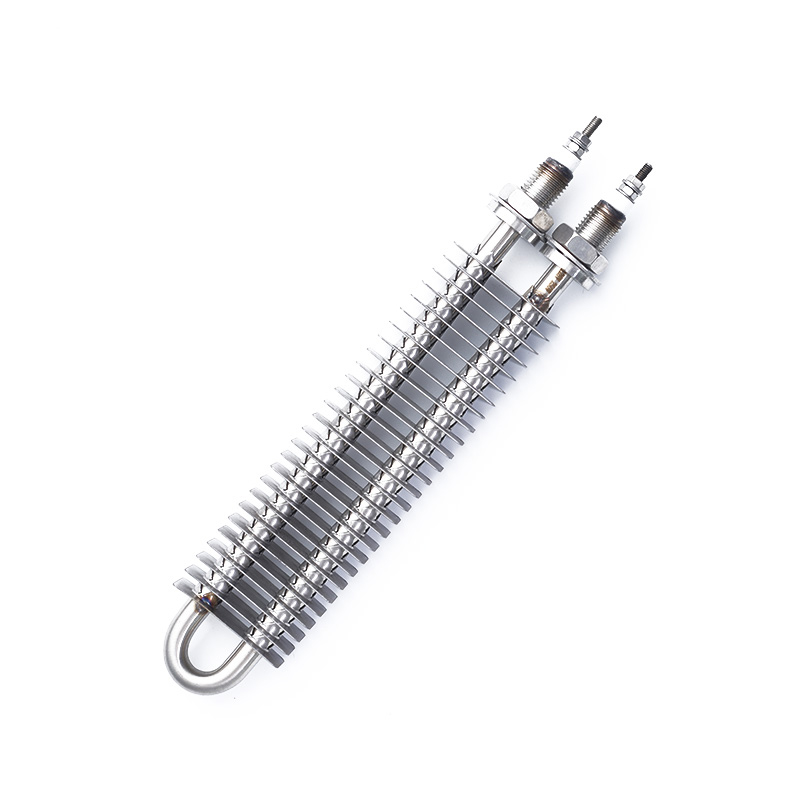 Finned Air Heating Tube Manufacturers and DesignsShows square, U-shaped, W-shaped, O-shaped, and I-shaped finned tubes that increase surface area for forced-air heating, with spring coil options for nozzles.View Product →
In a hot runner manifold, the same logic appears in spring coil heaters that wrap around nozzle bodies to hold the melt channel at setpoint. The geometry changes; the principle does not.
Because electric heating tubes are nearly always custom, with diameter, length, wattage, lead type, and thermocouple options changing with every order, the factory's engineering capacity and test equipment matter as much as the catalog price.
Xinghua Yading Electric Heating Element Co., Ltd., a heating element manufacturer in Jiangsu Province with around 30 years of industry history, builds cartridge heaters, immersion heaters, air heating tubes, band heaters, hot runner heaters, and thermocouples under the Yading brand. The company reports an annual production capacity above 500,000 pieces and exports to more than 25 countries, including the United States, Germany, Italy, and Brazil. It develops its own molds and states that it can take on special and hard-to-make elements, which is the practical test of a custom heating tube supplier.
China's Jiangsu coast offers direct export shipping, which shortens lead times for overseas buyers. Before you commit to a specification, confirm three documentation items with the supplier:
Send the drawing and operating conditions to the factory's engineering team through the contact page before ordering; a qualified supplier will challenge the specification, not just confirm it.
Three failure modes cause the majority of electric heating tube failures: open circuits at the terminal, insulation breakdown from moisture ingress, and sheath corrosion from a wrong material match.
An open circuit usually starts at the joint between the resistance wire and the lead pin, where vibration and thermal cycling fatigue the connection until it separates. Insulation breakdown follows moisture entry through a failed end seal, because the magnesium oxide is hygroscopic and loses insulating strength once damp. Corrosion appears as pitting or holes in the sheath, most often on a tube whose alloy was matched to a catalog rather than to the chemistry of the medium.
| Failure mode | Symptom | Primary cause | Prevention |
| Open circuit | No heat output, meter reads infinite | Broken wire at the lead joint | Flexible or right-angle leads, strain relief |
| Insulation failure | Leakage current, RCD trips | Moisture in MgO through a failed end seal | Sealed ceramic head, waterproof construction |
| Sheath corrosion | Pitting or holes in the sheath | Alloy incompatible with the medium | Use SS 316, Incoloy, or titanium |
| Overheating | Discolored sheath, short service life | Watt density above the medium limit | Reduce surface load or add fins |
A cartridge heater is a cylindrical electric heating tube that inserts into a drilled metal block, where the block conducts heat away, and it typically runs at 8-12 W/cm2. An immersion heating tube is mounted through a tank wall or flange and is directly immersed in liquid, so it is sized to the tank geometry and must stay below the liquid level when energized.
Divide the rated power in watts by the heated surface area in square centimeters, calculated as 3.14 x diameter x heated length. Compare the result with the recommended limits for your medium: below 1.5 W/cm2 for free air, 4-5 W/cm2 for finned air, 3-5 W/cm2 for water, and up to 12 W/cm2 for cartridge heaters in a properly fitted mold.
Copper is the economical choice for clean water and gives the highest watt density, up to about 5 W/cm2. Use stainless steel 304 or 316 when the water is chlorinated or mildly corrosive, and use titanium for aggressive chemical baths. Incoloy is unnecessary for water below 150 degC.
Yes. Custom diameter, heated length, wattage, sheath material, thread, flange, lead wire, thermocouple bore, and shape, including U, W, O, and square forms, are standard work for a manufacturer such as Yading that develops its own molds. Send the drawing and operating conditions to the factory for a specification check before ordering.
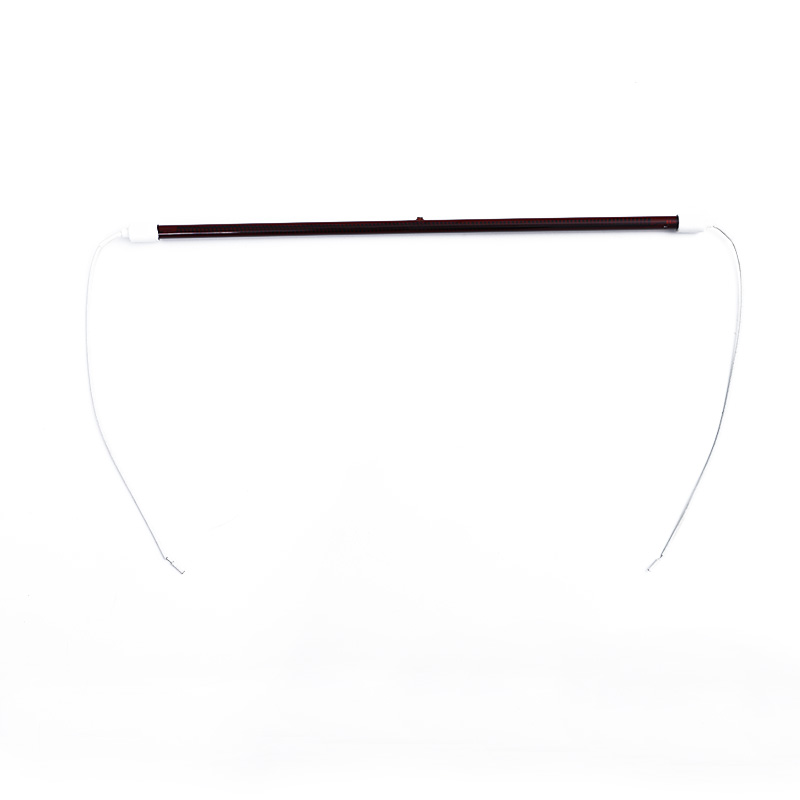
Infrared Tube Heater Selection: Wavelength, Watt Density, and Materials
Nov 04,2026
No previous article
Jan 01,1970Your email address will not be published. Required fields are marked *