

 English
 русский
 عربى

Product Consultation
Your email address will not be published. Required fields are marked *
A packaging line running shrink film at 55 units per minute spends almost 40 percent of its total energy budget on heat. When the line engineer replaced a convective hot-air oven with an electric infrared heater tube, warm-up time dropped from 18 minutes to under 90 seconds, and film quality improved because the radiation heated the product instead of the surrounding air. This measured result is typical of radiant heating, and it is why infrared emitters dominate paint curing, thermoforming, drying, and packaging lines in industrial plants.
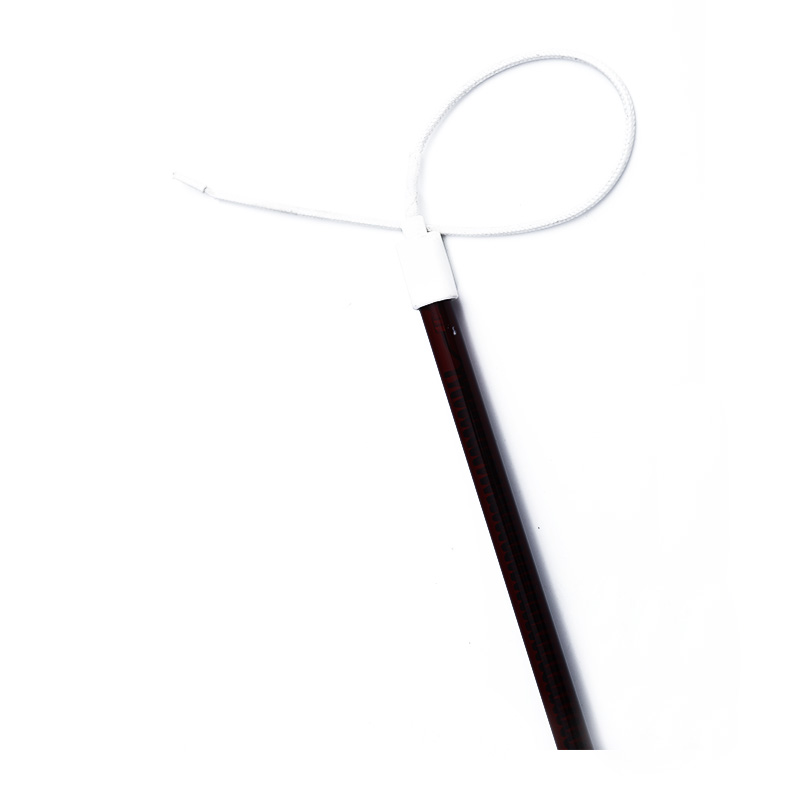
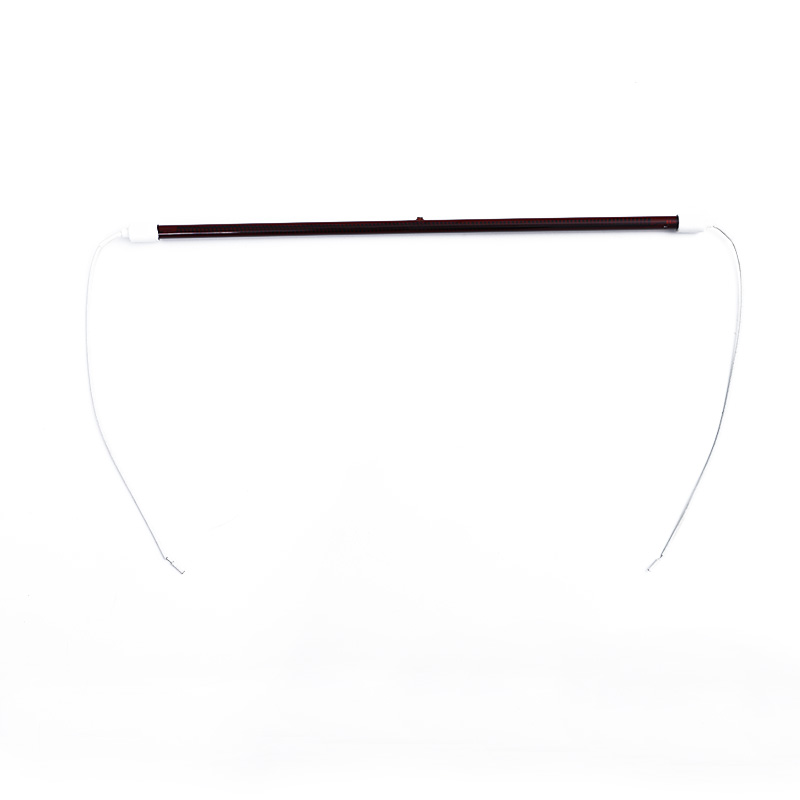
An electric infrared heater tube is a cylindrical emitter that converts electrical energy into infrared radiation and transfers it directly to the target surface without heating the air in between. Inside the tube, a coiled nickel-chromium resistance wire heats to operating temperature, and the ceramic or quartz envelope radiates that heat toward the product.
Three designs dominate the market, and the difference is the emitter surface material:
These surface temperatures translate directly into efficiency. A well-built unit converts 85 to 95 percent of the input wattage into usable radiation, compared with 40 to 60 percent for a hot-air oven that must first heat the air, the ducting, and the oven walls.
Wavelength determines what your electric infrared heater tube can actually heat, because every material absorbs infrared energy only in specific bands. Choose the wrong wavelength and the radiation passes through the product or reflects off it; choose the right one and most of the energy lands exactly where it is needed.
Short-wave radiation, from 0.76 to 1.4 microns, has the highest intensity and the deepest penetration. It suits thick or dense products and fast-moving lines where the part stays under the emitter for only a few seconds. Medium-wave radiation, from 1.4 to 3 microns, matches the absorption peaks of water, solvents, and paint, which makes it the default for drying and curing. Long-wave radiation above 3 microns is absorbed at the surface, so it suits plastics, food, and temperature-sensitive coatings. A dedicated comparison of short-wave, medium-wave, and long-wave emitters explains the physical differences in more detail.
| Property | Short wave | Medium wave | Long wave |
| Wavelength range | 0.76 - 1.4 microns | 1.4 - 3 microns | 3 - 1000 microns |
| Surface temperature | 900 - 950 C | 550 - 750 C | 300 - 600 C |
| Absorption match | Glass, deep penetration | Water, solvents, paint | Plastics, coatings |
| Typical use | Fast curing, glass heating | Paint drying, powder coating | Thermoforming, gentle heating |
Operating temperature of the emitter surface for the three common tube types.
Sizing an electric infrared heater tube comes down to three numbers: watt density, heated length, and input voltage. Of these, watt density is the one most often specified wrong, and the error appears as either scorched product or a line that never reaches temperature.
Watt density is the total wattage divided by the total heated surface area of the tube, expressed in watts per square centimeter. It controls how hot the emitter surface gets and therefore how aggressively the product is heated. A low-watt-density tube run at full power does not simply get hotter; the extra wattage is wasted because the surface temperature is fixed by the element design.
Sheath material is the second decision. Quartz tubes respond in seconds and resist thermal shock, but they are fragile and cost more. Ceramic tubes are mechanically stronger and naturally emit long-wave radiation, which is why ceramic emitters dominate thermoforming and food lines. Metal-sheathed tubes are the most robust choice for dirty environments, though their radiant efficiency is lower. Xinghua Yading Electric Heating Element Co., Ltd. manufactures ceramic infrared tube heaters at its Jiangsu factory, one of the first electric heating element plants in China.
 Ceramic Infrared Tube Heater for Industrial HeatingThis ceramic tube heater provides instant long-wave infrared heat, making it suitable for thermoforming and food processing lines. Its durable ceramic construction offers corrosion resistance and even heat distribution.View Product →
Spacing and distance complete the layout. Tubes are usually spaced 15 to 100 millimeters apart depending on the reflector beam width, and the product sits 100 to 300 millimeters from the emitter. Too far and the energy density drops; too close and a single hot spot burns the product surface.
Switching to an electric infrared heater tube consistently cuts process energy use by 15 to 30 percent, with even larger gains in floor space and cycle time, because the energy lands on the product instead of heating the air and the oven structure.
A representative case: a paint curing booth in eastern China replaced a 120 kW hot-air oven with medium-wave infrared tubes rated at 78 kW. Cycle time fell from 12 minutes to 4 minutes, energy per finished part dropped 28 percent, and rejects from dust contamination fell sharply because the infrared line had no forced air movement to carry particles onto wet paint.
An electric infrared heater tube earns its place wherever a process needs heat fast, precisely, and without a large air-handling footprint. The five most common application groups are:
Multi-zone lines are the best layout for most of these processes. Because every electric infrared heater tube is individually controllable, operators can raise the heat at dense or thick sections and lower it at thin sections. This zoned control is not possible with a single hot-air oven and is the main reason infrared retrofits pay back faster than projected.
To size a line correctly you need the product absorption spectrum, the line speed, and the target temperature. You can discuss the layout with our engineers and request a sample test before committing to a full installation.
Short-wave tubes operate at 900 to 950 C and emit radiation from 0.76 to 1.4 microns, which penetrates deep into the product. Long-wave ceramic tubes operate at 300 to 600 C and emit radiation above 3 microns, which is absorbed at the surface. Use short wave for fast heating of dense parts and long wave for gentle surface heating.
Quartz short-wave tubes typically last 5,000 to 7,000 hours, ceramic long-wave tubes 8,000 to 12,000 hours, and metal-sheathed tubes longer when protected from contamination. Closed-loop temperature control extends life by preventing over-temperature spikes.
Yes, for most surface-heating processes, but the line layout changes. The infrared zone is shorter because heat transfer is faster, and the product-to-tube distance must be controlled at 100 to 300 millimeters. A direct swap without re-spacing the emitters usually gives uneven results.
For solvent-based and water-based paint curing, plan on 3 to 5 W/cm2 of emitter surface. Powder coating normally runs slightly higher at 4 to 6 W/cm2. Confirm the value with a single-tube test on the actual product before ordering a full line.
Ceramic Infrared Tube Heater: Selection Guide for Industrial Process Heating
Oct 14,2026
No previous article
Jan 01,1970Your email address will not be published. Required fields are marked *