

 English
 русский
 عربى

Product Consultation
Your email address will not be published. Required fields are marked *
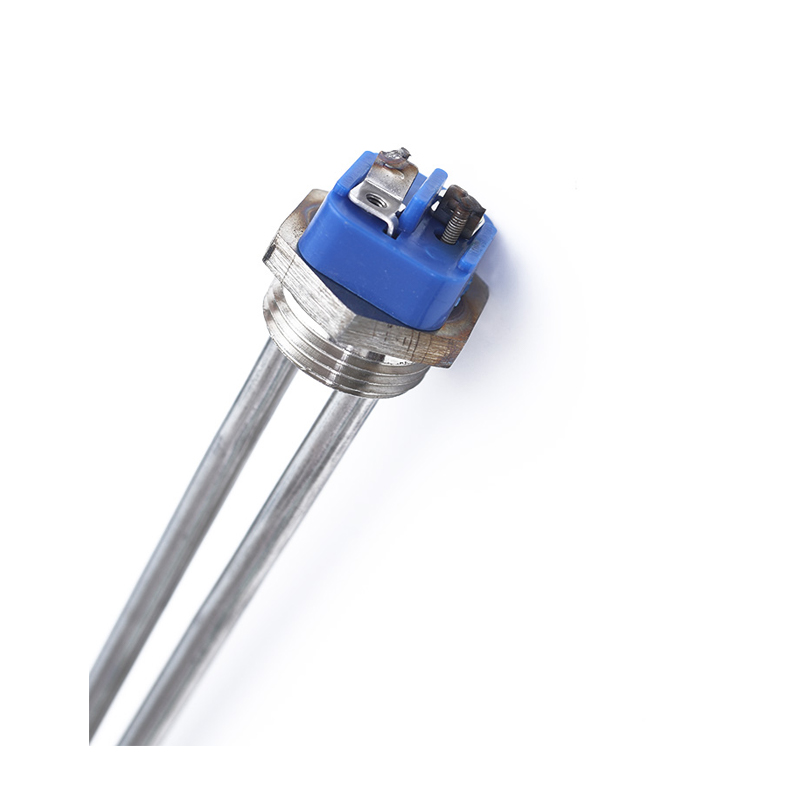
When a 500-liter wash tank in a food plant needs a replacement heater, ordering the same wattage seems safe. It is not. An electric tubular heater fails early when watt density, sheath material, and the heated medium are mismatched. A 2.4 kW element rated for water will burn out within weeks if pressed into oil service at the same wattage. Three parameters separate a heater that runs for years from one that fails in a season: watt density, sheath metallurgy, and medium compatibility.
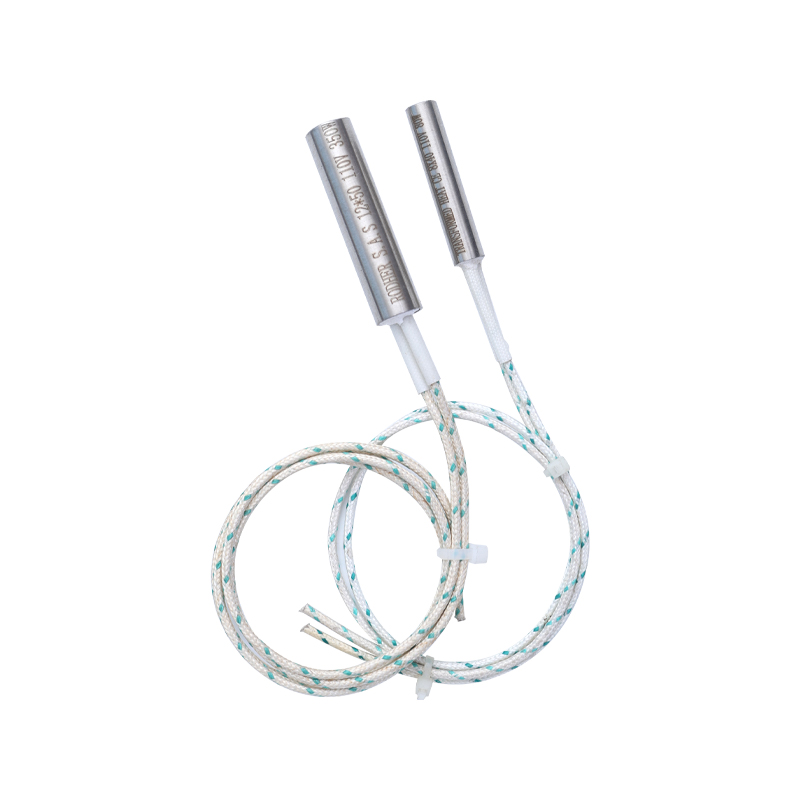
An electric tubular heater is a metal-sheathed resistance heating element that converts electricity into heat through a nickel-chromium resistance wire, electrically insulated and thermally coupled to its outer metal tube by compacted magnesium oxide (MgO) powder.
An electric tubular heater is a sealed cylindrical element in which a coiled nickel-chromium wire runs along the center of a metal tube, surrounded by compacted MgO powder that transfers heat while preventing short circuits.
Xinghua Yading Electric Heating Element Co., Ltd., which has manufactured heating elements for 30 years and exports to over 25 countries, builds these elements in a consistent pattern: terminal pins, resistance wire, MgO insulation, metal sheath, surface treatment, and end seals. The sheathing process swages the tube to compress the MgO, improving heat transfer and dielectric strength.
When current flows, the wire heats, the MgO conducts that heat outward, and the sheath transfers it to air, water, oil, or mold steel. A 1 kW element with a 10 mm sheath can reach steady working temperature in under 30 seconds.
Compacted MgO insulation gives a tubular heater a combination of electrical safety and thermal response that open-coil elements cannot match.
Watt density is the heating power per unit area of the heated sheath surface, expressed in W/cm², and it is the most reliable predictor of tubular heater service life.
It is calculated as total wattage divided by the cylindrical surface area of the heated length: W/cm² = power / (3.1416 x outside diameter x heated length). For the same wattage, a shorter element runs hotter and oxidizes faster. Ordering the same wattage with a shorter heated length is a common cause of early burnout.
For a complete calculation walkthrough with worked examples, see our analysis of watt density in electric heating elements.
The sheath metal sets the maximum operating temperature and chemical resistance of an electric tubular heater, so it must be chosen together with watt density, not after it.
Matching the sheath to the medium prevents two dominant failure modes: corrosion that eventually pierces the tube, and oxidation that scales the surface and blocks heat transfer. The table below summarizes standard industrial choices.
| Sheath Material | Max Continuous Temp | Best Suited Media | Primary Limitation |
| Copper | 200 °C | Water, dilute solutions | Low strength, acid corrosion |
| Carbon steel | 400 °C | Oil, dry air | Rusts in water |
| Stainless steel 304 | 600 °C | Water, mild chemicals | Chloride pitting |
| Stainless steel 316 | 650 °C | Chloride-laden water, food plants | Higher cost than 304 |
| Incoloy 800 | 750 °C | Hot air, thermal oil | Premium price |
For air ducts above 400 °C, Incoloy 800 is the only sheath in the list with a solid safety margin; stainless steel 304 will oxidize quickly when its surface passes roughly 600 °C continuously.
An electric tubular heater is a platform that becomes an air heater, an immersion heater, or a mold heater once fins, fittings, and watt density are selected for the medium. The same construction also scales down to low-wattage greenhouse and electrical cabinet heaters; only the sheath diameter and watt density change.
Air is a poor heat conductor, so fins multiply the external surface area and let the same wattage run at a lower sheath temperature. Use 1.5-2.5 W/cm² with a stainless or Incoloy sheath for ovens and duct heaters.
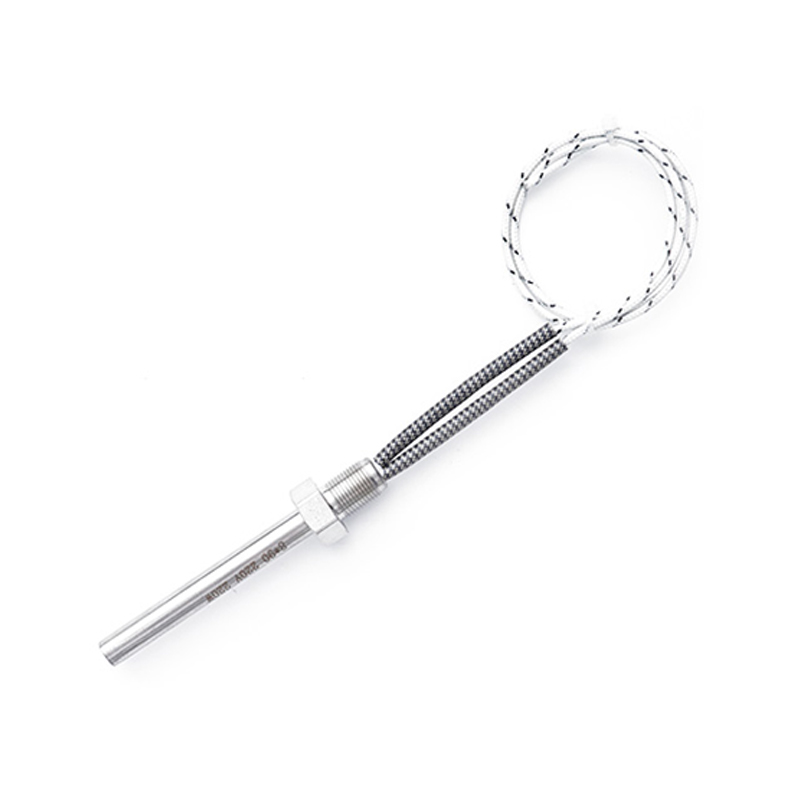
Liquids remove heat quickly and allow 3.0-5.0 W/cm². Threaded or flange fittings seal the tank, and a low-liquid-level cutoff prevents dry firing. Copper or stainless sheaths cover most water duties.
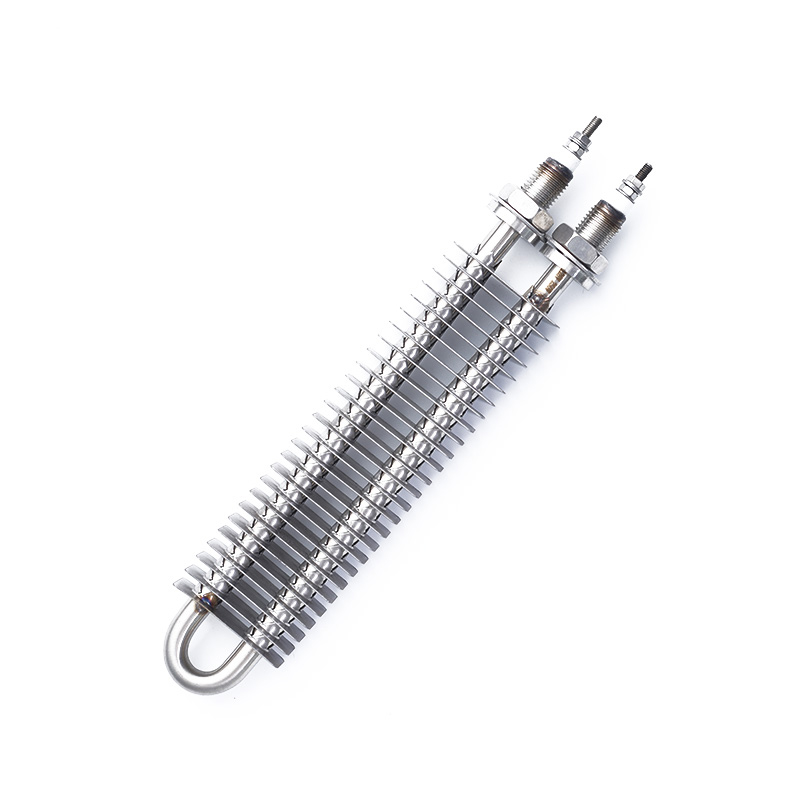
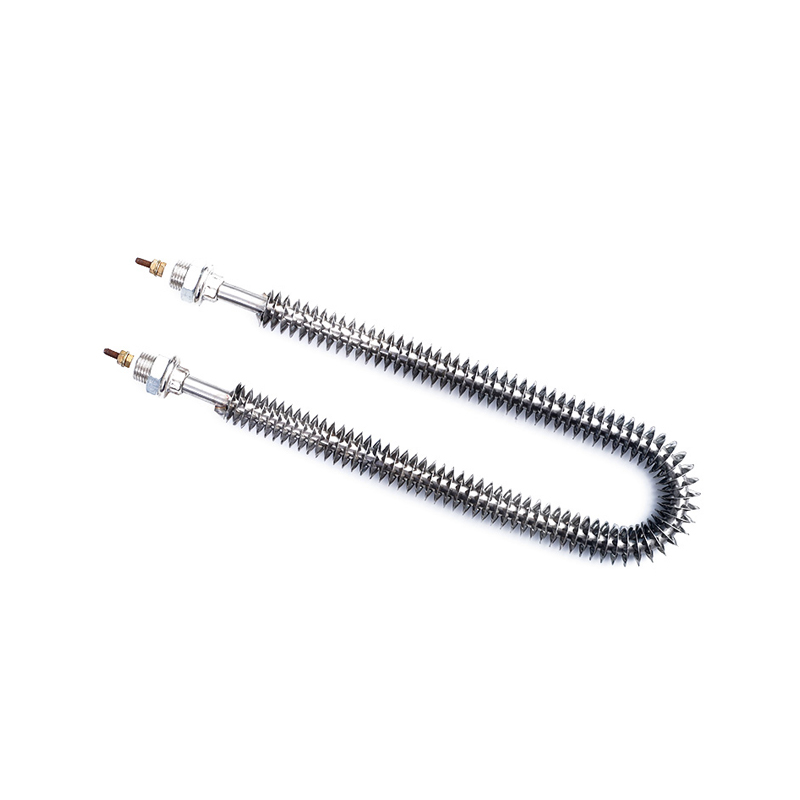
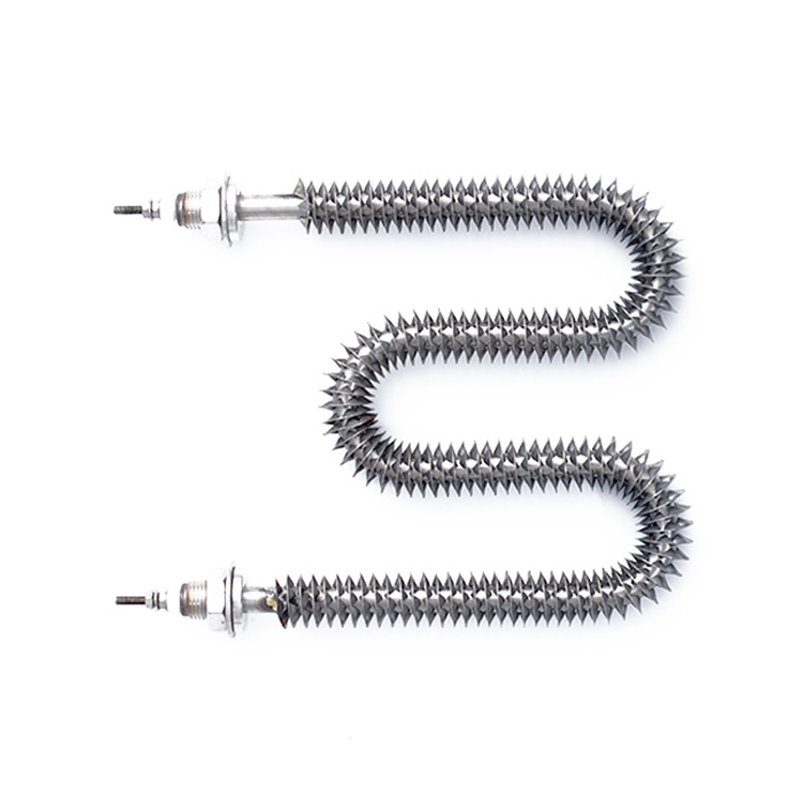
For ovens, drying cabinets, and duct systems, a finned air heating tube maximizes the exchange surface and keeps the sheath cool enough for a long service life.
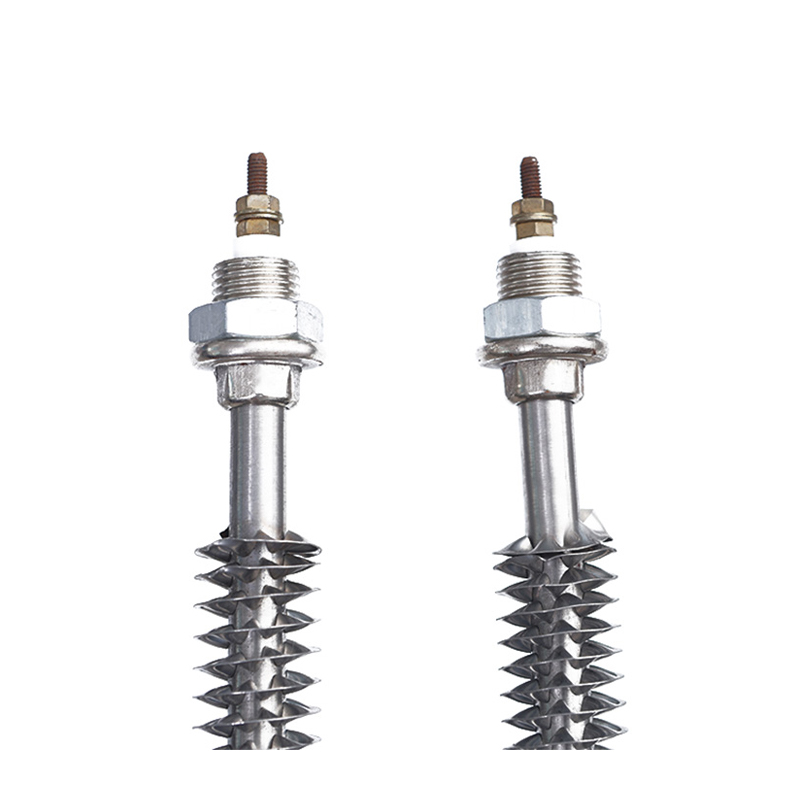 U-Shaped Finned Heating Tube for Air Ducts and OvensDesigned for ovens, drying cabinets, and duct systems, this finned tube maximizes heat exchange surface while keeping the sheath cool for extended service life. Its U-shape and fins improve heat distribution and energy efficiency.View Product →
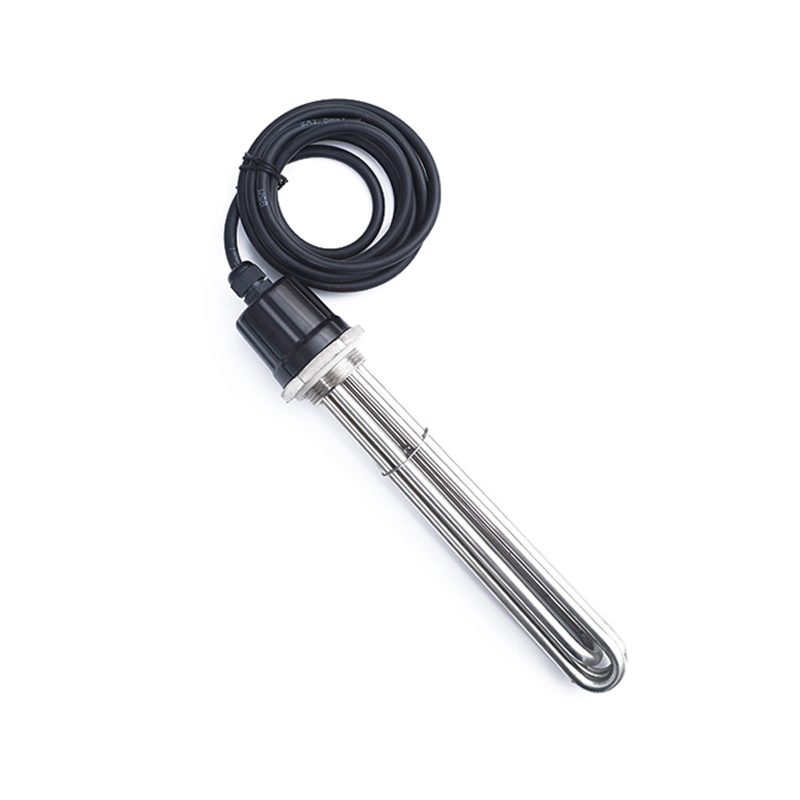
For wash tanks and process water, a threaded or flange immersion heater delivers the same capacity through a sealed tank entry.
Threaded Immersion Heater for Water Tanks and Process WaterThis threaded heater suits wash tanks and process water applications, delivering reliable capacity through a sealed tank entry. It offers high-efficiency heating with precise temperature control and safety protections for continuous water supply.View Product →
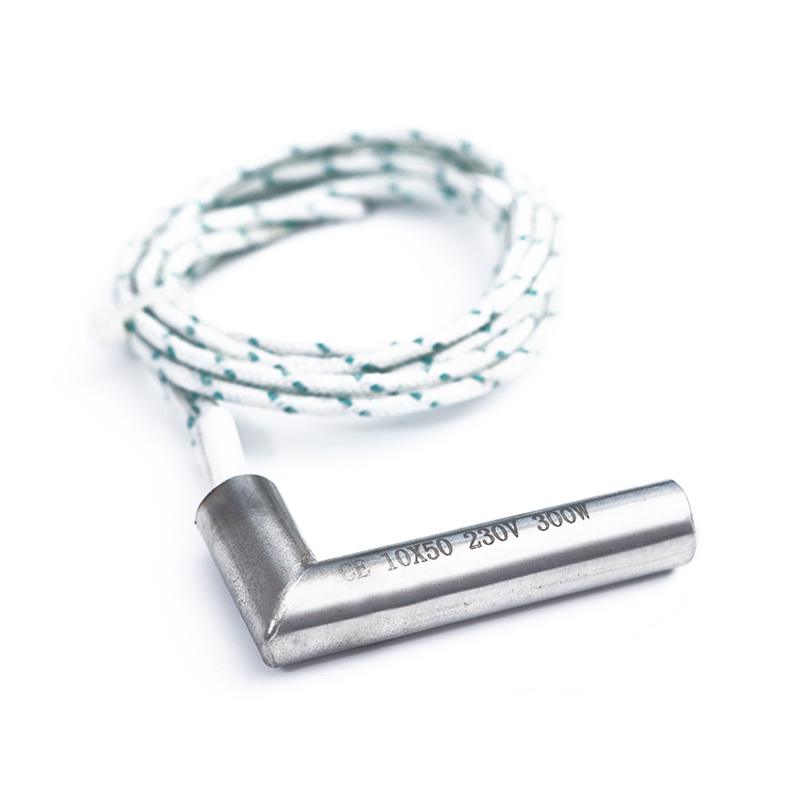
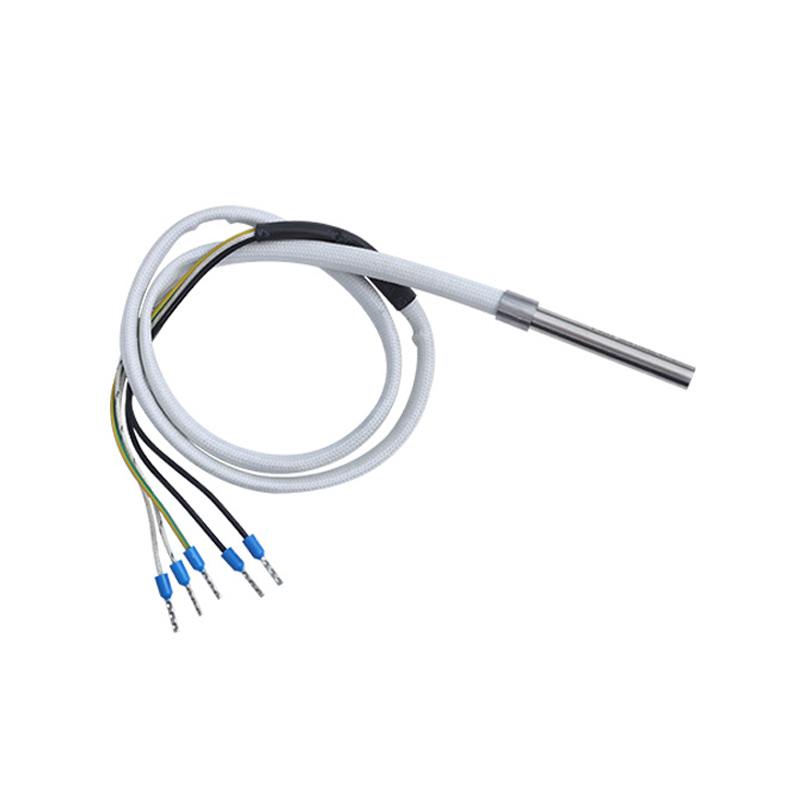
For injection molds, the element becomes a cartridge heater with a controlled outer diameter tolerance so the bore grips the sheath and heat flows into the mold steel.
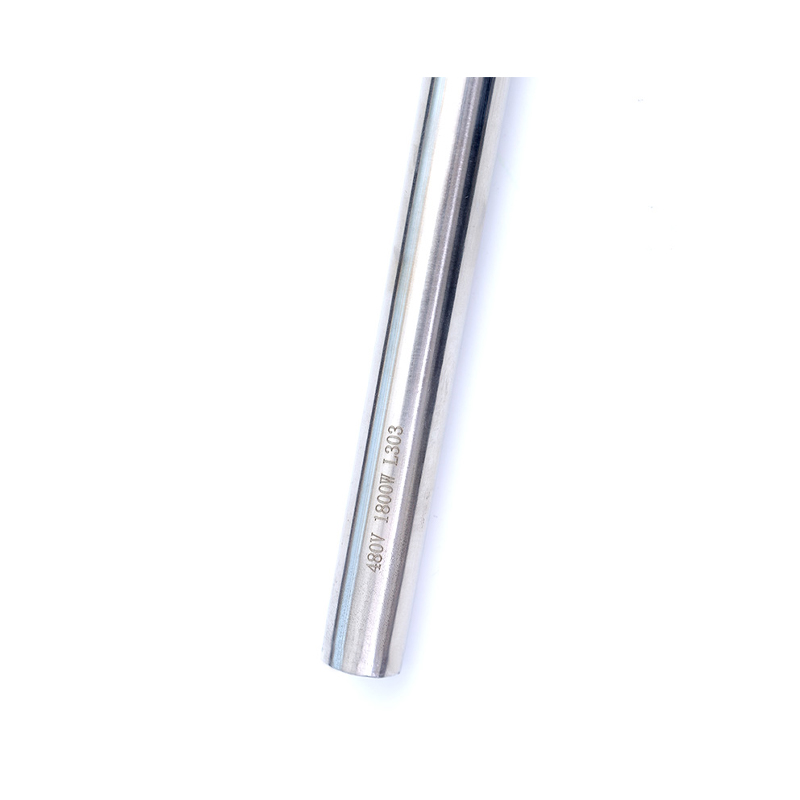 Cartridge Heater with Fixed Blocking Plate for Injection MoldsThis cartridge heater features a controlled outer diameter tolerance so the bore grips the mold sheath, ensuring efficient heat transfer. Its fixed blocking plate enhances stability and even heat distribution, ideal for injection molds.View Product →
Oil is the exception: even with a flange mount, keep watt density at 1.0-1.5 W/cm² because oil carbonizes above roughly 300 °C sheath temperature.
Most tubular heater failures originate in operating conditions rather than in the resistance wire: dry firing, scale accumulation, overvoltage, and vibration.
Prevention is straightforward: fit a low-liquid-level cutoff, add a thermostat with an over-temperature limit, descale on a fixed schedule, and lock the watt density to the medium. These four measures address the cause of more than 80 percent of premature element failures.
The most common root cause of early burnout is specifying the element by wattage alone without a watt density check: one line of calculation that takes about 30 seconds.
Use 1.5 to 2.5 W/cm². Still air removes heat slowly, so anything above 2.5 W/cm² drives the sheath beyond the safe operating limit unless fins are added.
No. Water allows roughly twice the watt density of oil. An element sized for water will carbonize oil and burn out quickly, so the watt density must be matched to the specific liquid.
With correct watt density and sheath material, tubular heaters typically run 10,000 to 30,000 hours. The dominant variable is sheath temperature: every 50 °C reduction roughly doubles element life.
A cartridge heater is the cylindrical form of a tubular heater, built with a tight outer diameter tolerance for insertion into drilled bores in mold steel. Both share the same MgO-insulated construction.
If the medium, target temperature, and duty cycle are uncertain, send those three facts to our engineering team before ordering; the correct sheath and watt density choice starts from them. Contact the Yading engineering team.
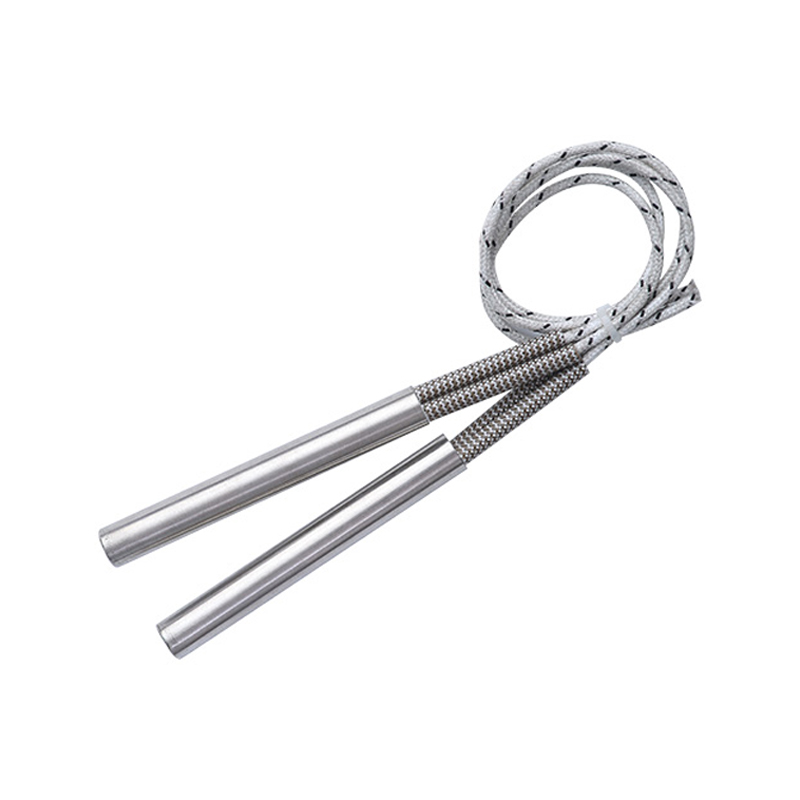
Electric Heating Tube Selection: Watt Density, Sheath Materials & Form Factors
Nov 11,2026
No previous article
Jan 01,1970Your email address will not be published. Required fields are marked *