

 English
 русский
 عربى

Product Consultation
Your email address will not be published. Required fields are marked *

An industrial air heater tube rated at 15 W/in² and installed in a duct with only 2 m/s airflow will often burn out before its first annual maintenance shutdown. Move the same element down to 8 W/in², add fins, and it can hold the outlet temperature for years. That watt-density-versus-airflow trade-off is the decisive calculation in a reliable industrial air heating system.
This guide covers how industrial air heater tubes are built, which specifications to verify before ordering a replacement, and why finned tubes have become the default for forced-air processes.
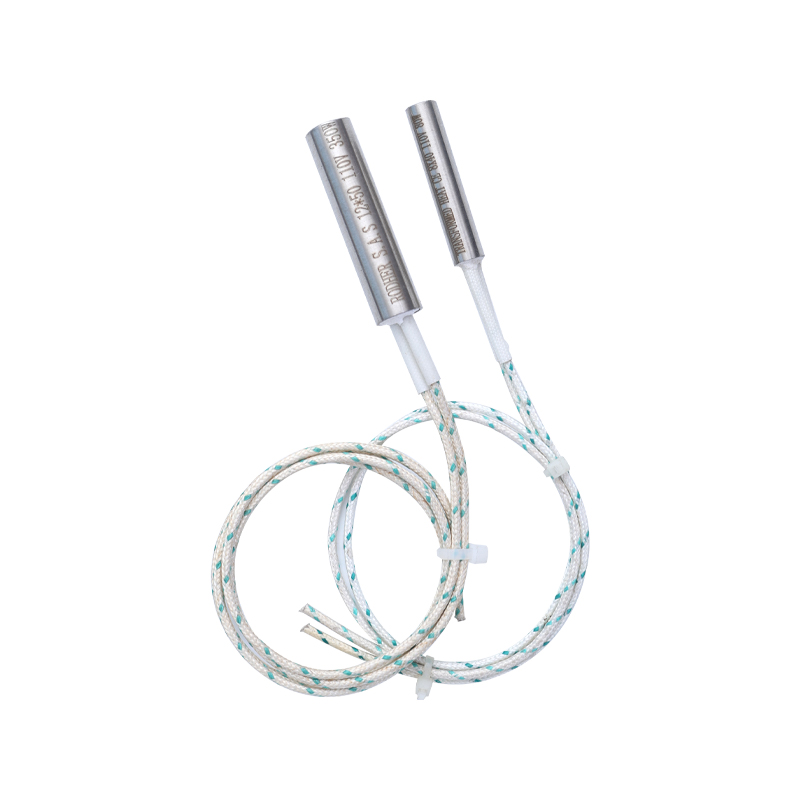
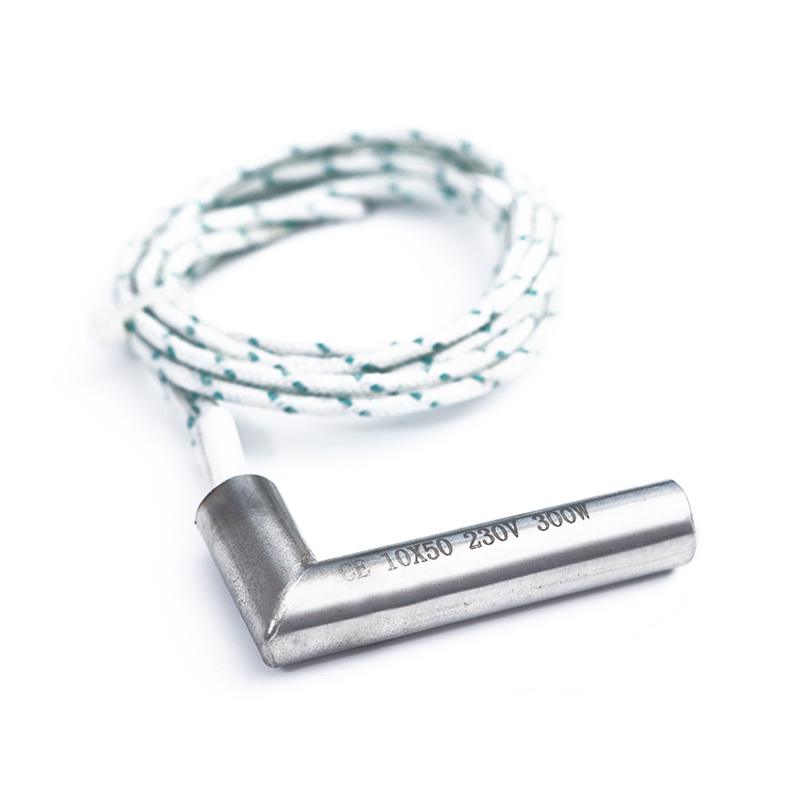
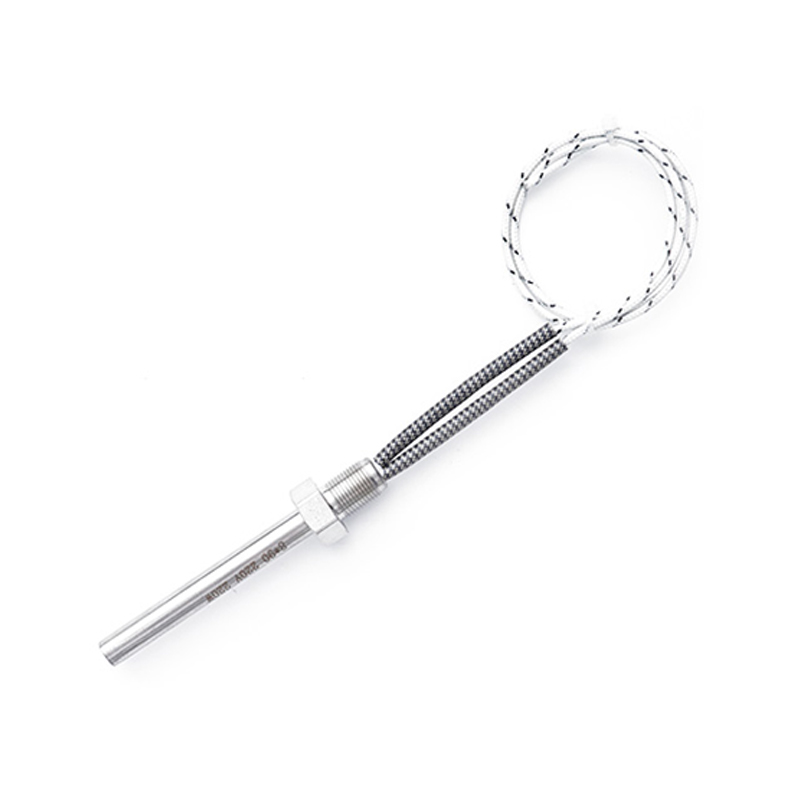
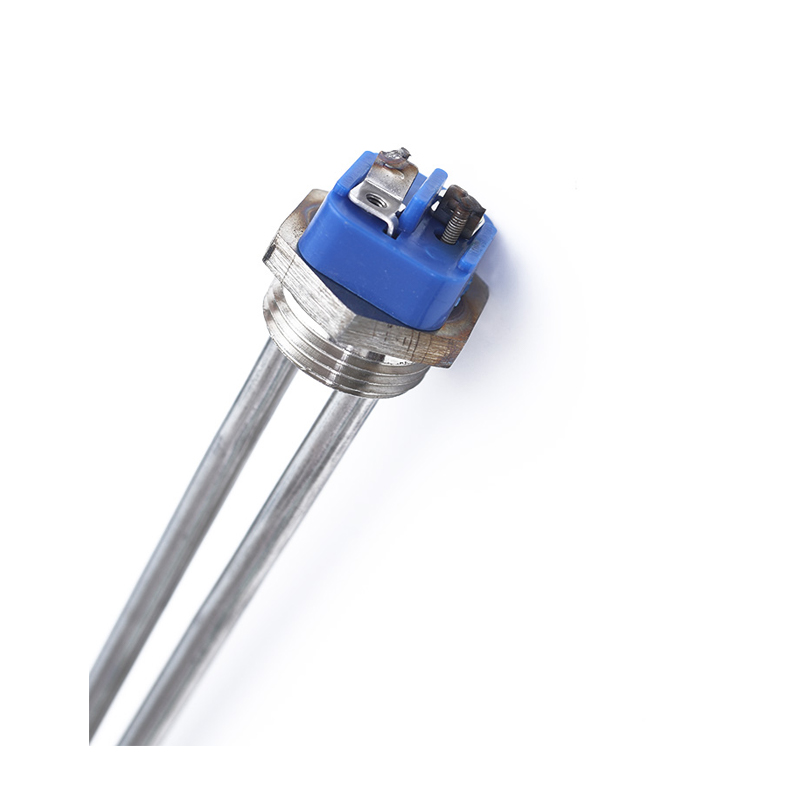
An industrial air heater tube is a sealed electric heating element that transfers heat to an air or gas stream through a metal sheath, with no live electrical parts exposed to the flow. Inside the sheath, a coiled 80/20 nickel-chromium resistance wire carries the current, and compacted magnesium oxide powder provides both electrical insulation and a thermal bridge from the wire to the tube surface.
Watt density is the heat release rate per square inch of heated sheath area, expressed in W/in² or W/cm². It sets the sheath temperature and therefore the useful life of the element, so it is the first number to check on any air heater datasheet.
The quality of that magnesium oxide fill separates a reliable element from a cheap one. Xinghua Yading Electric Heating Element Co., Ltd. (Yading), a Chinese manufacturer with 30 years of heating element production history, compacts the MgO under controlled pressure so the heated zone stays uniform over the full tube length. The factory produces more than 500,000 heating elements per year and exports to more than 25 countries, which is the kind of scale that keeps unit pricing realistic for OEM buyers.
Watt density, sheath material, and airflow velocity determine service life before the heater is ever switched on. Raise watt density and the sheath temperature climbs; the resistance wire inside suffers accelerated oxidation as a result.
Every 100°C rise in sheath temperature roughly halves the life of the resistance wire.
Sheath material comes next. The table below lists the common grades and their continuous operating limits for air heating duty.
| Sheath material | Max continuous tube temperature | Typical application |
| 304 stainless steel | 750°C | Duct heaters, drying ovens, packaging machinery |
| 310 stainless steel | 1000°C | High-temperature furnace and kiln air |
| Incoloy 800 | 850°C | Cyclic thermal stress, mildly corrosive air |
| Copper, tin-plated | 200°C | Cleanroom and specialized low-temperature air |
Airflow is the cooling medium. A bare tube sees about 15 W/m²K of convective heat transfer at 1 m/s; at 5 m/s that figure climbs to roughly 45 W/m²K. A tube sized for 5 m/s will overheat quickly if the fan slows down or the intake filter loads up. Choose the lowest watt density that still fits the physical envelope; oversizing the sheath area is always cheaper than replacing elements twice as often.
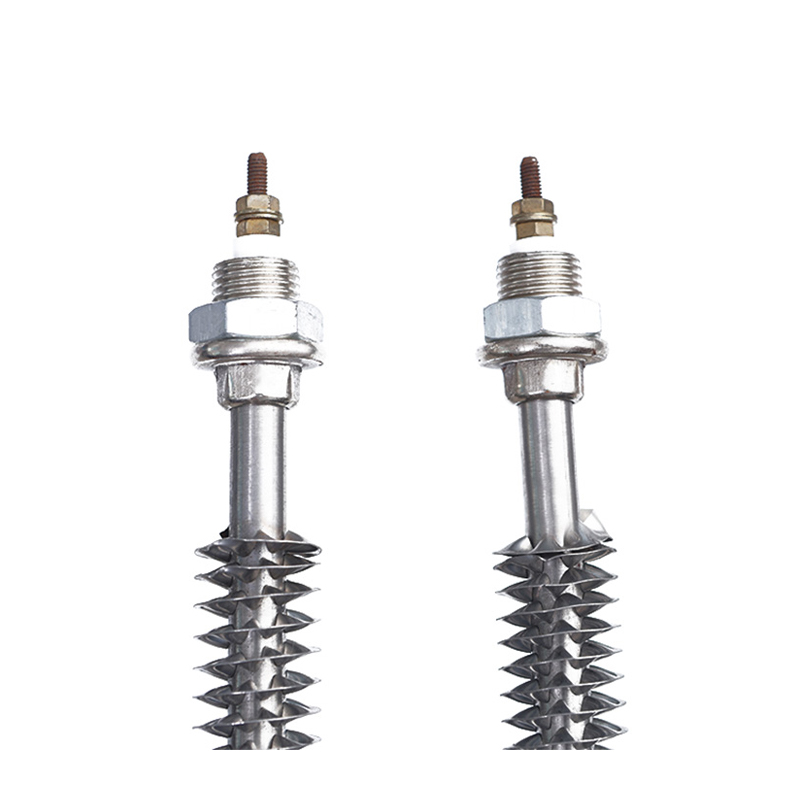
Finned air heater tubes are the correct choice for almost every forced-air and duct heating process; unfinned tubes should be reserved for radiant heating, natural convection, or air streams heavy with dust and lint.
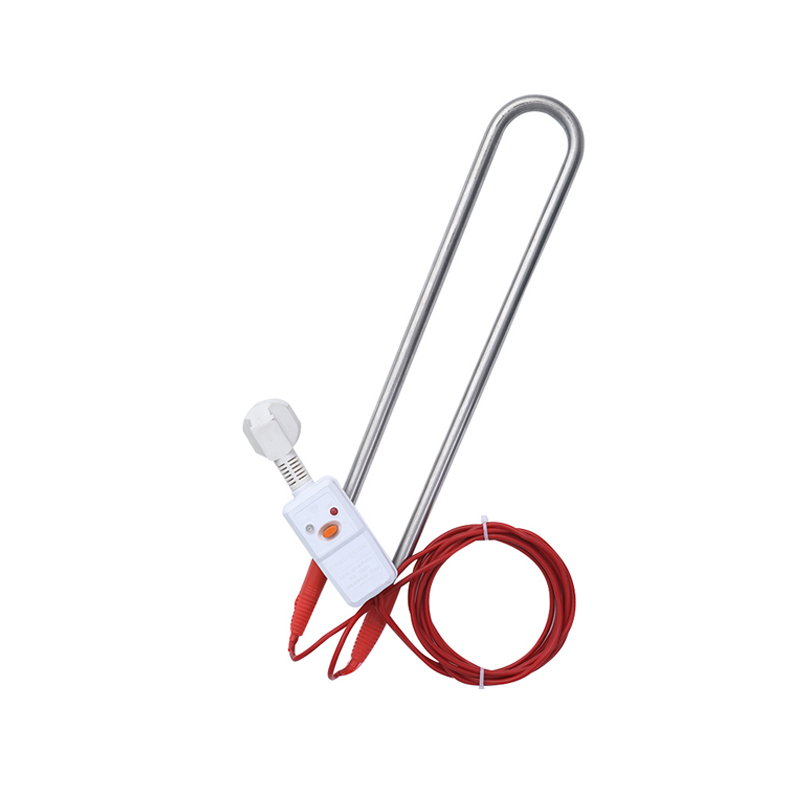
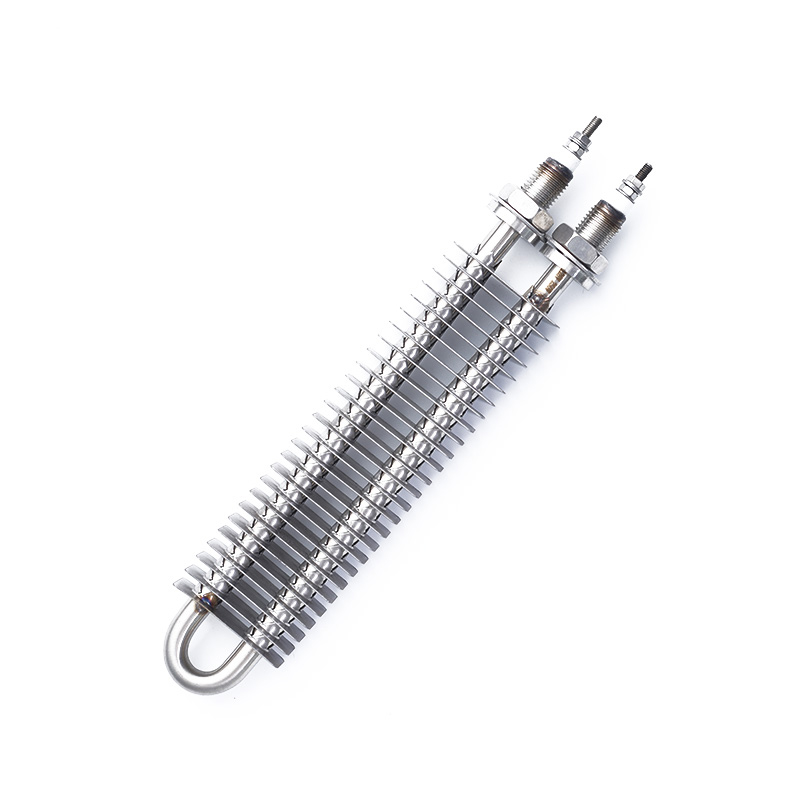
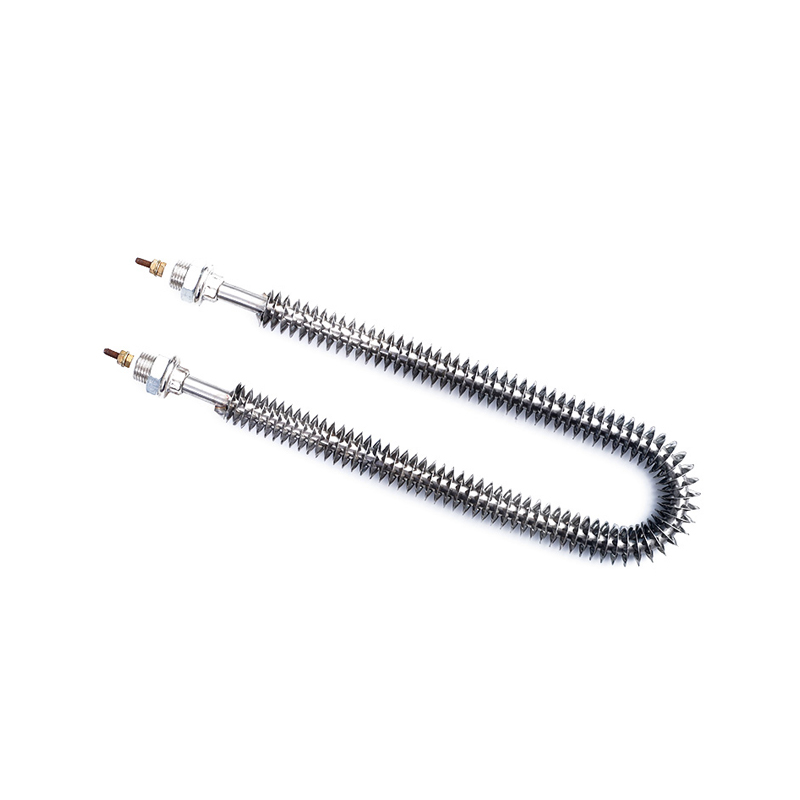
The heat transfer advantage is well documented: finned air heating tubes are the preferred solution for efficient heat dissipation in industrial ducts. Verify fin spacing against your air cleanliness before ordering. For duct banks with a tight flange footprint, a U-shaped finned tube packs more heated length into the same opening.
 U-Shaped Finned Heating Tube for Compact Duct BanksThis U-shaped finned tube packs more heated length into tight flange openings, making it ideal for duct banks with limited space. Its design maximizes heat exposure and even distribution, reducing energy costs while maintaining durability in demanding industrial environments.View Product →
Industrial air heater tubes appear wherever process air must reach a controlled temperature quickly and hold it: duct heaters, convection ovens, drying hoppers, packaging lines, and test chambers.
Most installations mount several tubes in a flange frame or slide them directly into a rectangular duct. Total installed power is the sum of the individual ratings, so a single failed tube can be replaced without re-engineering the bank. In drying hoppers, tubes are often mounted radially so the airflow sweeps the full heated length evenly, and packaging machinery typically uses shorter tubes at higher watt density because the sealing bar cycles on and off.
For round ducts, an O-type air heating tube matches the circular cross-section and smooths the flow around the heated length.
O-Type Air Heating Tube for Round DuctsDesigned to match circular duct cross-sections, this O-type tube smooths airflow around the heated length. It offers rapid heating, corrosion resistance, and precise temperature control, suitable for dryers, HVAC systems, and experimental equipment.View Product →Selection reduces to six numbers: required kilowatts, airflow in cubic meters per second, inlet air temperature, target outlet temperature, supply voltage, and the physical envelope of the duct. Work through them in order.
Spring-type air heating tubes add layout freedom when the duct geometry is irregular, because the coiled form follows curved or tight plenums without kinking the internal resistance wire.
 Spring Air Heating Tube for Irregular Duct GeometriesThe coiled spring design increases heat exchange area and follows curved or tight plenums without kinking the resistance wire. It provides uniform rapid heating for dryers, food baking, and chemical processes, with easy installation and maintenance.View Product →
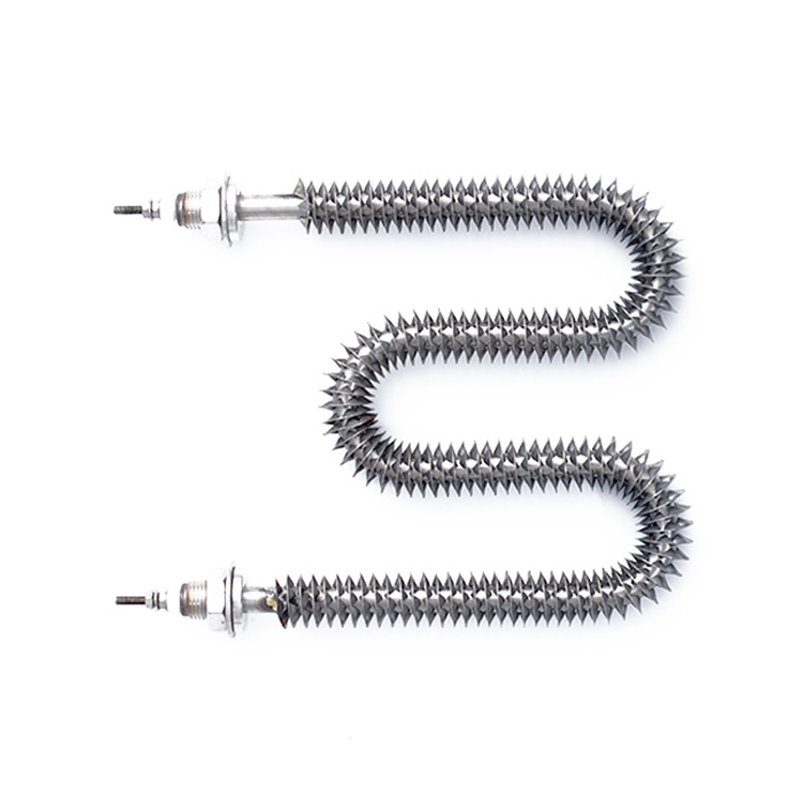
If your process needs more than 25 W/in², grow the duct or the airflow instead of accepting a short element life. Yading produces W-shaped, I-shaped, O-shaped, and square-finned tubes, and its engineering team handles non-standard bend radii as routine work. Send your duct dimensions and airflow data via the contact page for a verified heating calculation.
Four failure modes account for most industrial air heater tube replacements: contamination, low airflow, loose terminations, and overvoltage. Each one pushes the sheath above its intended operating temperature.
Wiring checks matter as much as thermal checks. A loose lug on one phase of a three-phase heater creates an unbalanced load, so one tube draws more current while the other two run cool; mark and re-torque every connection at each maintenance interval.
Preventive maintenance rule: inspect air filters monthly, measure voltage at the heater terminals under load, re-torque terminals every quarter, and blow fins clean with compressed air at every scheduled shutdown.
304 stainless steel tubes run continuously to about 750°C; 310 grade reaches 1000°C. For process air above 400°C, use 310 or Incoloy 800 and keep watt density below 20 W/in² to slow oxide growth on the sheath.
Compare nameplate power with the heated surface area. Still air accepts up to 8 W/in²; finned tubes in 3 m/s forced air accept up to 25 W/in². A failed element rated above these figures was almost certainly overworked.
No. Fins trap combustible dust and solvent vapors that can auto-ignite on a hot sheath. For classified areas, use smooth-sheath elements at lower watt density or a certified explosion-proof duct heater with a limited surface temperature.
Below 1.5-2 m/s the fins lose most of their benefit and the element behaves like a natural-convection heater. Lower the watt density, add baffles to raise velocity across the tube surface, or switch to an unfinned radiant tube.
Electric Tubular Heater Selection Guide: Watt Density, Sheath Metals, and Service Life
Nov 18,2026
No previous article
Jan 01,1970Your email address will not be published. Required fields are marked *