

 English
 русский
 عربى
عربى
Product Consultation
Your email address will not be published. Required fields are marked *
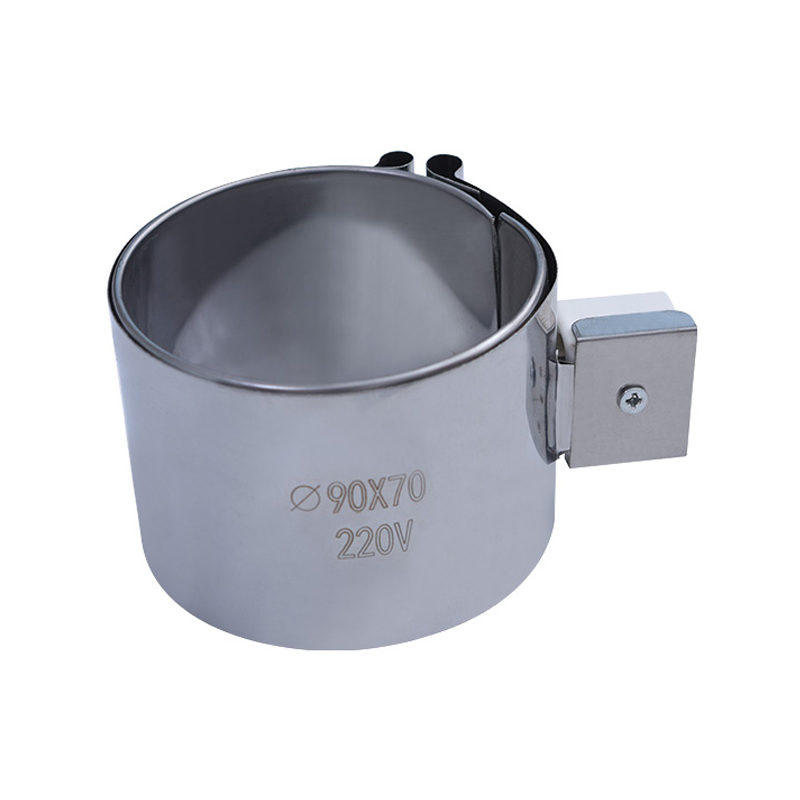
Stainless band heater stands out as a reliable and durable heating component widely adopted in modern industrial production. It can maintain stable heating output under long-duration high-temperature working conditions, with service life far exceeding ordinary heating accessories. This heating part takes stainless steel as outer protective shell, combines internal heating wire and insulating materials, and realizes efficient heat conduction and uniform heat radiation. Compared with traditional heating devices, it boasts outstanding anti-corrosion property, strong structural toughness and convenient installation mode, perfectly adapting to diverse high-intensity heating demands in manufacturing, plastic processing, chemical industry and mechanical matching fields.
In actual industrial operation, stainless band heater can quickly raise the surface temperature of matched equipment, effectively avoid local overheating or insufficient heating problems. Its closed structural design can isolate dust, moisture and corrosive gas in the working environment, greatly reducing failure probability caused by external interference. For continuous production lines that need non-stop heating support, this type of band heater can keep steady running state, cut down frequent replacement frequency and lower overall operational cost of production equipment.
The outermost layer adopts high-quality stainless steel material, which forms the main bearing and protection structure of the whole heater. This material has fine metal ductility, can be closely wrapped on the outer wall of cylindrical equipment, and will not deform easily under extrusion and vibration. Meanwhile, stainless steel material resists oxidation at high temperature, will not rust and crack after long-term use, and can resist erosion of weak acid and weak alkaline substances in conventional industrial environment.
Inside the stainless steel shell lies the core heating wire, which is arranged in regular layout to guarantee even heat release. High-performance insulating filler is filled between heating wire and outer shell. The insulating material can block electric leakage risk, isolate heat conduction towards outer shell excessively, and concentrate heat energy on the equipment surface that needs heating. Qualified internal assembly structure can control heat loss rate within reasonable range and improve thermal utilization efficiency remarkably.
Matching fixed fasteners and wiring terminals are configured on both sides of the band heater. The fastening structure enables operators to finish disassembly and fixation rapidly without complex tools. The wiring part follows safe electrical design standards, fits common industrial power supply access modes, and ensures smooth power transmission and safe electrified operation during heating process.
The working operation of stainless band heater relies on electric thermal conversion principle. After accessing stable power supply, current passes through internal heating wire with specific resistance value, and electric energy converts into thermal energy under resistance effect. The generated heat transfers inward layer by layer through insulating medium, and acts on the surface of wrapped industrial equipment.
In the whole heat transfer process, the stainless steel outer shell plays a role in balancing temperature distribution. It diffuses local concentrated heat uniformly, making the heated equipment surface obtain consistent temperature. When the equipment reaches preset working temperature, matched temperature control components can cooperate with the band heater to adjust power input automatically, maintain temperature in stable interval, and avoid material damage or processing quality defect caused by excessive temperature fluctuation.
In frequent start-stop working scenes, the heating wire can respond to power changes quickly, realize rapid temperature rise and gentle temperature drop. The overall structural coordination makes the heating process controllable and predictable, meeting the precise heating requirements of different production processes.
| Applied Industry | Heating Target | Core Heating Demand |
|---|---|---|
| Plastic Industry | Machine Barrel | Uniform Melting Heating |
| Chemical Industry | Transport Pipeline | Anti-solidification Heating |
| Rubber Industry | Forming Roller | Vulcanization Constant Temperature |
Before selection, measure the outer diameter of heated equipment accurately. The inner diameter of stainless band heater needs to fit closely with equipment surface. Excessive gap will lead to poor heat conduction, while too-tight size will cause installation difficulty and shell extrusion damage. Reasonable size matching can maximize heat contact area and guarantee heating efficiency.
Focus on stainless steel material grade and internal heating wire quality. In high-temperature and corrosive working environment, prefer materials with stronger oxidation resistance. Heating components stably working under long-time high temperature can effectively reduce aging speed and extend overall service cycle. Avoid choosing thin and inferior shell materials which are easy to deform and damage.
Select matching power specification according to actual heating speed and temperature upper limit required by production process. Low power cannot meet rapid heating demand, while excessive power easily causes temperature out of control. Combine daily working environment temperature and equipment heat dissipation condition to pick band heater with suitable temperature adaptation scope.
Cut off power supply completely before daily maintenance. Clean dust, residual raw material and oil stain attached on stainless steel surface regularly. Long-time accumulated dirt will hinder heat dissipation and even cause local overheating burnout. Check shell surface for abrasion and corrosion marks, replace damaged parts timely to prevent internal structure exposure.
Mechanical vibration in production process may loosen fastening parts of band heater. Regularly check binding tightness to keep close fitting state between heater and equipment. Inspect wiring connection position, process loose wiring and aging insulating sheath promptly, guarantee safe and unobstructed power supply loop.
Do not start heating operation when the heater is not installed in place. Avoid frequent violent start and stop operation in short time, which will impact internal heating wire and shorten service life. Stop operation immediately once abnormal heating noise, peculiar smell and sharp temperature deviation appear, and carry out fault inspection after power failure.
Good maintenance habits can effectively reduce equipment failure rate. Under standard maintenance mode, the comprehensive use stability of stainless band heater can be greatly improved, and unnecessary production pause loss can be avoided.
As industrial production constantly upgrades towards high efficiency, energy saving and precise control, stainless band heater is also evolving continuously in structural design and performance optimization. New generation products pay more attention to energy conservation transformation, optimize internal heat conduction layout to lower invalid heat loss, and conform to energy consumption reduction requirements of modern factories.
In terms of material application, higher strength and anti-corrosion alloy stainless materials are gradually applied, adapting to more harsh high-temperature and corrosive working environments. The matching temperature induction and intelligent adjustment structure are combined with band heater, realizing automatic temperature monitoring and dynamic power regulation, further promoting heating precision and operation intelligence level.
Meanwhile, the product specification series becomes more abundant, covering small miniature heating accessories and large-size heating parts for industrial large-scale equipment. The convenient disassembly and modular design will further simplify later maintenance and replacement work, making stainless band heater adapt to more diversified industrial heating scenes and maintain indispensable application value in mechanical processing and material production fields.
What Core Parameters Must Be Considered When Selecting an Immersion Flange Heater?
May 08,2026
What Makes a Versatile Thermocouple the Best Temperature Sensor?
May 22,2026Your email address will not be published. Required fields are marked *