

 English
 русский
 عربى
عربى
Product Consultation
Your email address will not be published. Required fields are marked *
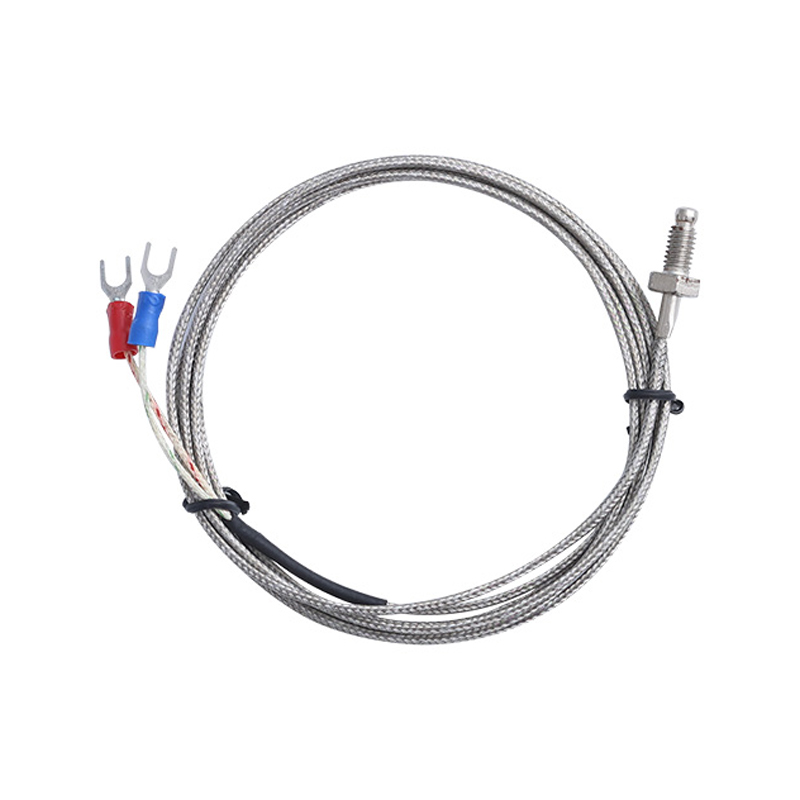
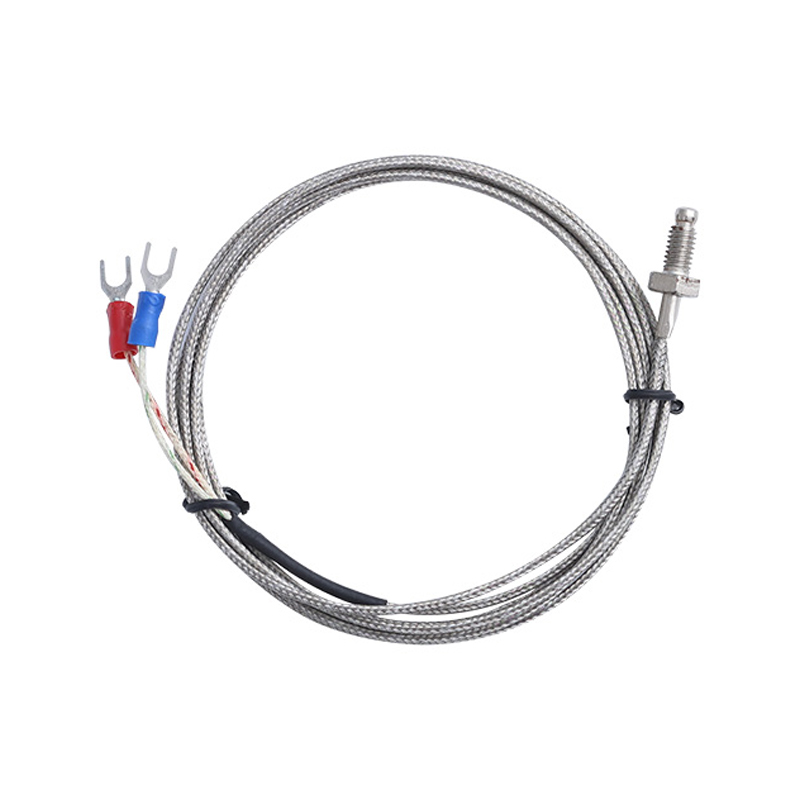
A thermocouple is the most widely used temperature sensor in industrial process control, electric heating systems, and manufacturing equipment. Its operating principle is straightforward: two dissimilar metal wires joined at one end (the measuring junction) generate a small voltage proportional to the temperature difference between the measuring junction and the reference end (the cold junction). This thermoelectric voltage — the Seebeck effect — is measured by the connected instrument, which converts the voltage reading to a temperature value based on the standardized thermocouple calibration curve for that thermocouple type.
The critical practical point for engineers, equipment designers, and procurement teams is that "thermocouple" is not a single product — it is a family of standardized sensor types, each defined by a specific pair of alloy wires and each with a distinct temperature range, output sensitivity, chemical compatibility, and accuracy profile. Specifying a thermocouple for an industrial heating application means selecting the correct type for the temperature range, the process environment, and the accuracy requirement — selecting the wrong type produces inaccurate temperature readings or early sensor failure, both of which degrade process quality and increase maintenance cost.
This guide explains the main standardized thermocouple types, compares their key performance parameters, and provides a practical framework for matching thermocouple type to application requirements.
Thermocouple types are standardized internationally — the IEC 60584 standard defines the reference tables (EMF vs. temperature relationships) for the main letter-designated thermocouple types used globally. ANSI/ASTM E230 is the equivalent US standard, and DIN EN 60584 is the European harmonized standard. Each thermocouple type is designated by a single capital letter (K, J, T, E, N, R, S, B, C) that identifies the specific alloy pair used for its two conductors. Because the letter designations and the reference tables are internationally standardized, a Type K thermocouple from one manufacturer and a Type K thermocouple from another manufacturer are interchangeable in the same temperature instrument — as long as both are manufactured to the standard calibration table.
Within each thermocouple type, accuracy tolerances are defined in two or three classes (Class 1, Class 2, Class 3 per IEC 60584-2), where Class 1 is the tightest tolerance and Class 3 applies to lower temperature ranges. The class selected should match the accuracy requirement of the process — specifying Class 1 where Class 2 is adequate adds unnecessary cost; using Class 2 in a precision process where Class 1 is needed produces inaccurate temperature control.
Type K is the most widely used thermocouple type globally — its combination of wide temperature range, adequate accuracy, good oxidation resistance, and low cost makes it the default specification for the majority of industrial temperature measurement applications where no specific property of another type is required.
Temperature range: –200°C to +1,260°C (continuous service up to +1,100°C recommended for wire gauges typically used in industrial thermocouples). Output sensitivity approximately 41 µV/°C at 500°C.
Wire alloys: Positive conductor — Chromel (approximately 90% nickel, 10% chromium); Negative conductor — Alumel (approximately 95% nickel, 2% manganese, 2% aluminum, 1% silicon).
Strengths: Wide temperature range; good resistance to oxidizing atmospheres; stable calibration over long service periods in clean environments; good linearity across most of its range; lowest cost of the common types; widest availability of compatible instruments, connectors, and extension wire.
Limitations: Subject to "green rot" corrosion in low-oxygen, sulfur-containing atmospheres — the chromium in the positive conductor selectively oxidizes in these conditions, causing calibration drift. Not suitable for use in reducing, sulfurous, or vacuum environments without protection. Exhibits hysteresis in the 300–600°C range (minor calibration cycling effect).
Best for: General industrial process temperature measurement; electric heating element surface and process temperature monitoring; oven and furnace temperature control; plastics processing (injection molding, extrusion) barrel and hot runner temperature; food processing and drying equipment; HVAC and air handling systems; any standard industrial application where a specific property requirement does not mandate another type.
Type J was one of the earliest standardized thermocouple types and remains in widespread use, particularly in existing industrial equipment where it was the original specification, and replacement maintains calibration compatibility.
Temperature range: –40°C to +750°C (limited upper range compared to Type K; above 760°C, the iron conductor oxidizes rapidly). Output sensitivity approximately 55 µV/°C at 300°C — slightly higher sensitivity than Type K in its working range.
Wire alloys: Positive conductor — iron; Negative conductor — Constantan (copper-nickel alloy, approximately 55% copper, 45% nickel).
Strengths: Higher output sensitivity than Type K in the low-to-medium temperature range; suitable for use in reducing or vacuum atmospheres (where Type K's chromium conductor is problematic); widely supported by legacy industrial instrumentation; lower cost than noble metal types.
Limitations: Iron conductor rusts in humid environments — not suitable for unprotected use in humid or wet conditions without a stainless steel protection sheath; oxidizes rapidly above 760°C; shorter service life than Type K in oxidizing environments at moderate temperatures due to iron oxidation; being gradually replaced by Type N in new applications.
Best for: Low-to-medium temperature industrial processes; reducing or vacuum atmosphere applications; replacement in existing equipment originally specified with Type J; plastic injection molding equipment (historical specification); heat treating and annealing furnaces operating below 750°C.
Type T is specifically suited to low and cryogenic temperature measurement — its copper-Constantan alloy combination performs reliably at temperatures down to –270°C (cryogenic) while also being suitable for use up to +350°C in standard industrial applications.
Temperature range: –270°C to +400°C. Output sensitivity approximately 46 µV/°C at 100°C.
Wire alloys: Positive conductor — copper; Negative conductor — Constantan.
Strengths: Excellent accuracy and stability at low temperatures; suitable for cryogenic applications; resistant to moisture and mild corrosion; good stability in both oxidizing and reducing atmospheres; highest accuracy of the base-metal thermocouple types in the –200°C to +350°C range.
Limitations: Upper temperature limit of 400°C restricts use to low-temperature applications; copper conductor has high thermal conductivity, which can cause conduction errors in applications with steep temperature gradients.
Best for: Cryogenic and low-temperature measurement; food refrigeration and freezer temperature monitoring; pharmaceutical cold chain monitoring; laboratory and scientific applications requiring precision at low temperatures; moisture-resistant temperature sensing in HVAC and building automation systems.
Type E has the highest output sensitivity (EMF per degree) of any of the common standardized thermocouple types — approximately 68 µV/°C at 300°C — making it the best choice for applications where maximum signal strength is needed to minimize instrument sensitivity requirements or where small temperature differences must be resolved accurately.
Temperature range: –200°C to +900°C. Non-magnetic (both conductors are non-magnetic alloys).
Wire alloys: Positive conductor — Chromel; Negative conductor — Constantan.
Strengths: Highest sensitivity of standard base-metal types; non-magnetic construction is important in applications near strong magnetic fields; good oxidation resistance; stable calibration.
Limitations: Not suitable for reducing or vacuum atmospheres (Chromel conductor); less widely available than Type K or J in some markets; marginally higher cost than Type K.
Best for: Applications requiring maximum sensitivity at low temperature differences; magnetic field environments where iron-conductor types are unsuitable; sub-zero temperature measurement with high sensitivity.
Type N was developed as a higher-stability alternative to Type K, addressing some of Type K's known calibration stability limitations at elevated temperatures. It uses alloys specifically formulated to minimize the calibration drift mechanisms (short-range ordering, selective oxidation) that affect Type K above 300°C.
Temperature range: –200°C to +1,300°C. Output sensitivity approximately 39 µV/°C at 600°C.
Strengths: Better long-term calibration stability than Type K at temperatures above 300°C; better resistance to high-temperature oxidation than Type K; more resistant to hysteresis in the 300–600°C range.
Best for: High-temperature industrial processes where long-term calibration stability is critical; replacement of Type K in applications where drift is a recurring maintenance issue; furnaces and kilns operating in the 600–1,200°C range.
Types R and S are noble metal thermocouples — both use platinum-based alloys (Type R: 13% Rhodium/Platinum positive; Type S: 10% Rhodium/Platinum positive; both use pure platinum negative conductor). Their noble metal construction gives them stability and accuracy characteristics that base-metal types cannot match, at significantly higher cost.
Temperature range: 0°C to +1,600°C (Type R and S). Type B (30% Rh/Pt / 6% Rh/Pt) extends to +1,700°C.
Strengths: High-temperature capability to 1,600°C; excellent calibration stability at elevated temperatures; high accuracy (Class 1 tolerance ±1°C or 0.25%); suitable for use in oxidizing and inert atmospheres; the international temperature scale ITS-90 uses Type S as one of its defining interpolation instruments between 630.74°C and 1,064.43°C.
Limitations: Very high cost (platinum-rhodium alloy cost); low output sensitivity (approximately 10 µV/°C at 1,000°C — requires sensitive instrumentation); susceptible to contamination from reducing gases and metal vapors (must be protected with ceramic or platinum sheaths in most industrial environments); fragile — cannot be used unprotected in mechanical shock or vibration environments.
Best for: Glass manufacturing furnaces; ceramic kilns; precious metal processing; laboratory calibration standards; any high-temperature process above the capability of base-metal types where measurement accuracy justifies the cost premium.
| Type | Alloys (+/–) | Max Temp (°C) | Sensitivity (µV/°C) | Atmosphere | Relative Cost | Best Application |
|---|---|---|---|---|---|---|
| K | Chromel / Alumel | 1,260°C | ~41 | Oxidizing / inert | Low | General industrial, plastics processing, ovens |
| J | Iron / Constantan | 750°C | ~55 | Reducing / inert | Low | Reducing atmospheres, vacuum, and legacy equipment |
| T | Copper / Constantan | 400°C | ~46 | Oxidizing/reducing | Low | Cryogenic, food refrigeration, low-temp precision |
| E | Chromel / Constantan | 900°C | ~68 (highest) | Oxidizing / inert | Low-medium | High sensitivity required, non-magnetic environments |
| N | Nicrosil / Nisil | 1,300°C | ~39 | Oxidizing / inert | Low-medium | High-temp stability, Type K replacement for long-term drift |
| R | Pt-13%Rh / Pt | 1,600°C | ~10 | Oxidizing / inert | Very high | Glass, ceramics, high-temp precision measurement |
| S | Pt-10%Rh / Pt | 1,600°C | ~10 | Oxidizing / inert | Very high | Calibration standard, high-temp industrial |
| B | Pt-30%Rh / Pt-6%Rh | 1,700°C | ~6 | Oxidizing / inert | Very high | Highest temperature measurement, molten metal |
Beyond the alloy type, the physical construction of the thermocouple assembly determines its response speed, mechanical robustness, and suitability for different installation environments:
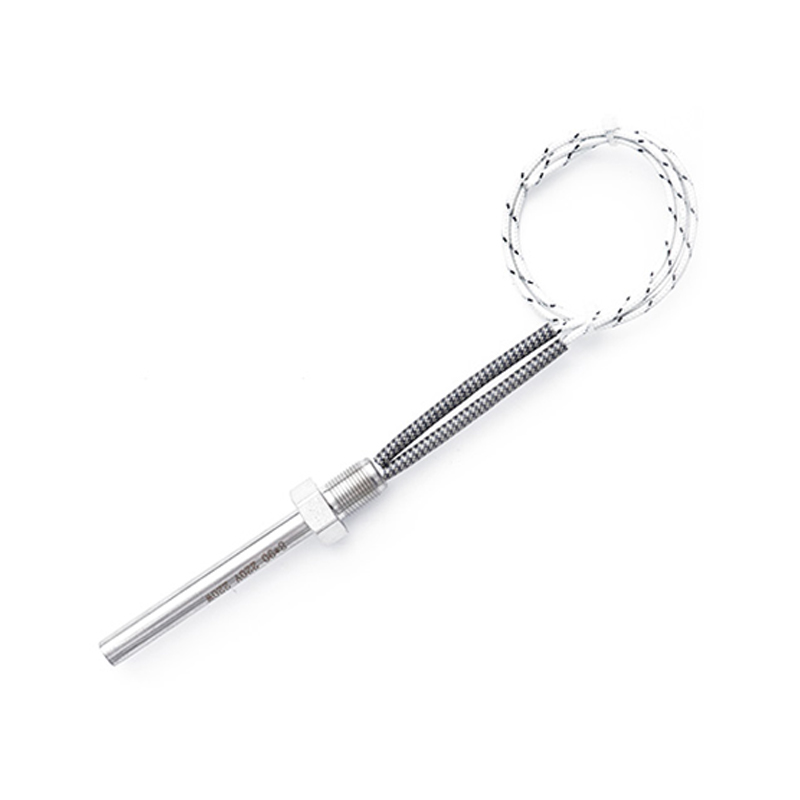
Bare wire thermocouples are the simplest form — the two thermocouple wires are welded at the measuring tip and run unprotected or with basic ceramic insulation. They have the fastest thermal response (no protective mass between the tip and the measured medium) and are used in applications where fast response is critical, and the environment does not require mechanical protection — gas stream temperature measurement, research applications, and short-life process monitoring.
Mineral-insulated metal-sheathed (MIMS) thermocouples (also called MI thermocouples or mineral-insulated cables) consist of thermocouple wires packed in magnesium oxide (MgO) mineral powder inside a seamless metal sheath (stainless steel, Inconel, or other alloys). The MgO insulation provides electrical isolation between the conductors and the sheath, while the metal sheath provides mechanical protection and chemical resistance. MIMS thermocouples are the standard industrial construction — they are robust, vibration-resistant, available in small diameters (1–12mm OD), and can be bent into complex installation geometries. Available with the measuring junction grounded (welded to the sheath for faster response), ungrounded (isolated from the sheath for electrical isolation), or exposed (projecting beyond the sheath for fastest response).
Thermowell-mounted thermocouples insert into a separately installed thermowell (a closed-end tube fixed into the process vessel or pipe) rather than contacting the measured medium directly. The thermowell protects the thermocouple from flow erosion, pressure, and chemical attack, and allows the thermocouple to be removed and replaced without shutting down the process. Slightly slower thermal response than direct-immersion types, but essential for high-pressure and high-velocity process applications.
You can replace a Type K thermocouple with a Type N mechanically — the thermocouple's physical dimensions can be identical. However, the calibration tables for Type K and Type N are different (they produce different EMF values at the same temperature), which means the temperature instrument connected to the thermocouple must be reconfigured for Type N input to display the correct temperature. If the instrument is set for Type K and a Type N thermocouple is connected, the displayed temperature will be wrong, typically reading a few degrees lower than actual at high temperatures. Always reconfigure the instrument and the extension wire (Type N extension wire is required for Type N thermocouples) when changing thermocouple type.
Thermocouple wire is the actual sensing alloy used at the measuring tip — it must be the correct alloy pair for the designated thermocouple type (Chromel/Alumel for Type K, etc.) and must extend continuously from the measuring junction to the reference junction (the instrument terminal) without introducing a dissimilar metal junction in between. Extension wire (also called compensating cable for lower-grade types) is used to run the thermocouple signal from the thermocouple head to the instrument over long distances at lower cost — it uses alloys selected to closely match the thermoelectric properties of the original thermocouple alloys within the ambient temperature range of the wiring run (typically 0–200°C). Using regular copper wire or the wrong extension wire type between the thermocouple and instrument introduces a measurement error at the connection point and produces incorrect temperature readings.
Thermocouple failure and degradation have several identifiable indicators: sudden open-circuit failure (the instrument displays a fault reading, usually maximum scale or an error code — the thermocouple wire has broken at a corroded or mechanically stressed point); gradual calibration drift (the instrument reads increasingly different from a reference measurement — the thermocouple alloys have changed composition through oxidation, contamination, or grain growth at elevated temperature); intermittent readings that change erratically (a partial break in the thermocouple wire that makes and breaks contact with movement — causes instrument readings to jump or oscillate). Scheduled replacement based on the manufacturer's recommended service life for the installation temperature and environment, rather than running to failure, prevents unexpected process control disruption from thermocouple failure during production.
Xinghua Yading Electric Heating Element Co., Ltd., Xinghua, Jiangsu, manufactures industrial thermocouples in Type K, Type J, Type T, Type E, Type N, and noble metal types, in mineral-insulated (MIMS) and assembled configurations. Sheath materials include stainless steel 304/316, Inconel 600/601, and other alloys for high-temperature and corrosive environment applications. Standard and custom tip configurations, sheath diameters from 1mm to 12mm, and connection head types are available. Thermocouple assemblies for electric heating systems, injection molding equipment, industrial furnaces, and process temperature control. OEM manufacturing for custom specifications and application-specific configurations.
Contact us with your application temperature range, process atmosphere, required accuracy class, sheath material, and mechanical configuration to receive a thermocouple specification recommendation and quotation.
Related Products: Thermocouple | Cartridge Heater | Band Heater | Hot Runner Heater | Immersion Heater
What Materials Are Best for Finned Air Heating Tubes to Ensure Durability and Performance?
Feb 22,2026
What Is a Band Heater and How Do You Select the Right One for Injection Molding and Extrusion?
Mar 08,2026Your email address will not be published. Required fields are marked *