

 English
 русский
 عربى
عربى
Product Consultation
Your email address will not be published. Required fields are marked *
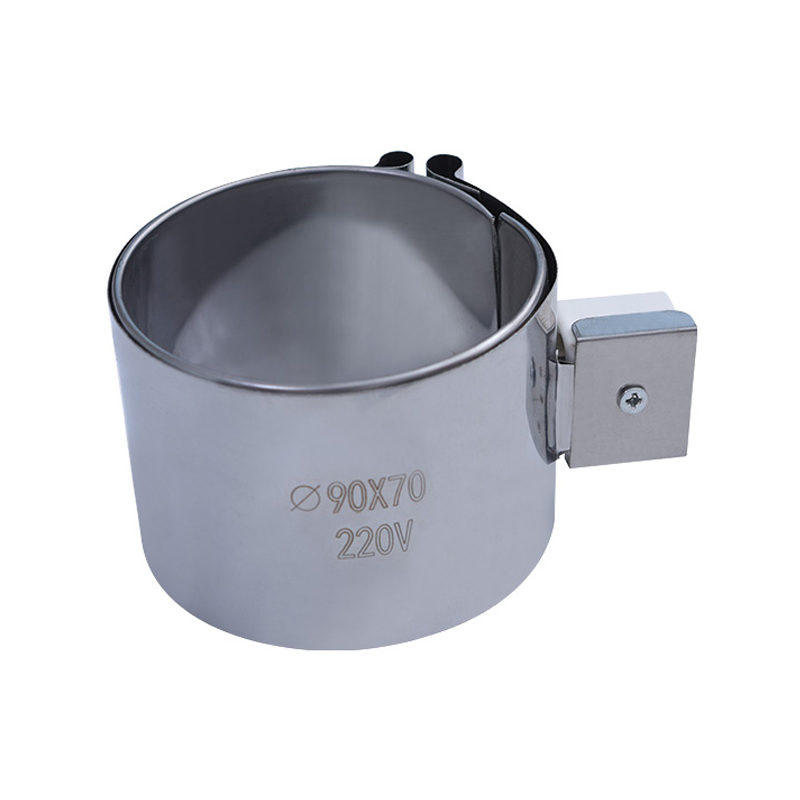
Band heaters are one of the most widely used electric heating elements in plastics processing equipment. Every injection molding machine, plastics extruder, blow molding machine, and hot melt system that heats a barrel, nozzle, or manifold uses some form of band heater to bring the processing temperature up to the melt point of the polymer being processed and maintain it precisely during production. Getting the band heater specification right — the correct watt density, insulation material, terminal arrangement, and dimensional fit — is fundamental to achieving efficient, uniform barrel heating, adequate temperature control response, and long heater service life.
For injection molding machine operators, plastics processing plant engineers, equipment maintenance teams, and procurement managers sourcing replacement or original-equipment band heaters, this guide provides a practical understanding of band heater construction types, their performance characteristics, and the selection parameters that determine which type is right for each application.
A band heater is a resistive heating element designed to wrap around the outside of a cylindrical component — typically an injection molding barrel, extruder barrel, nozzle, or pipe — and transfer heat conductively into the cylinder wall. The heating element (a resistance wire or ribbon coil) is embedded within or wound around an insulating substrate, all assembled into a flat strip that is formed into a cylinder and clamped or bolted around the barrel. When electrical power is applied, the resistance wire generates heat that conducts through the insulating material and the cylinder contact surface into the barrel metal, heating the barrel to the process temperature required to melt the polymer.
Band heaters are specified to cover the barrel circumference completely when installed — full circumferential contact between the heater and the barrel surface is essential for efficient heat transfer and uniform temperature distribution around the barrel. Poor contact (gaps, deformed heater surface, over-tight or under-tight clamping) creates hot spots where the heater is not in contact with the barrel, leading to local heater overheating and premature element failure, and cold spots in the barrel temperature profile that cause poor melting uniformity.
Mica band heaters are the most widely used band heater type globally in injection molding and extrusion applications. The heating element — typically a flat resistance ribbon wound in a serpentine pattern — is sandwiched between sheets of mica mineral insulation, all enclosed in a stainless steel outer shell. The mica insulation provides good electrical isolation, adequate thermal conductivity for heat transfer to the barrel, and acceptable service temperatures up to approximately 500°C (though practical operating limits of 400°C are more common in most applications).
Strengths of mica band heaters:
Mica heaters have a slim profile (typically 6–12mm thick), which makes them suitable for installation in tight machine geometries where barrel spacing is limited. They reach operating temperature quickly from cold (fast thermal response due to relatively low thermal mass) and respond quickly to setpoint changes, which is beneficial for temperature control during production. They are the lowest cost band heater type per unit area of heating surface, making them the standard choice for the cost-sensitive injection molding machine market. Mica band heaters are available in standardized sizes across a very wide range of barrel diameters (typically 25mm to 350mm diameter) and widths, with a wide selection of watt densities and supply voltages.
Limitations of mica band heaters:
The mica insulation is brittle and can crack if the heater is dropped, flexed sharply, or subjected to mechanical shock. Cracked mica insulation creates local hot spots that degrade the heater's life. Mica band heaters are not suitable for applications where the heater must withstand thermal cycling to very high temperatures (above 400°C) because repeated thermal expansion cycling eventually degrades the mica mineral. The stainless steel outer shell must maintain contact with the barrel surface — if the shell deforms or the clamping arrangement fails to maintain contact, local overheating develops rapidly.
Best for: Standard injection molding machine barrel zones (most processing temperatures 200–380°C); extruder barrel heating in standard thermoplastic processing; nozzle heaters for standard polymer processing; cost-sensitive replacement applications; applications where fast thermal response to setpoint changes is required.
Ceramic band heaters use resistance coils wound through or supported on ceramic insulator blocks assembled into a flexible array that wraps around the barrel. The ceramic insulator blocks are typically assembled on stainless steel cables or strips, creating a flexible band that conforms to the barrel surface. Unlike the rigid mica construction, the ceramic block construction provides inherent mechanical flexibility.
Strengths of ceramic band heaters:
The ceramic insulation provides significantly higher maximum operating temperatures than mica — ceramic band heaters are rated to 700°C and higher, making them the standard choice for high-temperature polymer processing (high-performance engineering thermoplastics, thermosets, and rubber processing) where mica heaters would be operating at or beyond their temperature limit. Ceramic insulation is more dimensionally stable under repeated thermal cycling than mica, making ceramic band heaters longer-lived in applications with frequent thermal cycling. The resistance coil is mechanically protected within the ceramic blocks, giving the element better mechanical protection than the mica sandwich construction in some configurations.
Limitations of ceramic band heaters:
Ceramic band heaters are thicker than mica heaters (typically 15–25mm) due to the ceramic block construction, requiring more clearance space around the barrel. They have higher thermal mass than mica heaters, meaning slower warm-up from cold and slower response to setpoint changes — a consideration for applications requiring fast temperature profile changes. Cost is higher than equivalent mica band heaters. The ceramic blocks, while individually robust, can fracture under impact loads — the assembled heater must be handled carefully.
Best for: High-temperature polymer processing above 400°C; engineering thermoplastics (PEEK, PPS, PEI, LCP) with high melt temperatures; thermoset and rubber processing; applications with frequent thermal cycling where long heater service life is the priority; barrel zones subject to intermittent high-temperature excursions.
Mineral-insulated band heaters use the same MgO-insulated metal-sheathed construction as MI cartridge heaters and MI heating cables, formed into a band geometry. The resistance wire runs inside a metal tube filled with compacted magnesium oxide insulation, all folded or formed to the required band profile. MI band heaters provide the most compact construction, the highest temperature capability (limited only by the sheath metal choice), and the best resistance to moisture and contamination ingress.
MI band heaters are used in demanding applications where the combination of high temperature, small physical profile, and high moisture or chemical resistance simultaneously is required — pharmaceutical and food-grade equipment, chemical processing, and specialized engineering thermoplastic processing. They are the most expensive band heater type per unit area.
Nozzle heaters are a specialized small-diameter band heater type designed to fit the nozzle zone of injection molding machines, where the barrel terminates in the injection nozzle. The nozzle is a high-temperature, thermally critical zone — it must maintain precise melt temperature right to the point of injection into the mold, and its small diameter (typically 20–60mm) and complex geometry require a dedicated heater design distinct from the main barrel band heaters. Nozzle heaters are typically mica or MI construction in small diameters with high watt density to compensate for the nozzle zone's high heat loss relative to its small mass.
The internal diameter of the band heater must match the outside diameter of the barrel it is installed on. Barrel outside diameters vary by machine manufacturer and barrel size — always measure the actual barrel OD before ordering replacement heaters, as nominal machine specifications and actual machined diameters can differ by 1–3mm, and a heater that does not fit the barrel properly will not make adequate contact. The heater width (axial dimension along the barrel) is specified to provide the required heated length within the available spacing between machine tie bars, flanges, and adjacent heaters.
Watt density — the heater's power output per unit area of heating surface, expressed in W/cm² — is the critical parameter that determines heater life. A watt density that is too high for the application causes the heating element to run at excessively high internal temperatures (the heater generates heat faster than it can conduct it into the barrel), resulting in element degradation and shortened heater life. A watt density that is too low means the heater cannot supply enough power to bring the barrel to temperature in an acceptable time or to maintain temperature under high production throughput heat demand.
General guidelines for watt density selection in plastics processing barrel heating:
| Application | Recommended Watt Density | Reason |
|---|---|---|
| Injection molding barrel, standard thermoplastics (PE, PP, ABS, PS) | 2.0–3.5 W/cm² | Moderate heat-up requirements; adequate for standard cycle times |
| Extruder barrel, continuous production | 1.5–2.5 W/cm² | Lower watt density for longer life in continuous-duty service |
| Engineering thermoplastics (PC, Nylon, POM, PEEK) | 2.5–4.0 W/cm² | Higher melt temperatures require more heating power |
| Nozzle heaters | 4.0–6.0 W/cm² | Small surface area requires high density; thermocouple control is essential |
| Low-temperature thermoplastics (<200°C) | 1.5–2.0 W/cm² | Lower temperature differential reduces the density requirement |
Band heaters are manufactured for the supply voltage of the machine's heating system — most industrial injection molding and extrusion equipment uses 220–240V single-phase or 380–415V three-phase supply. The total wattage of the heater is calculated from the watt density multiplied by the heater's surface area. For multi-zone barrel heating (multiple heaters along the barrel length, each controlled by a separate temperature zone), each zone's heater wattage should be matched to the heat demand of that zone — the feed zone of an extruder typically has lower heat demand than the metering zone and benefits from lower wattage to avoid overheating that can degrade the polymer.
The electrical terminals of a band heater must be positioned to align with the power supply lead routing within the machine guarding. Standard terminal positions are at 90°, 180°, or 270° from the split (the gap in the band where the two ends meet). In machines with restricted access for cabling, the terminal position and lead exit direction (radial, tangential, or with a flexible conduit) must be confirmed for the specific machine configuration before ordering. A heater with terminals in the wrong position for the machine wiring creates a difficult installation and may result in the power cable being strained or kinked.
Band heater service life in injection molding and extrusion is primarily determined by how well the heater maintains contact with the barrel surface, how the temperature control system manages the heater's power duty cycle, and how the heater is installed and maintained:
Ensure full barrel contact on installation. When installing a new band heater, check that the heater seats flat against the barrel with no visible gaps around the circumference. Use the manufacturer's specified clamping torque for the mounting hardware — both insufficient clamping (leaving gaps) and excessive clamping (deforming the heater shell, cracking mica insulation) reduce heater life. If the heater does not seat flat, check that the barrel OD is within tolerance and that there is no buildup of contamination on the barrel surface from previous heater failure or polymer leakage.
Use thermocouple-based closed-loop temperature control. Band heaters operated at full power continuously without temperature feedback will overheat the barrel and the heater itself, degrading both. Proper temperature control via a thermocouple in the barrel zone and a PID temperature controller manages the heater's power on/off ratio (duty cycle) to maintain setpoint temperature, preventing overtemperature events that accelerate heater degradation.
Prevent polymer contamination. Polymer melt leaking from barrel seals or flanges and getting onto the heater surface carbonizes at heater operating temperatures, creating localized high-resistance hot spots. Regular inspection and immediate cleaning or replacement of damaged barrel seals prevent heater contamination failures.
Measure the barrel outside diameter (OD) with a caliper — this gives the required heater internal diameter. Measure the width of the zone to be heated — this gives the heater width. Read the supply voltage and wattage from the heater nameplate if it is still readable; if not, count the number of heater zones on the barrel and divide the machine's total barrel heating power (from the machine specifications) by the number of zones to estimate the per-zone wattage. For the insulation type, the original heater profile will tell you whether it is mica (thin, typically 6–10mm), ceramic (thick, typically 15–25mm), or MI. With diameter, width, voltage, and approximate wattage confirmed, a band heater manufacturer can supply the correct replacement.
The most common causes are: loss of barrel contact (the heater shell deforms over time or the mounting hardware loosens, creating gaps — the heater generates heat that cannot transfer to the barrel, causing local overheating of the element); polymer contamination (melt on the heater surface creates hot spots as described above); electrical terminal overheating (loose terminal connections have high resistance that generates heat at the connection point — always use the correct terminal torque and inspect connections periodically); operating above the heater's rated temperature limit (incorrect setpoint, temperature controller failure, or runaway); and mechanical damage during installation or removal (mica heaters cracked by impact, element damaged by forcing onto an out-of-tolerance barrel).
Xinghua Yading Electric Heating Element Co., Ltd., Xinghua, Jiangsu, manufactures mica band heaters, ceramic band heaters, and nozzle heaters for injection molding, extrusion, blow molding, and hot melt equipment. Products available in barrel diameters from 20mm to 400mm and in standard and custom widths. Wattage and voltage to specification; standard 220V and 380V available or custom voltage. Terminal arrangements and lead exits are configured for specific machine types. OEM replacement band heaters for major injection molding machine brands are available. Custom specifications for new equipment programs and specialized applications.
Contact us with barrel diameter, heater width, required wattage, supply voltage, and terminal position to receive a band heater quotation and lead time.
Related Products: Band Heater | Cartridge Heater | Hot Runner Heater | Thermocouple | Air Heating Tube
Thermocouple Types Explained: Type K, J, T, E, N, R, S and How to Choose the Right One
Mar 01,2026
Watt Density in Electric Heating Elements: What It Is and How to Calculate the Right Value
Mar 15,2026Your email address will not be published. Required fields are marked *