

 English
 русский
 عربى
عربى
Product Consultation
Your email address will not be published. Required fields are marked *

The fundamental conclusion regarding electric heating elements is that their performance and service life are dictated almost entirely by the matching of the element's material properties to the specific operating environment. Selecting an element based solely on wattage without considering the maximum temperature and atmospheric corrosion will lead to premature failure. Whether utilizing Nickel-Chromium alloys or Iron-Chromium-Aluminum alloys, the resistance wire must withstand thermal cycling and oxidation without significant deformation. For applications requiring rapid heat transfer, the sheath material and surface area are just as critical as the internal resistance wire. Ultimately, a well-chosen heating element operates with minimal energy loss, maintains structural integrity at high temperatures, and provides a predictable lifespan based on its watt density.
An electric heating element functions on the principle of Joule heating, where the passage of an electric current through a conductor encounters resistance, resulting in the conversion of electrical energy into thermal energy. This process is governed by the formula P = I²R, where P is power (heat generated), I is the current, and R is the resistance. The efficiency of this conversion is exceptionally high, often approaching 100% within the element itself, meaning almost all electrical energy consumed is converted into heat.
The resistance of the material is not static; it changes as the temperature rises. Most heating element alloys are designed to have a relatively low temperature coefficient of resistance. This stability ensures that the current draw does not drop drastically as the element heats up, allowing for a consistent heat output. If the resistance were to drop significantly with heat (a negative temperature coefficient), the current could increase uncontrollably, leading to a thermal runaway situation. Conversely, a sharp increase in resistance could prevent the element from reaching the desired temperature.
The choice of alloy is the most critical engineering decision in the design of a heating element. Different alloys offer different trade-offs between maximum operating temperature, lifespan, and mechanical properties. The two most predominant categories are Nickel-Chromium (NiCr) and Iron-Chromium-Aluminum (FeCrAl).
The longevity of a metallic heating element largely depends on its ability to form a stable oxide layer. When heated, the alloy reacts with oxygen in the air to form a crust. This layer must be adherent and slow-growing. If the oxide flakes off (spalling), fresh metal is exposed, leading to rapid thinning of the wire and eventual breakage. Elements operated above their recommended temperature range will form oxide layers too quickly, which tends to be brittle and non-protective.
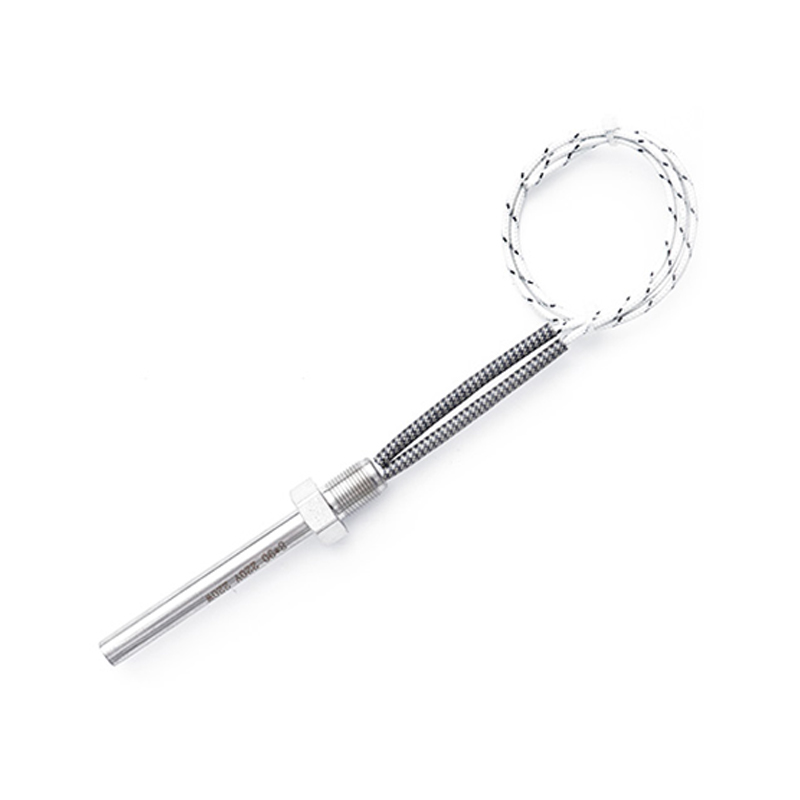
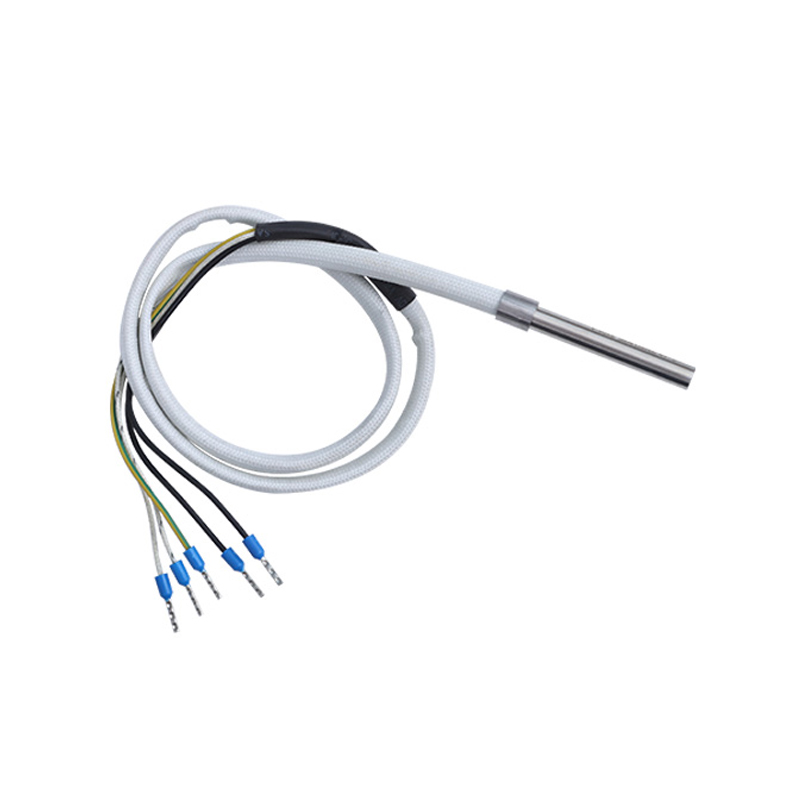
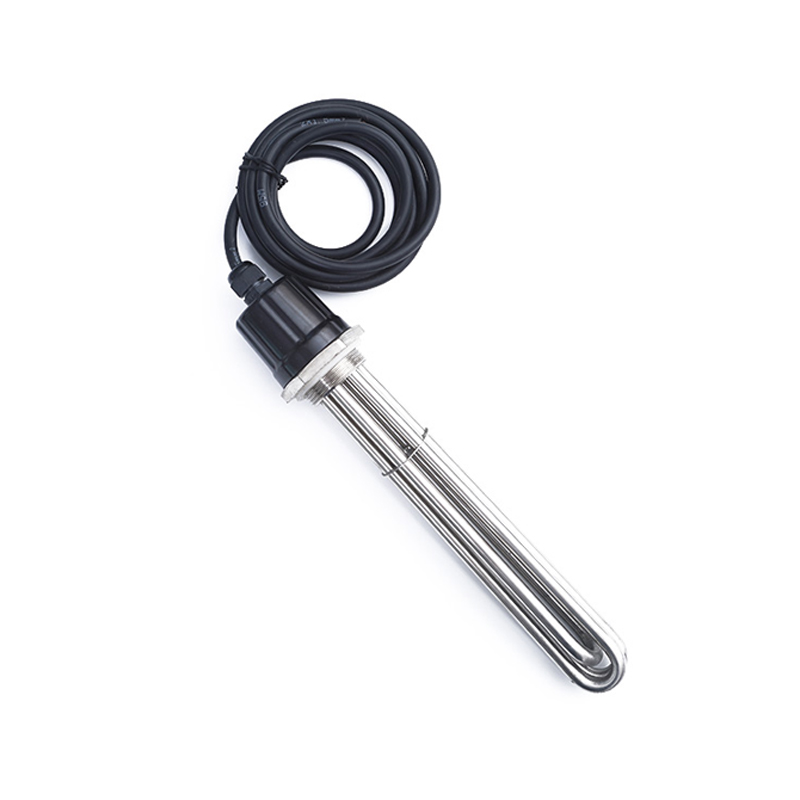
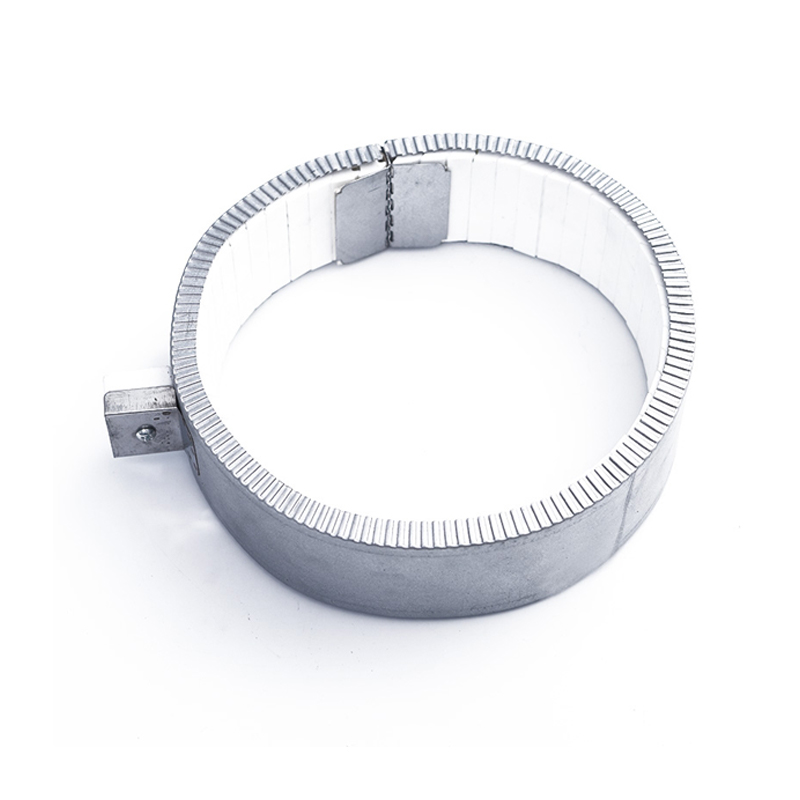
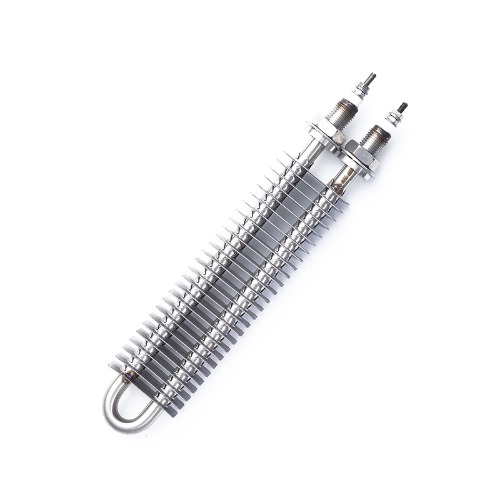
While the material dictates the thermal limits, the physical configuration dictates how the heat is delivered to the target. Engineers must choose a form factor that maximizes surface area without compromising mechanical stability.
Generating heat is only half the battle; transferring that heat effectively to the medium (air, liquid, or solid) is the other half. The design of the housing and the placement of the element are governed by three modes of heat transfer.
Even the highest quality element will fail prematurely if the operating conditions are hostile. Understanding these failure vectors is essential for maximizing return on investment.
This is the amount of power (watts) divided by the surface area (square inches or centimeters). A higher watt density means the element runs hotter to transfer its energy. Exceeding the recommended watt density for a specific application is the number one cause of burnout. For example, water can handle high watt densities because it transfers heat away quickly, whereas oil has a lower limit due to its lower specific heat capacity and tendency to carbonize on hot surfaces.
Hot resistance wire is soft and brittle relative to its cold state. In applications with heavy vibration, the supports for the element must be robust to prevent fatigue cracking. Expansion and contraction during thermal cycling can also loosen connections, leading to arcing and eventual failure at the terminal points.
Certain atmospheres are corrosive to specific alloys. Sulfur, carbon, and halogens can attack the oxide layer or react with the base metal. For example, a standard Nickel-Chromium element will degrade quickly in a sulfur-rich environment (common in some rubber curing processes) unless it is specifically protected or a different alloy is used.
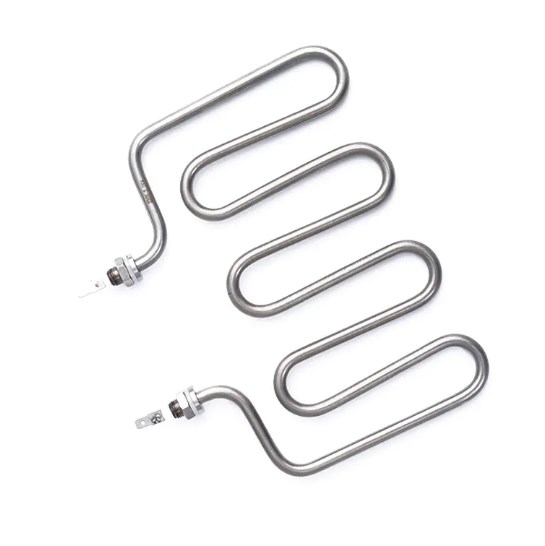
How do I choose the right heating element for corrosive environments?
Jul 22,2026
How to choose the right heater for packaging machinery?
Aug 05,2026Your email address will not be published. Required fields are marked *