

 English
 русский
 عربى
عربى
Product Consultation
Your email address will not be published. Required fields are marked *
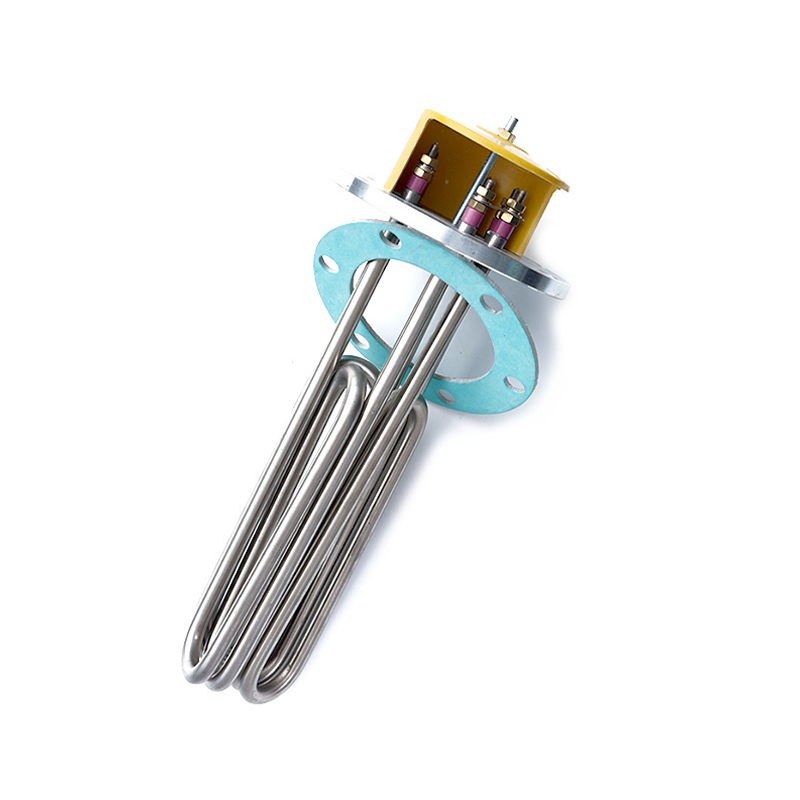
At a food-processing plant in the Midwest, a replacement flange heater in a 6,000 L hot-water tank failed after 11 weeks. The unit delivered 36 kW from a 12-inch flange, which meant a watt density close to 38 W/cm². In water with 180 ppm hardness, that specification forms a thin calcium scale layer, and the sheath temperature climbs past 400°C even when the water sits at 82°C.
An industrial immersion heating element is a resistance heater built to be submerged directly into a liquid or gas. It is never designed to radiate heat in open air; it transfers energy through a metal sheath into the surrounding medium. Service life is decided less by coil quality than by three specification choices made before the purchase order is issued: watt density, mounting style, and sheath metallurgy.
Watt density — total wattage divided by the heated surface area of the sheath, expressed in W/cm² — is the first number an engineer must fix. It controls heat-up speed and sheath temperature, and therefore element life.
The sheath always runs hotter than the liquid touching it. As watt density rises, that gap widens and every degradation mechanism accelerates: scale deposits faster, oil carbonizes, chloride attack grows more aggressive. Watt density limits belong to the liquid, not the catalog.
Maximum practical watt density by heating medium (W/cm²)
A 38 W/cm² element in still water is not "more powerful" — it is a heat source that outruns the liquid's ability to carry heat away. Local boiling creates a steam blanket, scale bonds to the hot surface, and the element fails open.
| Medium | Recommended maximum | Failure mode when exceeded |
| Water, agitated | 20-23 W/cm² | Scale and steam blanketing |
| Water, still | 8-12 W/cm² | Local boiling, scale deposit |
| Thermal oil | 5-8 W/cm² | Coking and sheath burnout |
| Caustic solutions | 10-15 W/cm² | Stress corrosion cracking |
For tanks that need more total wattage without pushing watt density into the danger zone, the answer is more heated surface, not a hotter sheath. A high-power flange heater spreads the load across a larger bundle and keeps every tube inside its safe range.
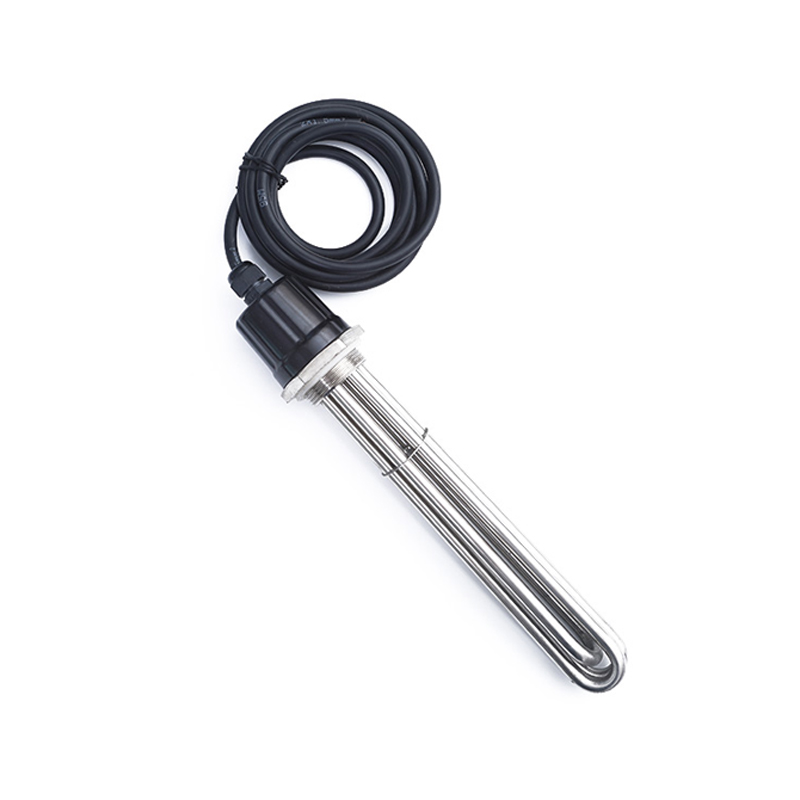
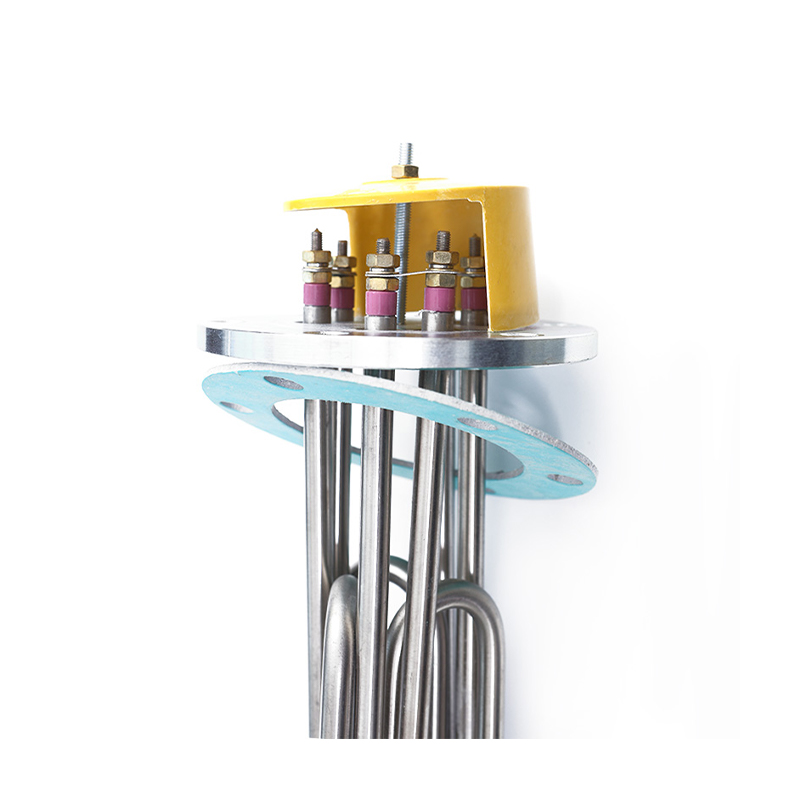 High Power Flange Heater for Large TanksThis flange-mounted immersion heater spreads high wattage across a large tube bundle, keeping heat density safe for processes needing more than 10 kW.View Product →
The second decision is mechanical: how the element attaches to the vessel. Two designs dominate — flange immersion heaters for large tanks and threaded screw-plug heaters for small vessels — and the choice is controlled by vessel volume, wall construction, and maintenance access.
A flange mount is preferred when the bundle must be pulled for cleaning, the tank has a matching nozzle, or the process runs above 10 kW. The flange carries the bundle weight and the gasket seals the vessel at operating pressure. For outdoor or washdown installations, specify a fully immersed waterproof flange heater so the junction box stays dry.
 Flange Immersion Heater for Vessel MountingA durable flange design with corrosion-resistant materials suits tanks with matching nozzles or washdown areas, ensuring reliable sealed operation.View Product →
Threaded heaters are the default for drums, mixing tanks, and pipeline boosters below roughly 15 kW. The threaded connection screws directly into a half-coupling, which cuts installed cost and seals reliably in low-pressure service.
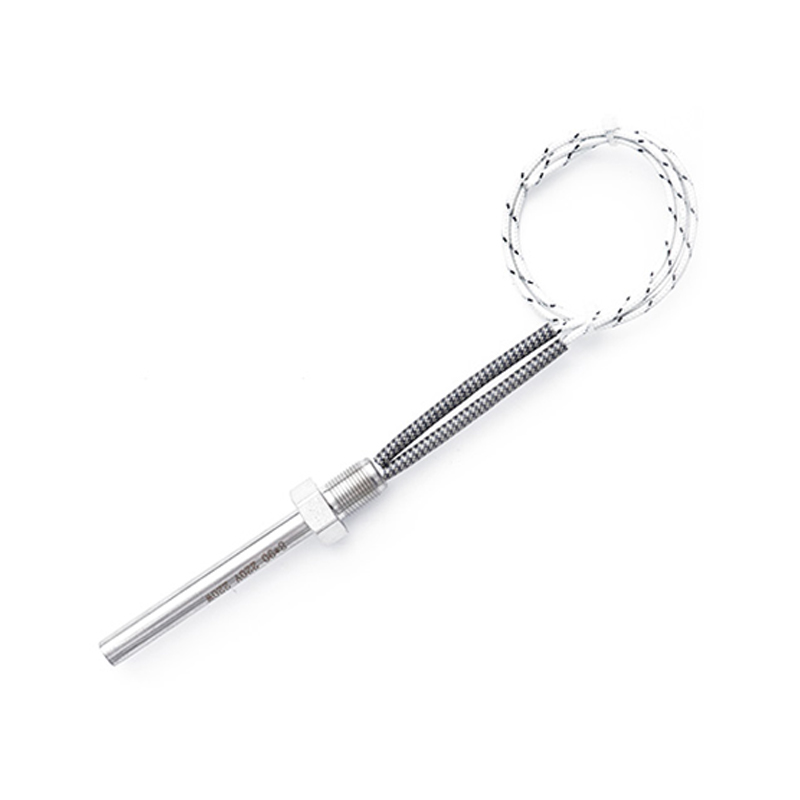
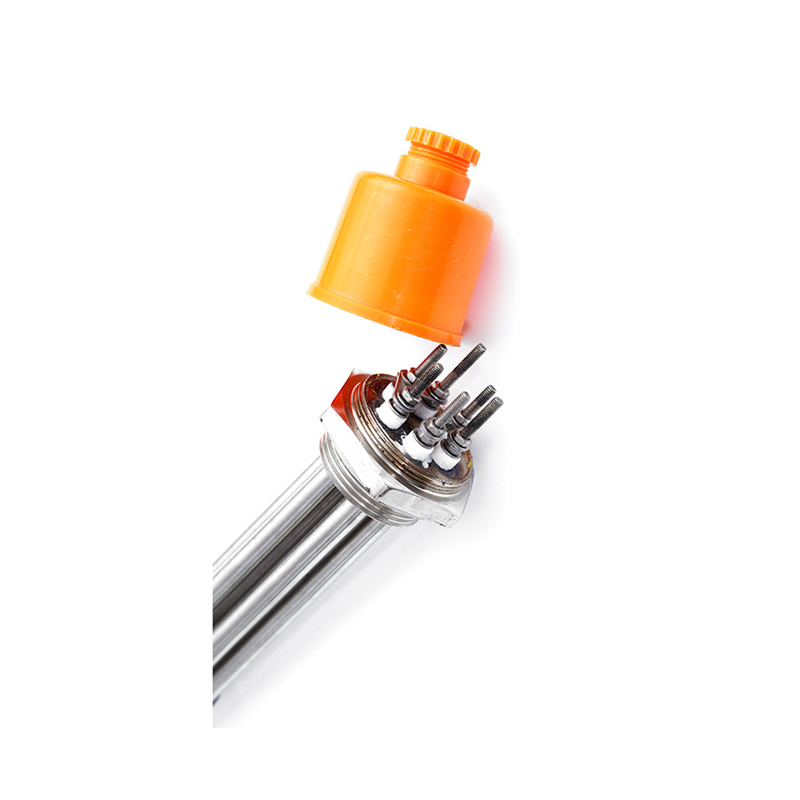 Hexagonal Thread Immersion Heater for Small VesselsThreaded screw-plug style fits drums and mixing tanks below 15 kW, offering easy installation, stable mounting, and dependable low-pressure sealing.View Product →
The sheath is the only material in contact with the process liquid. It — not the resistance wire — sets the corrosion limit and the maximum permitted operating temperature of the complete assembly.
| Liquid or process | Sheath material | Maximum sheath temperature |
| Neutral water | 304 stainless steel | 400°C |
| Water with chlorides | 316 / 316L stainless steel | 400°C |
| Thermal oil | 304 stainless steel or copper | 400°C |
| Caustic / alkaline baths | Incoloy 800 | 650°C |
| Mild organic acids | Copper or Incoloy 840 | 650°C |
A frequent field mistake is upgrading from 304 to 316 stainless for chloride resistance while keeping the same watt density. The alloy change helps corrosion, not scale. Copper sheaths transfer heat well but fail quickly in dilute acids and are disallowed in many food plants.
Most premature immersion element failures are operating-condition failures, not manufacturing defects. A review of failed elements across food, chemical, and oil plants shows three causes dominating every batch.
Prevention starts at specification. Wire a low-liquid-level cutoff into the heater contactor so the element cannot energize below the minimum submergence line, and torque-check terminals on every maintenance cycle. Because the same miscalculations repeat across industries, the selection parameters for an industrial immersion heating element should be reviewed against real operating conditions before ordering.
Sizing starts from process heat demand, not tank volume. The common shortcut — one kilowatt raises 10 L of water by about 11°C per hour — ignores initial temperature, allowed heat-up time, and continuous heat loss from the vessel walls.
Manufacturing consistency matters as well. Xinghua Yading Electric Heating Element Co., Ltd. (Yading), a supplier with a stated annual output above 500,000 elements, holds uniform wall thickness and terminal quality across batches. A plant reviewing its immersion heating setup can start a specification review with the factory through the contact page.
For clean circulating water, 20-23 W/cm² is the practical maximum. Without circulation, stay between 8 and 12 W/cm². Thermal oil should remain at 5-8 W/cm² to avoid coking. Hard water lowers every limit.
Not with the same watt density and control settings. An element safe at 20 W/cm² in water will carbonize oil because the oil film cannot carry heat away fast enough. If a tank changes products, recompute the watt density limit for the new liquid.
Reduce watt density, add circulation or agitation, and schedule regular descaling. Wire a low-liquid-level cutoff into the contactor so the element cannot run dry during tank drawdown.
With correct watt density, a compatible sheath, and fully immersed operation, stainless elements in treated water typically last three to six years. Elements in scaling or coking duty rarely pass one to two years. Six-month inspections are standard practice.
Ceramic Band Heater Selection Guide: Watt Density, Sizing, and Temperature Limits
Sep 16,2026
No previous article
Jan 01,1970Your email address will not be published. Required fields are marked *