

 English
 русский
 عربى
عربى
Product Consultation
Your email address will not be published. Required fields are marked *
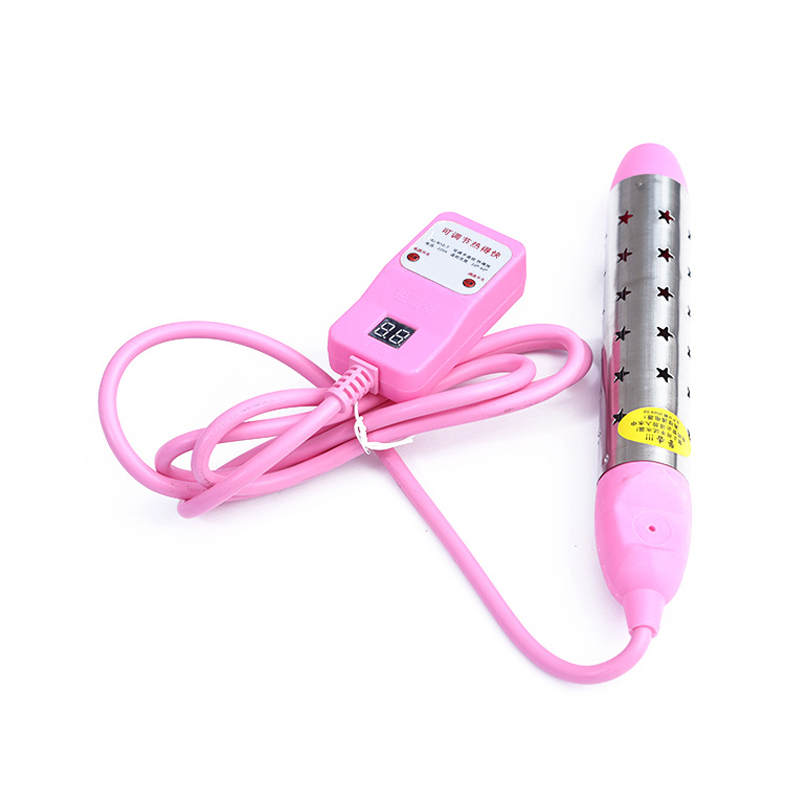
A 50-gallon commercial water heater that trips its breaker every morning at 6 a.m. usually has one culprit: a burned-out water heating element. After 30 years of manufacturing immersion heaters at Xinghua Yading Electric Heating Element Co., Ltd. in Jiangsu, China, our engineers have watched the same four failure patterns repeat across hotels, laundries, and food-processing plants. None of them was random. Each one was decided weeks earlier by a specification that ignored water chemistry, watt density, or installation conditions.
This guide gives procurement engineers and maintenance teams the same framework we use on the factory floor: how water heating elements are constructed, why they fail, which ratings actually control service life, and what a supplier must verify before an order ships.
A water heating element is a resistive coil enclosed in a metal sheath and packed with compacted magnesium oxide, converting electrical energy into heat through Joule heating and transferring that heat to the surrounding water by conduction.
The construction follows a standard sequence across virtually all producers: an 80/20 nickel-chromium wire is wound on a ceramic or mica support, inserted into a copper, stainless steel, or Incoloy tube, filled with magnesium oxide powder, and compacted to give the coil mechanical fixation and electrical insulation. On a 220 V circuit, a 3,000 W element draws 13.6 A. The sheath temperature must stay below roughly 350°C at the hottest point in normal operation, which is where watt density enters the discussion.
The four common causes of water heating element failure are:
Scale is the most predictable of the four. At 300 ppm calcium hardness, a high-density element typically grows a visible crust within four to six months. Dropping the watt density below 8 W/cm2 at the same hardness keeps the sheath clean enough for normal maintenance intervals.
Dry-firing is the fastest way to destroy a water heating element: one 60-second run without water can end a five-year design life.
Watt density, defined as the element's wattage divided by its active sheath surface area in W/cm2, is the most important specification on a water heating element datasheet, because it fixes the sheath temperature and therefore the rate of scale formation.
Consider a 3,000 W element with 400 cm2 of active sheath area: that is 7.5 W/cm2, a low-density design. Compress the same 3,000 W into 200 cm2 and you get 15 W/cm2, a high-density design. The high-density element brings the tank to temperature a few minutes faster, but its sheath runs much hotter. Scale that touches a hotter surface bakes into a hard, cemented crust; on a cooler surface it stays soft and sheds during normal expansion and contraction.
| Attribute | Low watt density | High watt density |
| Watt density range | 6-10 W/cm2 | 12-20 W/cm2 |
| Relative heating speed | Slower temperature rise | Faster temperature rise |
| Sheath surface temperature in boiling water | Roughly 250-320°C | Roughly 330-420°C |
| Scale accumulation rate | Low to moderate | High, deposits bake on |
| Expected element life in hard water | 5-10 years | 2-4 years |
| Best application | Hard water, continuous draw, commercial duty | Soft water, low duty cycle, low spare cost |
Maximum recommended watt density for water heating, by sheath material
A 4,500 W element at 8 W/cm2 exposes about 560 cm2 of sheath to the water. At 15 W/cm2, the same wattage uses only 300 cm2. In hard water, that 260 cm2 difference is where scale settles, and why low-density elements deliver a lower cost per operating hour even with a slightly higher first cost.
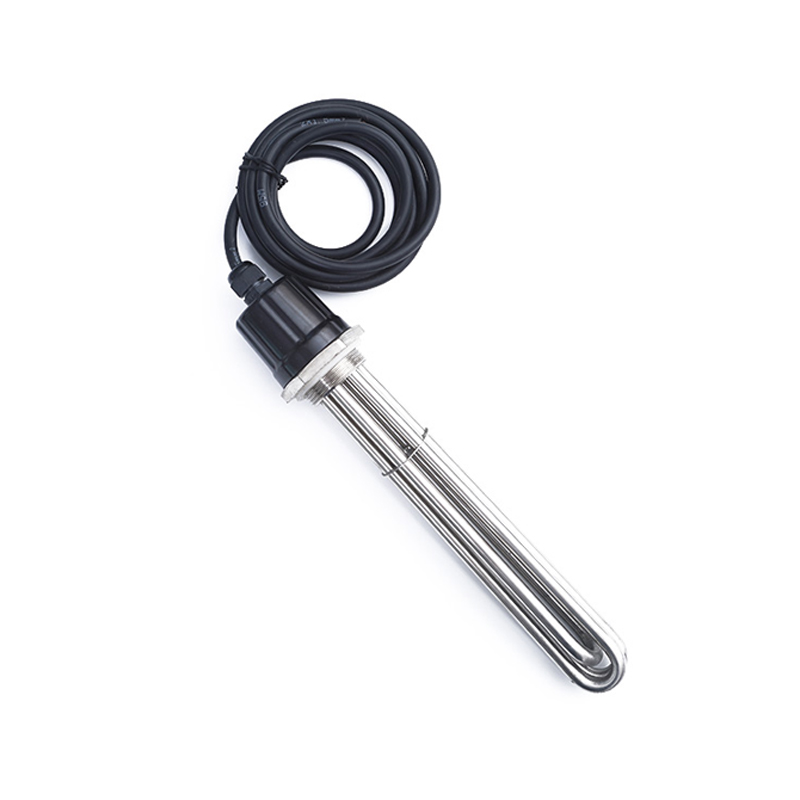
Screw-in elements keep small and mid-size tanks running through a standard threaded opening, while flange elements carry high wattage into commercial and industrial vessels through a bolted plate.
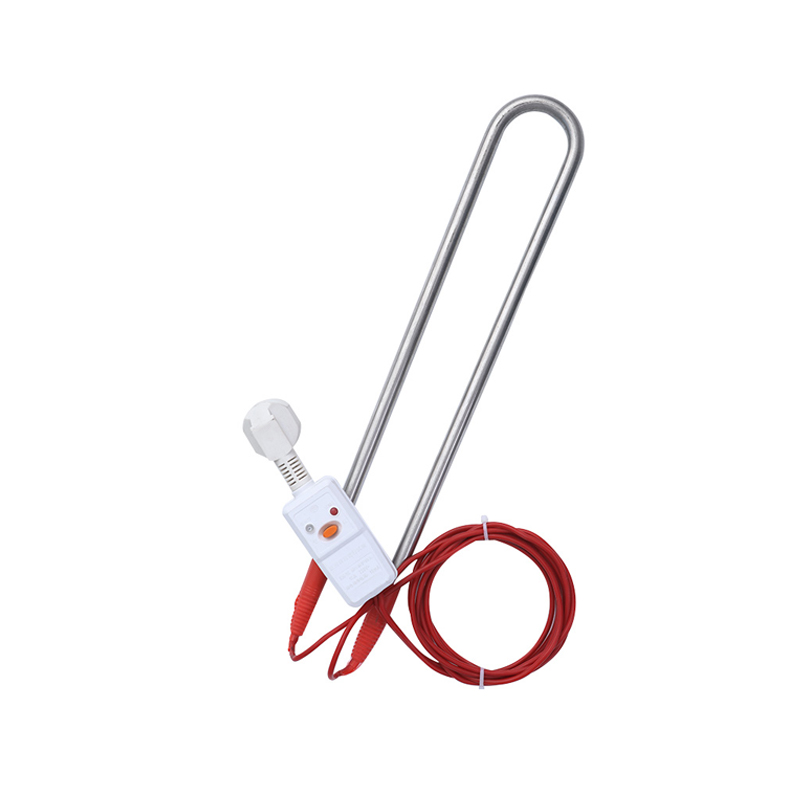
Screw-in water heating elements, also called threaded or screw-plug elements, use a male NPT or BSP thread, normally 1 inch in domestic water heaters and 1.25 or 2 inches on larger export tanks. The element is U-shaped, inserts through a threaded opening in the tank wall, and a qualified plumber can replace it in about 40 minutes. Power ratings typically span 1,500 W to 6,000 W. Xinghua Yading currently manufactures these in copper, stainless steel, and Incoloy versions to match the water chemistry of the destination market.
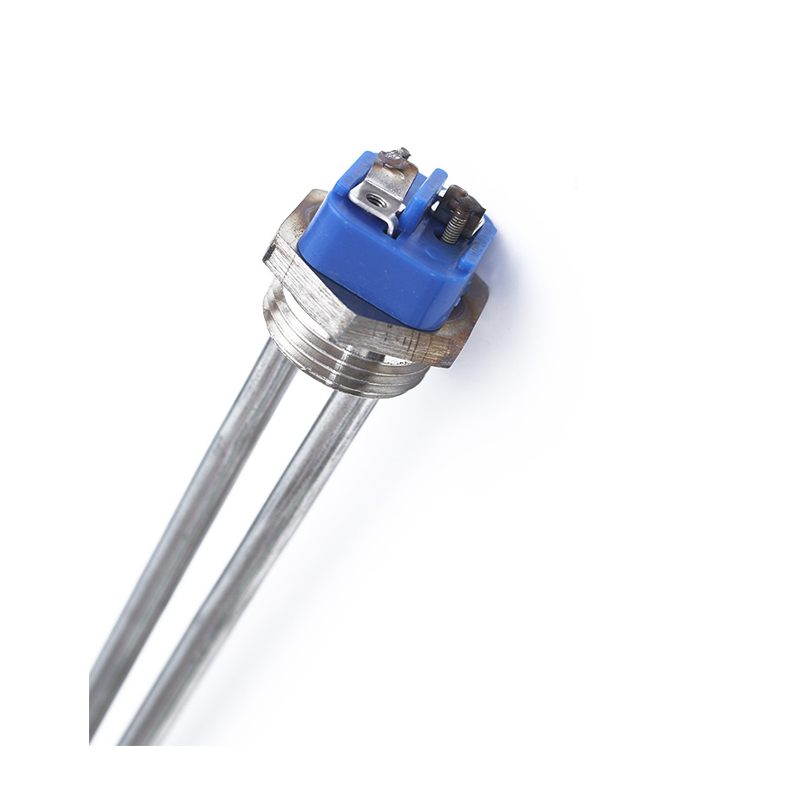 Threaded Screw-In Water Heating Element for TanksThis threaded or screw-plug element suits domestic and export water heaters where quick replacement matters. Available in copper, stainless steel, or Incoloy, it matches the earlier 1,500–6,000 W range and helps meet watt density limits before moving to flange options.View Product →
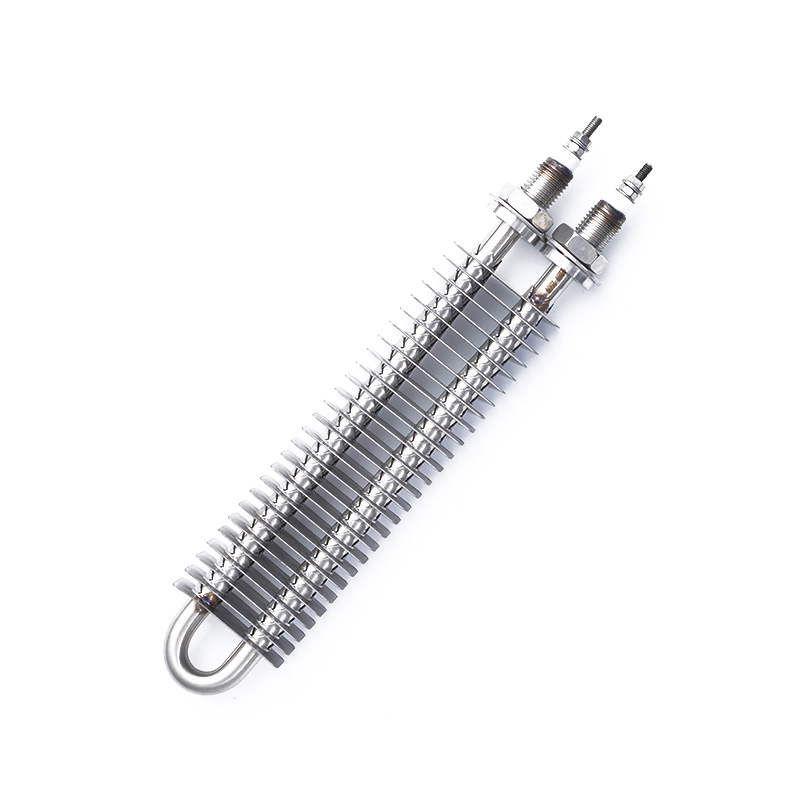
Flange elements bolt onto a mating flange welded to the tank wall. A 3-inch to 8-inch flange carries several hairpin tubes on a single plate, spreading 6,000 W to over 60,000 W across a much larger sheath area. Flange heaters are the standard for boilers, process tanks, and large storage vessels where a single screw-in element cannot supply the required wattage without exceeding the watt density limit.
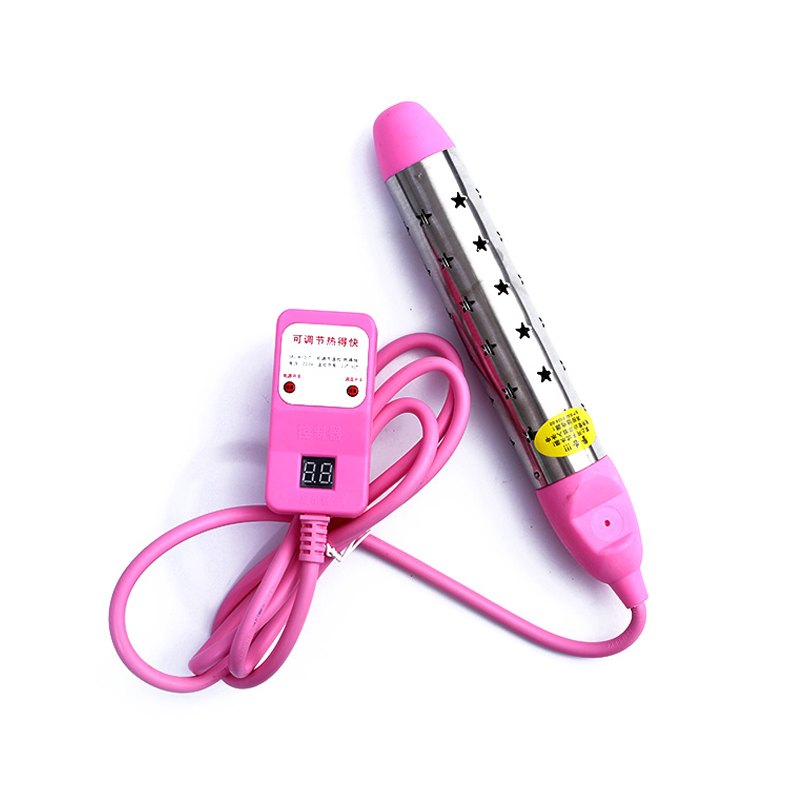 Flange Immersion Heater for Large VesselsFollowing the screw-in discussion, this flange heater handles 6,000 W to over 60,000 W across multiple hairpin tubes. Its 3-to-8-inch mounting plate suits boilers and process tanks, while sheath material choice directly affects corrosion resistance and watt density.View Product →
| Comparison | Screw-in element | Flange element |
| Mounting | Threaded plug, 1-2 inch NPT or BSP | Bolted flange, 3-8 inch bolt circle |
| Power range | 1,500-6,000 W | 6,000-60,000 W and above |
| Replacement time | 40-60 minutes | 1-3 hours, gasket and torque wrench |
| Tank opening | Standard threaded tap | Welded flange or manway |
| Typical duty | Residential, light commercial | Industrial boilers, process tanks |
Sheath material determines a water heating element's corrosion resistance, maximum safe watt density, and price, so the choice must follow the water chemistry rather than the catalog price.
Copper conducts heat at around 401 W/mK, roughly 25 times better than stainless steel, so a copper sheath stays cooler at the same watt loading and can carry a higher watt density without scaling. Copper fails when the water is aggressive: below pH 6.5 it corrodes, and high flow velocity erodes the soft metal.
Stainless steel 304 is the all-rounder. It resists most potable water, covers a pH range of about 6.5 to 9.5, and tolerates chlorides up to roughly 200 ppm. Its thermal conductivity of about 16 W/mK is far lower than copper's, so the safe watt density drops to the 8-12 W/cm2 range.
Stainless 316 adds molybdenum for improved chloride resistance and suits supplies treated with chloramine or drawn from coastal groundwater with 500 ppm chloride. Incoloy 825 combines high nickel, chromium, molybdenum, and copper to give the best combination of scale resistance and corrosion resistance, and it is the standard choice for commercial water heaters in hard-water regions where hardness exceeds 300-400 ppm.
Watt density is the rated wattage divided by the active sheath surface area, measured in W/cm2. Raising watt density by 1 W/cm2 typically increases sheath temperature in still water by roughly 5-10°C, which is enough to change scale behavior.
A water heating element leaves a reliable factory only after passing resistance, dielectric, insulation, and ground-continuity tests, because the failures that matter in the field are electrical before they are mechanical.
The pass limits used at Xinghua Yading's test laboratory reflect common industry practice: coil resistance within 5 percent of the rated value, dielectric withstand of 1,500 VAC for 60 seconds with no breakdown, insulation resistance above 100 megohms measured at 500 VDC, and ground continuity below 0.1 ohm for exposed metal parts. A production element that fails any one of these tests is scrapped, not reworked.
Procurement engineers should ask a new supplier for three documents: the measured resistance values from the actual batch, the dielectric test report, and a photograph of a cut sample showing MgO compaction. A factory that supplies all three without resistance has a working quality system. A factory that cannot will struggle to deliver consistent water heating element performance.
Fully immersed service demands a sealed terminal head. On our flange heater line, a molded waterproof terminal block keeps condensation away from the live terminals.
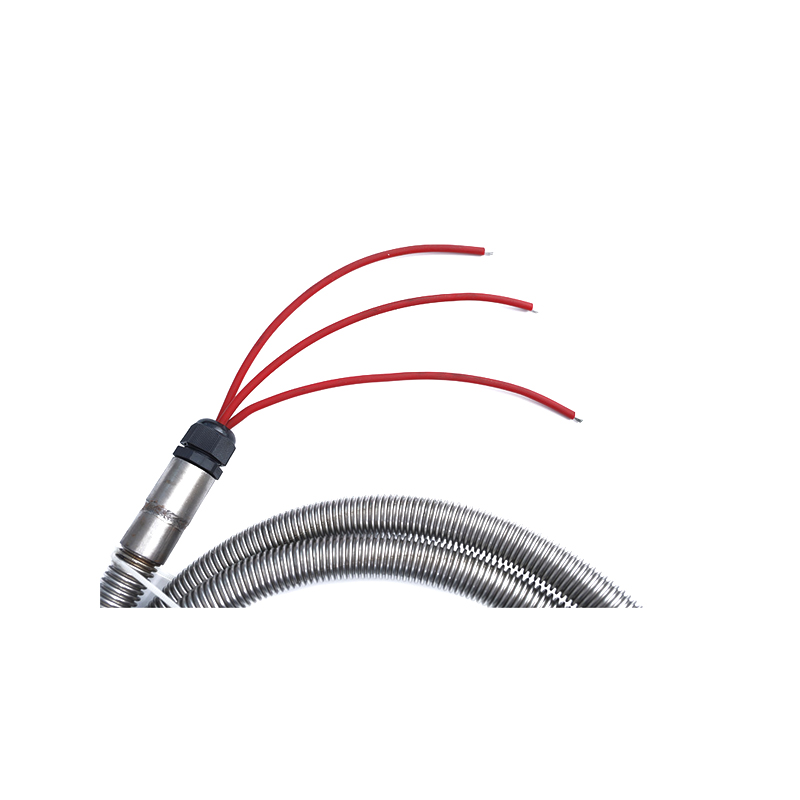 Fully Immersed Waterproof Flange HeaterThis sealed flange heater adds IP68 waterproofing for humid or fully immersed liquid service. Its molded terminal block prevents condensation on live parts, making it a reliable choice when specifying a configuration for harsh environments alongside your tank dimensions and voltage.View Product →
When you are ready to specify, send your tank dimensions, water hardness analysis, voltage, and required recovery time. Contact our engineering team with those details, and we will confirm the screw-in or flange configuration, sheath material, watt density, and the heat-up performance you can expect.
Measure resistance across the two terminals with a multimeter. A 3,000 W element rated for 220 V reads about 16 ohms when healthy. An open circuit means the coil has broken. Then measure from each terminal to the metal sheath; any reading below a few megohms indicates failed insulation, and the element must be replaced.
When total hardness is above 200 ppm calcium carbonate, choose a low-density element below 8-10 W/cm2 with an Incoloy sheath. Copper at high watt density develops a hard scale crust within six months. If hardness exceeds 400 ppm, use a flange element with oversized sheath area or soften the water upstream.
Yes. A 230 V-rated element on a 240 V supply draws about 8.8 percent more wattage. Low-density elements tolerate this easily. High-density elements that already run near their watt-density limit may suffer noticeably shorter life. If the supply is fixed at 240 V, order elements rated for 240 V.
With correct voltage, low watt density, and compatible water chemistry, a screw-in element in residential service typically lasts 6-10 years. Commercial flange elements with regular descaling run 3-5 years. A single dry-fire can destroy either type in under a minute.
Ceramic Band Heater Selection Guide: Watt Density, Sizing, and Temperature Limits
Sep 16,2026
Industrial Immersion Heating Elements: Watt Density, Materials, and Failure Preven
Sep 23,2026Your email address will not be published. Required fields are marked *