

 English
 русский
 عربى
عربى
Product Consultation
Your email address will not be published. Required fields are marked *
A drying line running at 90 m3/min of air can lose about 10 percent of its heating efficiency when the fin spacing on an air preheater tube is too tight. More often than not, the real problem is not the heater itself but the mismatch between tube design and the actual air conditions. That is why selecting an air preheater tube means balancing material temperature, watt density, and fin geometry before installation, not after a failure occurs.
An air preheater tube is a heat exchange component that raises the temperature of air flowing through a duct, oven, or drying chamber. In boiler systems, tubular preheaters recover heat from flue gas. In electric heating equipment, the tube is an enclosed resistance heater with a metal sheath, magnesium oxide insulation, and, in most air applications, fins to enlarge the heat transfer surface. The resistance wire is wound helically and packed with MgO, which transfers heat while electrically insulating the sheath. The sheath is welded shut and rolled to a final diameter, typically from 6.5 mm to 12.5 mm. This article focuses on the electric-heated version because it is the one that process engineers specify most often as a design component.
Standard air preheater tubes are available in straight, U-shaped, W-shaped, and O-shaped configurations.
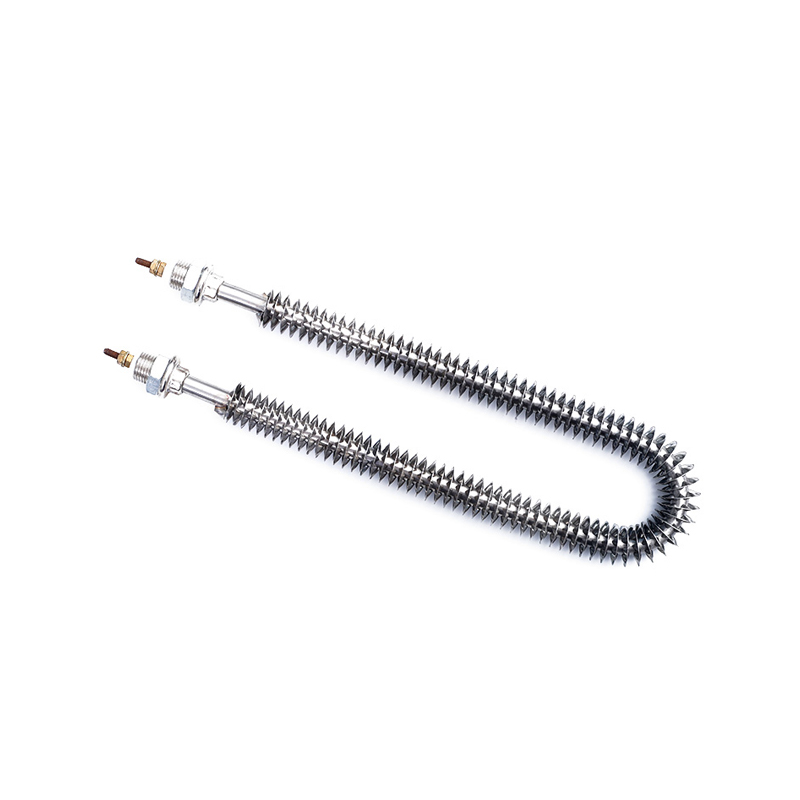
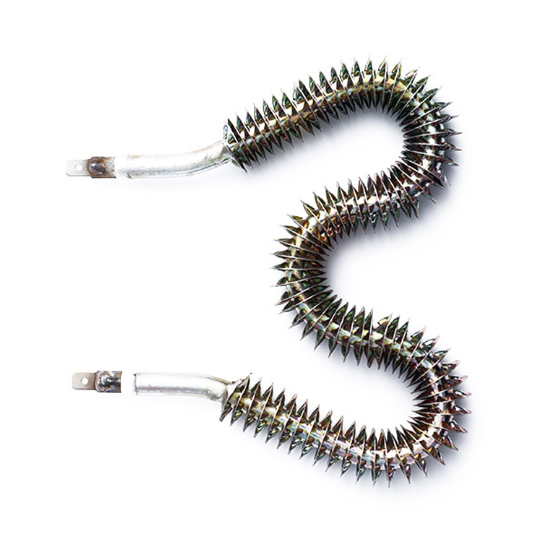
A straight tube is the simplest form and fits installations where the heated length matches the duct depth. A U-shaped tube returns into itself, which lets a short duct accommodate a long effective heating length. W-shaped tubes add another bend, giving even more active surface inside a compact space. In practice, the U-shaped format is a good default for forced-convection ovens because it keeps the connection terminals on the same side, simplifying wiring. For example, a U-shaped finned air heating tube is usually specified when the duct height is limited but the required power is high.
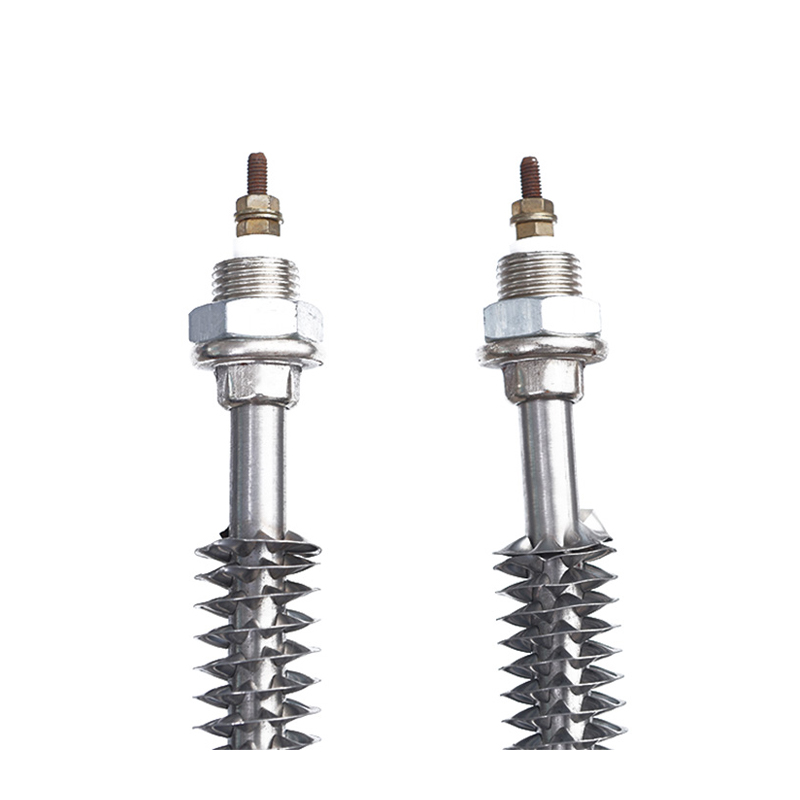 Custom U-Shaped Finned Heating Tube Manufacturers, SuppliersXinghua Yading Electric Heating Element Co., Ltd. is China Custom OEM/ODM U-Shaped Finned Heating Tube Manufacturers and U-Shaped Finned ...View Product →
Smooth tubes are easier to clean and are acceptable in low-power circulation systems. Finned tubes are the standard choice for air preheaters because they multiply the heat transfer area. The fin factor, which is the ratio of the finned surface area to the bare tube area, normally ranges from 2 to 4. In electric air heating, a higher fin factor allows the same wattage to be delivered at a lower surface load, which reduces the risk of oxide scaling and extends tube life. However, smooth tubes should not be ignored: in clean-room equipment or where frequent sterilization is required, the absence of fins can make maintenance considerably simpler.
The first selection step is sheath material. The material determines the maximum continuous operating temperature, the corrosion allowance, and the practical lifetime of the tube. The table below compares the most common materials for electric air preheater tubes.
| Material | Max continuous temperature | Corrosion resistance | Typical application |
|---|---|---|---|
| Stainless steel 304 | 750°C | Good in dry air | General duct heaters |
| Stainless steel 321 | 800°C | Better scaling resistance | Ovens and drying lines |
| Alloy 800 | 815°C | Good oxidation and moderate acid resistance | Preheaters with condensation risk |
| Alloy 840 | 900°C | Superior high-temperature stability | High-performance industrial air heating |
The maximum sheath temperature must stay below the oxidation point of the material. For continuous operation, 304 stainless steel is adequate below 750°C. When the outlet air temperature exceeds that level, move to 321 or Alloy 800. Alloy 840 is used when the tube surface itself will approach 900°C, for example in high-power density designs or when air velocity is low.
In air preheaters, dew point corrosion can occur when the tube surface temperature falls below the dew point of the surrounding gas. Even in an electrically heated duct, cold start-up conditions can create condensate on the stainless steel surface. Chlorides and sulfates in the workshop air then attack the sheath. For environments with known moisture, an Alloy 800 sheath and a low watt density limit give an additional margin of safety.
Watt density is the power divided by the heated surface area, usually expressed in W/cm2. It is the most useful number for predicting tube surface temperature. At the same wattage, a finned tube has a lower watt density than a smooth tube because the fin area is larger, so the sheath runs cooler. In forced-air applications with a duct velocity of 3 m/s or more, a starting range of 3 to 5 W/cm2 is safe for stainless steel. If the airflow is irregular or the duct is undersized, the effective value can double in some zones, which is why many engineers stay below 3 W/cm2 until the actual flow pattern is verified. For a 10 kW heater with 2000 cm2 of finned area, the watt density is 5 W/cm2. If the same heater is evaluated on bare tube area, the number can look much higher, so always confirm which area the manufacturer quotes.
Before finalizing the design, compare the calculated power with the air mass flow and temperature rise using Q = m * cp * dT. Once the required power is known, adjust tube length and fin geometry to keep the watt density inside the safe band. A detailed explanation of this relationship is available in the article on watt density in electric heating elements.
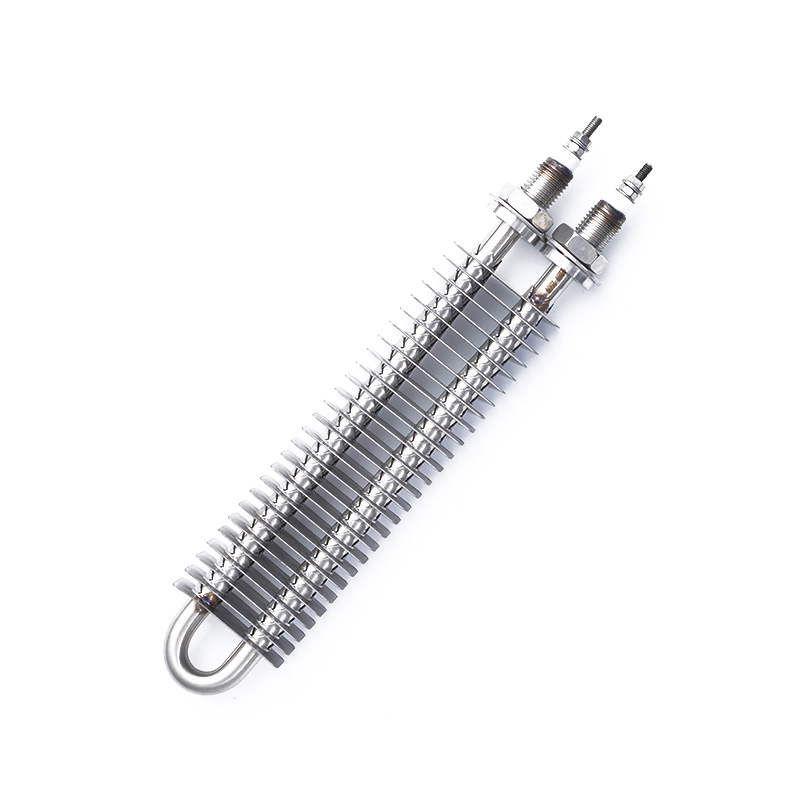
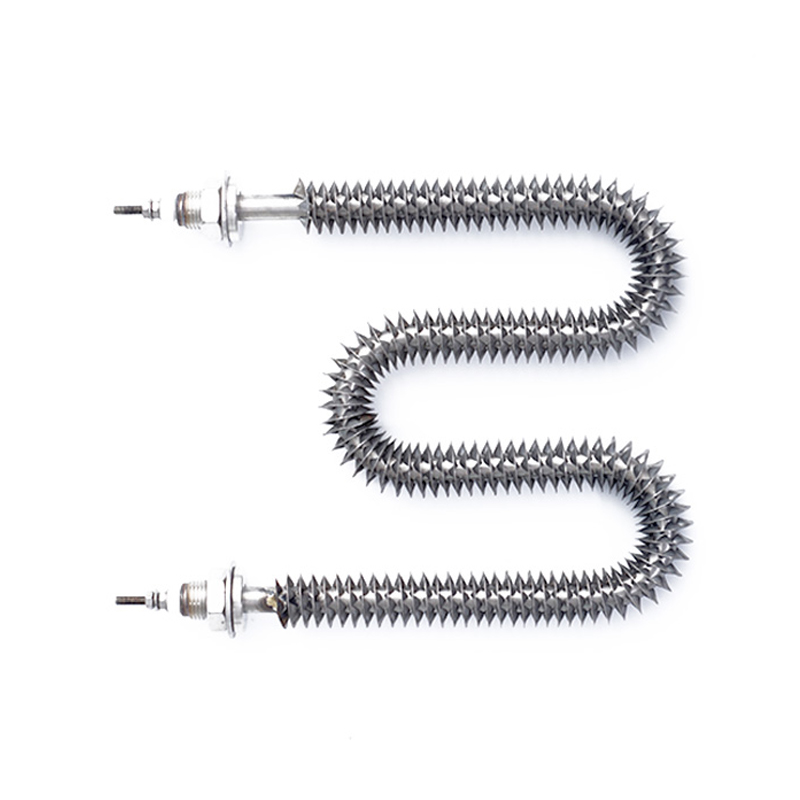
Fins change how an air preheater tube performs in a duct. Without fins, the outside heat transfer coefficient of air is low, so the tube surface temperature climbs quickly and the heating wire inside runs hotter than necessary. With fins, the same tube rejects more heat to the air flow and the overall efficiency improves noticeably. The trade-off is pressure drop: closer fin spacing creates more surface area but also more resistance, so the fan must work harder. For dusty or fibrous air, a wider fin pitch is safer even if the thermal performance is slightly lower. Fin height, thickness, and pitch define the fin factor. A common fin height is 6 to 15 mm, thickness 0.3 to 0.5 mm, and pitch 3 to 6 mm. When the demand is high, a W-shaped finned heating tube gives more surface in the same footprint. In circular ducts, an O-shaped finned heating tube is designed to follow the cross-section and reduce dead zones near the duct wall.
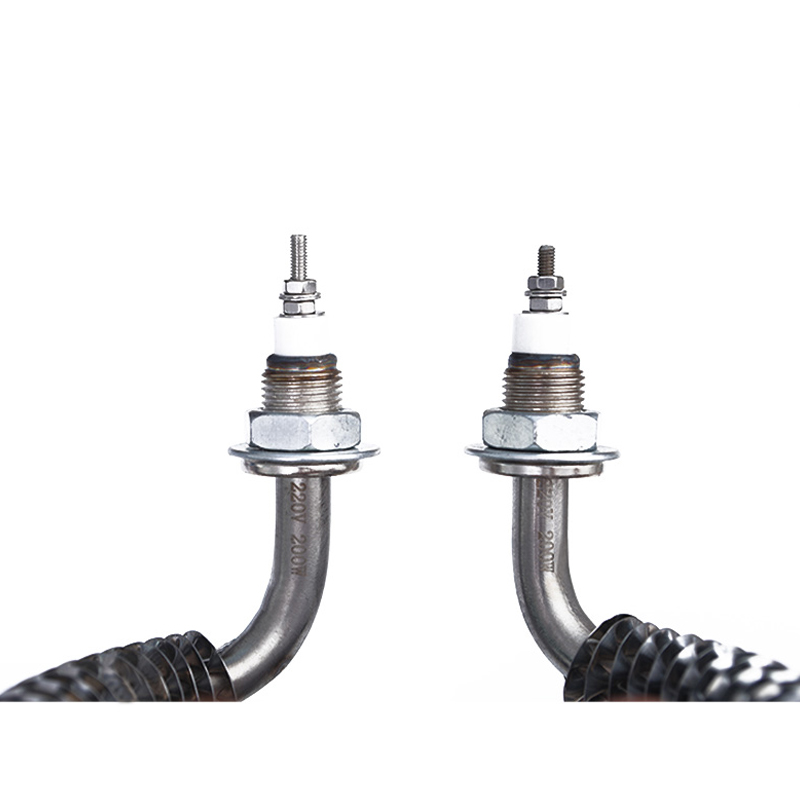 Custom O-Shaped Finned Heating Tube Manufacturers, SuppliersXinghua Yading Electric Heating Element Co., Ltd. is China Custom OEM/ODM O-Shaped Finned Heating Tube Manufacturers and O-Shaped Finned ...View Product →
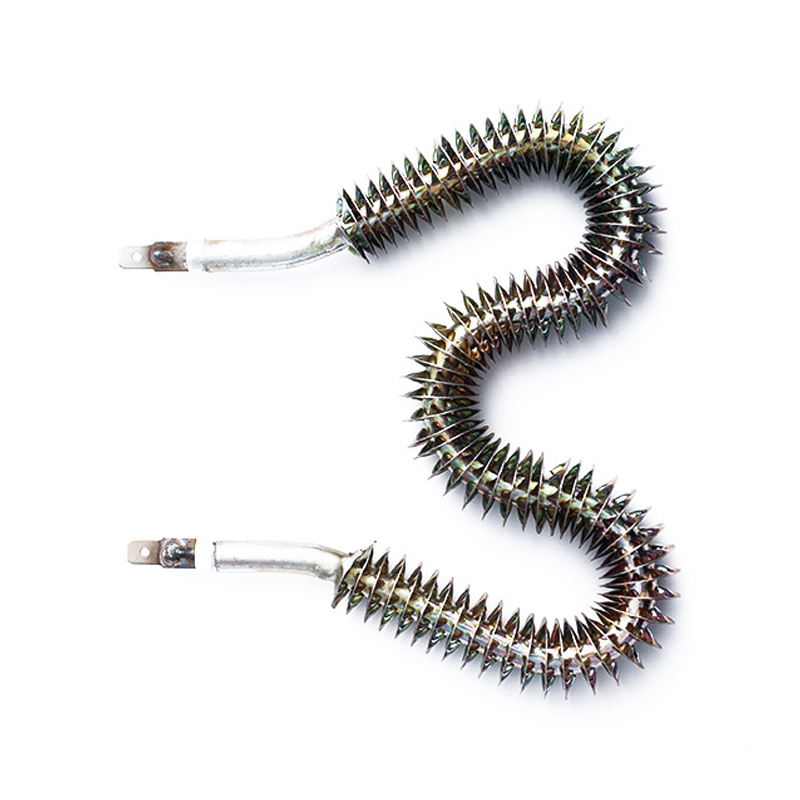 Custom W-Shaped Finned Heating Tube Manufacturers, SuppliersXinghua Yading Electric Heating Element Co., Ltd. is China Custom OEM/ODM W-Shaped Finned Heating Tube Manufacturers and W-Shaped Finned ...View Product →
A structured checklist prevents the typical mistakes in new installations: oversized watt density, wrong material, or insufficient fin area. Use the following sequence when you specify an air preheater tube.
For more guidance on improving the overall system, read about how to improve the energy efficiency of industrial air heating systems with efficient air heating tubes.
Even a well-specified tube can fail if the installed conditions differ from the design. The most common failures are overheating, insulation breakdown, and mechanical damage to fins.
Thermal protection is not optional. A basic high-limit thermostat or an airflow interlock can prevent most burn-out failures. For additional safety practice, review the essential safety rules for heating coils and their connections.
Choosing an air preheater tube is an engineering decision that depends on four numbers: outlet air temperature, available space, air velocity, and watt density. When all four are known, the material and fin geometry become straightforward. When one of them is ignored, the tube will likely fail before its expected service life. In an industrial heating system, a few hours of design review at the specification stage is always cheaper than a shutdown caused by an undersized or mismatched heater.
How to choose the right heater for packaging machinery?
Aug 05,2026
How do I select the right wattage density for a hot runner coil heater?
Aug 19,2026Your email address will not be published. Required fields are marked *